I have something of a weakness for free gaming modules. Whenever I go onto RPGnow to buy something I tend to also come away with a bunch of free pdfs, which build up and build up until I have a great pile of them; then I download them and skim them all in a blur of caves and ruins and dungeons with goblins in them. Most of them aren't that great, but a few really stand out; so I thought I'd flag a few of them up to bring them to other people's attention.
All of these are either freely available or 'pay what you want', at least at time of writing. Get them while you can, because PWYW products have a habit of suddenly acquiring fixed price tags after they get popular...
Dungeon of Signs: Gus L has produced a whole series of excellent adventures in pdf format, freely available on his blog. They're all well worth reading, but 'Prison of the Hated Pretender', 'Along the Road of Tombs', and 'The Dread Machine', are outstanding: dark and atmospheric and powerfully imagined throughout. Just steel yourself for a lot of dead PCs!
The Fungus Forest: It's not going to blow anyone's mind with its sheer originality, but this adventure module is a very solid example of OSR design principles in action: a subterranean forest full of weird factions and weirder individuals, almost all of which can be negotiated or allied with. Could make for several sessions of very enjoyable play.
The Caves of Moreau Country: This dungeon has a random-layout-generation gimmick, but that's honestly the least important thing about it. It's dark and vivid and sad and has some rather nice black and white art. It's also surprisingly faithful to the vision of The Island of Doctor Moreau itself.
Better than Any Man: I still think this is Raggi's best work, and he's giving it away for free. It's Lamentations, so expect cannibalism and dead babies, but if you're not put off by the subject matter then this is a very good example of historical fantasy-horror on a truly epic scale.
The Ruined Hamlet: This is mostly a pastiche of B2 The Keep on the Borderlands, and it's much more 'traditional D&D fantasy' than most of the others I've listed here, but it's done with heart and a pleasing level of attention to detail. Worth a look.
The Mysteries of Hollowfield: This is a series of short adventures set in and around a little woodland town, each of which is written by a different author. Unsurprisingly they're a bit of a mixed bag, but they mostly maintain a suitably creepy, Halloweeny tone, and the haunted house mini-adventure is a great example of using a few simple ideas and images to go a long way.
Madness of the Rat King: A 5th edition adventure, but should be very easy to convert to OSR D&D. This takes a concept which is cliched to the point of absurdity - a level 1 party gets hired to clear out some giant rats from under a tavern - and runs with it to such crazy lengths that it wraps right round into awesome again. By the time the flying rats with eye-beams attack, the cliches have been left a long way behind!
Sunday, 31 July 2016

Friday, 29 July 2016
Pdf Phrenzy 2: Pdf Harder
I had a slow morning at work so I made pdf versions of my six recent B/X classes: Deep One Hybrid, Goblin, Half-Troll, Orc, Ghoul-Blooded, and Skaven Engineer. Which would make for a pretty great adventuring party, now I think about it, although the ghoul and the half-troll would constantly be fighting over who got to eat the monsters!
Pdf versions of my first five B/X classes - the Inquisitor, the Mesmerist, the Angel, the Sandsculptor, and the Patchwork Girl - as well as my introductory ATWC adventure, the Tower of Broken Gears, can be found here. Feel free to download or print anything you fancy for personal use...

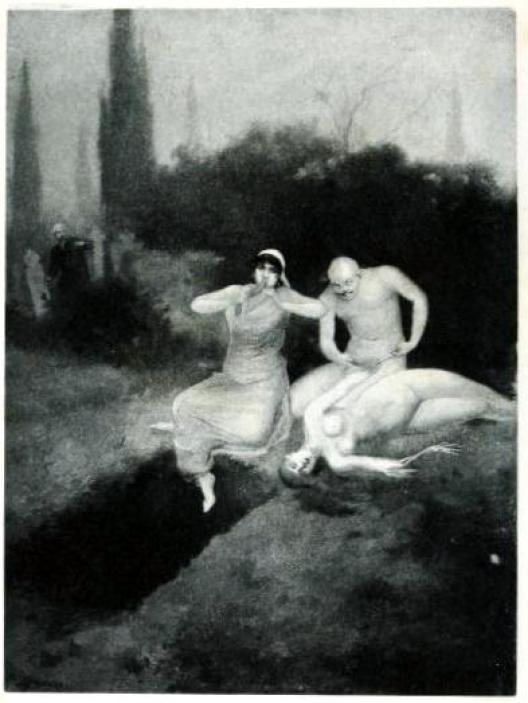


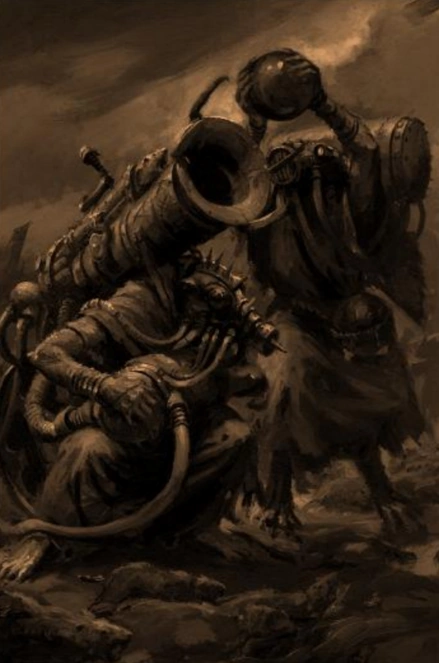
Pdf versions of my first five B/X classes - the Inquisitor, the Mesmerist, the Angel, the Sandsculptor, and the Patchwork Girl - as well as my introductory ATWC adventure, the Tower of Broken Gears, can be found here. Feel free to download or print anything you fancy for personal use...
Monday, 25 July 2016
So many monsters, so little time
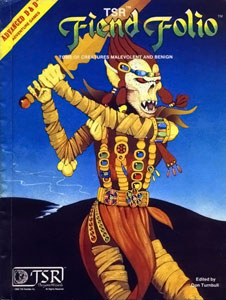
I have been reading (well, skimming) a lot of D&D monster books over the last few months. Like, a lot.
As a result, I have now seen what feels like approximately one million extremely minor variations on each of these monsters:
- A plant which comes to life and beats you to death / strangles you with vines / shoots thorns at you.
- A statue which comes to life and beats you to death.
- A skeleton, ghost, or zombie with a stupid gimmick and far too many hit dice.
- A mashup of two or more real-world predators.
- A race of big dumb humanoid brutes who love violence.
- A race of giant, hungry, alpha-predator monsters who love eating people.
- Innumerable pointless giant, golem, and dragon subraces. ('Marsh giants and bone golems are completely different from bog giants and skull golems!')
- Some random creature with snake parts, spider parts, and/or tentacles glued onto it for no fucking reason.
- A zillion different demon types which all boil down to 'it looks ugly and it wants to hurt you'.
- A variant on a classic monster but BIGGER and with MORE SPIKES.
- A variant on a classic monster but made of fire / ice / poison gas / thorns / knives / whatever.
- A mindless blob monster that dissolves people with acid.
- A giant heap of animated corpses all stuck together.
- A sneaky thing that jumps out of a shadow and stabs you to death.
- A robot with a sword.
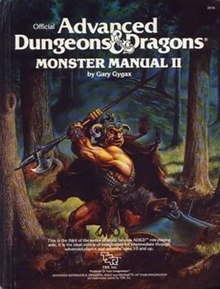
It brings home to me just how much of the conceptual territory for D&D monsters was soaked up by the original Monster Manual (and, to a lesser extent, the Fiend Folio and Monster Manual II): people setting out to write new monsters now are like settlers looking for new homes in territory where all the best land was taken forty years ago. The original Monster Manual was able to take every concept and present it in its purest form: footsoldiers of evil? Orcs. Big dumb thugs? Ogres. Terrifying boss monsters? Dragons. Everyone since has had to find narrower and narrower niches between the spaces which have already been taken. 'It's like a minotaur, but with six arms! It's like an ogre, but made of poisonous metal! It's like a troll, but with the head of a wolf!'
At the heart of this problem (like most others) is a basic tension between supply and demand. There's no limit to the number of monsters the game-as-written can contain: you can fill your shelves (or, more likely, your computer) with as many monster-books as you can be bothered to read. There is, however, a pretty sharp limit on the number of monsters the game-as-played can contain: regardless of how many monster ideas you have, you only need one session's worth of monsters per session. If every monster was equally useful, you'd expect the result to be increased variety; if the GM has a thousand monsters in his books, and only needs, say, five per session, then you could play weekly for almost four years without ever meeting the same monster twice. In practise, though, a glance at published modules, actual play reports, and everyone's real-life gaming experience confirms that this isn't what happens.
A handful of highly-popular monsters, almost all of them from the original Monster Manual or Fiend Folio, get used endlessly: goblins, orcs, ogres, skeletons, zombies, ghouls, elementals, lizard men, and so on. A second group of monsters, mostly just as old or very slightly newer, get used when GMs want something a bit more colourful: Githyanki, mind flayers, beholders, modrons, etc. And then all the rest - which, at this point, means something like 95% of all the monsters which have ever been published for D&D and its derivatives - is left fighting over the tiny 'novelty monster' slot that remains. Goblins and zombies have probably been used by every person who's ever run D&D for more than a few sessions. How many have ever used, say, the Bearhound? (It's an intelligent talking 10 HD bear with the teeth and tail of a wolf, which has the magical ability to make friends with other animals.) Two? Three? It's not even that bad a monster, as these things go; I can see one fitting very easily into a fae-themed adventure. It's just not good enough for most people to have any reason to use it instead of a dozen other things in actual play.
On reflection, I think that modern monsters are most likely to be useful (and to be used) if they bring a whole scene or scenario with them, rather than being modular plug-ins that can be slotted into almost any game with a minimum of fuss. This may seem counter-intuitive, but let me explain with an example: in the course of my monster-manual-reading binge, one line I got absolutely sick of reading in monster descriptions was 'these undead creatures are often found guarding ancient tombs'. In theory, this means the monsters are easy to use: just drop them in as a guardian of whatever graves, mausoleums, sarcophagi, or whatever you have lying around your dungeon. In practise, though, it virtually guarantees that they never will be used, because there are already several hundred undead monsters which could do the same job, and honestly 90% of the time people will just use a wight or a wraith or a mummy instead. Whereas a monster which carries something more specific with it - a scene, a story, a cultural context, a narrative or an environment or an adventure which its existence generates or implies or requires - can be used as a kind of mini-module, something that someone might read and think: 'huh, I'd like to run that at some point', and which thus has a much greater chance of it making its way into actual play than it would if it was just Minor Lizard-Man Variant #432.
Take, say, the Moon Apes from Fire on the Velvet Horizon. They're cool and weird-looking - big red-black frog-ape-monsters with vertical mouths whose bite induces confusion and forgetfulness, making people deny the very wounds that they have just sustained - but if that's all they were, they probably wouldn't see play, because D&D has about a thousand weird-looking ape-monsters with special attacks in it already. But there's more to them than that: they're parasites who live in the bodies of dead cloud-titans, who swing down to the surface on loops of cloud to bite people and steal valuables and children, and then vanish back up to their lairs with their loot, leaving their victims so befuddled from the effects of their bites that they have no idea what's just happened to them. There's a whole implied adventure, here. Scene one, PCs come across a devastated and looted community full of people with weird bite wounds, none of whom is able to give a coherent account of what has attacked them. Scene two, PCs try to work out what the hell is going on. Scene three, PCs find a way up to the cloud-lair of the moon-apes to kill them and take back what they've stolen. Now, maybe you don't like the sound of that adventure, and that's fine; but if you do like it, and if you want to run it, then the moon apes will be an essential part of it, and as a result there is a decent chance that they will get used. Whereas without that context they'd just have been one more entry on a long, long, long list of monsters that might leap out from behind the next bush and try to kill your PCs, with no more chance of actually making it into play than any other.
At the heart of this problem (like most others) is a basic tension between supply and demand. There's no limit to the number of monsters the game-as-written can contain: you can fill your shelves (or, more likely, your computer) with as many monster-books as you can be bothered to read. There is, however, a pretty sharp limit on the number of monsters the game-as-played can contain: regardless of how many monster ideas you have, you only need one session's worth of monsters per session. If every monster was equally useful, you'd expect the result to be increased variety; if the GM has a thousand monsters in his books, and only needs, say, five per session, then you could play weekly for almost four years without ever meeting the same monster twice. In practise, though, a glance at published modules, actual play reports, and everyone's real-life gaming experience confirms that this isn't what happens.
A handful of highly-popular monsters, almost all of them from the original Monster Manual or Fiend Folio, get used endlessly: goblins, orcs, ogres, skeletons, zombies, ghouls, elementals, lizard men, and so on. A second group of monsters, mostly just as old or very slightly newer, get used when GMs want something a bit more colourful: Githyanki, mind flayers, beholders, modrons, etc. And then all the rest - which, at this point, means something like 95% of all the monsters which have ever been published for D&D and its derivatives - is left fighting over the tiny 'novelty monster' slot that remains. Goblins and zombies have probably been used by every person who's ever run D&D for more than a few sessions. How many have ever used, say, the Bearhound? (It's an intelligent talking 10 HD bear with the teeth and tail of a wolf, which has the magical ability to make friends with other animals.) Two? Three? It's not even that bad a monster, as these things go; I can see one fitting very easily into a fae-themed adventure. It's just not good enough for most people to have any reason to use it instead of a dozen other things in actual play.
.jpg) |
| By the time they got to Monster Manual Five, they were really scraping the barrel. |
On reflection, I think that modern monsters are most likely to be useful (and to be used) if they bring a whole scene or scenario with them, rather than being modular plug-ins that can be slotted into almost any game with a minimum of fuss. This may seem counter-intuitive, but let me explain with an example: in the course of my monster-manual-reading binge, one line I got absolutely sick of reading in monster descriptions was 'these undead creatures are often found guarding ancient tombs'. In theory, this means the monsters are easy to use: just drop them in as a guardian of whatever graves, mausoleums, sarcophagi, or whatever you have lying around your dungeon. In practise, though, it virtually guarantees that they never will be used, because there are already several hundred undead monsters which could do the same job, and honestly 90% of the time people will just use a wight or a wraith or a mummy instead. Whereas a monster which carries something more specific with it - a scene, a story, a cultural context, a narrative or an environment or an adventure which its existence generates or implies or requires - can be used as a kind of mini-module, something that someone might read and think: 'huh, I'd like to run that at some point', and which thus has a much greater chance of it making its way into actual play than it would if it was just Minor Lizard-Man Variant #432.
Take, say, the Moon Apes from Fire on the Velvet Horizon. They're cool and weird-looking - big red-black frog-ape-monsters with vertical mouths whose bite induces confusion and forgetfulness, making people deny the very wounds that they have just sustained - but if that's all they were, they probably wouldn't see play, because D&D has about a thousand weird-looking ape-monsters with special attacks in it already. But there's more to them than that: they're parasites who live in the bodies of dead cloud-titans, who swing down to the surface on loops of cloud to bite people and steal valuables and children, and then vanish back up to their lairs with their loot, leaving their victims so befuddled from the effects of their bites that they have no idea what's just happened to them. There's a whole implied adventure, here. Scene one, PCs come across a devastated and looted community full of people with weird bite wounds, none of whom is able to give a coherent account of what has attacked them. Scene two, PCs try to work out what the hell is going on. Scene three, PCs find a way up to the cloud-lair of the moon-apes to kill them and take back what they've stolen. Now, maybe you don't like the sound of that adventure, and that's fine; but if you do like it, and if you want to run it, then the moon apes will be an essential part of it, and as a result there is a decent chance that they will get used. Whereas without that context they'd just have been one more entry on a long, long, long list of monsters that might leap out from behind the next bush and try to kill your PCs, with no more chance of actually making it into play than any other.
In nature, every organism is engaged in a Darwinian struggle for survival. The same is true of D&D monsters, except that what they're competing for isn't food and territory, it's use in actual play. A monster which brings something to the game, whether in the form of a vivid scene or an interesting tactical challenge, will get used more than one that doesn't; being used will grant it more exposure, which will lead to it being used by other people, and so on. The main ecological spaces are already taken: nothing is going to replace the goblin or the zombie any time soon, and just writing yet another 'big thug monster' and expecting people to start using them instead of trolls and ogres is usually going to be something of an exercise in futility. But there's no reason that new monsters shouldn't thrive within their own niche ecosystems if they're given the chance!
Thursday, 21 July 2016
Horrible Mysteries!!!
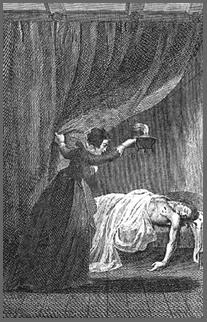
So - the reason for the ghoul-blooded class write-up in my last post is that I have been reading Gothic novels. The original ones. From the eighteenth and early nineteenth centuries.
They are super-weird.
If your players ever tell you they want more 'gothic horror' in your D&D game, roll on these tables and inflict the resulting plot on them in your next session. If they complain that it makes no fucking sense then smile and nod and explain that you are being authentic.

WHO IS THE VILLAIN? (roll 1d10)
- An evil priest.
- An evil aristocrat.
- A secret society.
- A ruthless outlaw chief.
- An evil aristocrat disguised as an evil priest.
- An evil aristocrat disguised as a ruthless outlaw.
- An evil priest disguised as a ruthless outlaw.
- An evil aristocrat disguised as an evil priest disguised as a ruthless outlaw.
- An evil aristocrat disguised as an evil priest disguised as a ruthless outlaw who also runs his own secret society in his spare time because why the fuck not.
- The Spanish Inquisition.
NO, SERIOUSLY, WHO IS THE VILLAIN? (roll 1d10)
- A demon.
- A demon disguised as a boy.
- A demon disguised as a girl disguised as a boy.
- A lustful monk.
- A lustful nun.
- A demon disguised as a girl disguised as a boy disguised as a lustful monk.
- A ghost.
- A lunatic.
- Some guy who sold his soul to the Devil.
- The Spanish Inquisition.
WHO IS THE HERO? (roll 1d6)
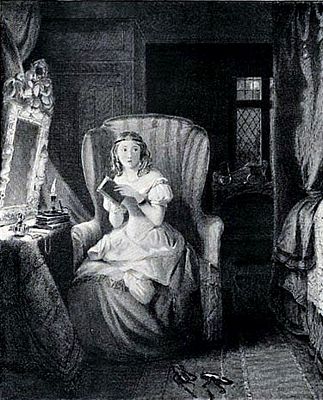
WHO IS THE HEROINE? (roll 1d6)
- A well-meaning but basically useless young Italian nobleman.
- A well-meaning but basically useless young Spanish nobleman.
- A well-meaning but basically useless young British nobleman.
- A well-meaning but basically useless young French nobleman.
- A well-meaning but basically useless young German nobleman.
- Victor Frankenstein.
WHO IS THE HEROINE? (roll 1d6)
- A beautiful, virtuous, and talented young Italian noblewoman.
- A beautiful, virtuous, and talented young Spanish noblewoman.
- A beautiful, virtuous, and talented young British noblewoman.
- A beautiful, virtuous, and talented young French noblewoman.
- A beautiful, virtuous, and talented young German noblewoman.
- Roll again, but they're disguised as a boy and carry a locket containing a MYSTERIOUS PORTRAIT with them at all time. (If you keep rolling 6s, just keep adding more MYSTERIOUS ITEMS until you roll something else.)
- There's a beautiful girl in town and the villain wants to rape her.
- There's a holy man in town and the Devil wants to test his faith.
- There's a rich man in town and the villain wants to kill him and steal his estate.
- There's proof of the villain's crimes in town and the villain wants to destroy it.
- There's a rich man in town whose only relative is his beautiful daughter and the villain wants to murder him and rape her and steal the estate while he's at it.
- There's a beautiful girl in town and the villain wants to kill her because she is the LIVING PROOF OF HIS CRIMES!!!!
- A secret society is trying to start a revolution. Their plan for doing this involves tricking everyone into thinking they have magical powers but actually they don't but maybe they actually do.
- There's a castle which seems to be haunted but it isn't really haunted because the villain is just tricking everyone into thinking that in order to keep them away from his hidden secrets.
- There's a castle which seems to be haunted but then seems not to be haunted but then it turns out it actually is haunted HA HA GOTCHA SUCKERS and then a ghost pulls out everyone's eyeballs.
- NO-ONE EXPECTS THE SPANISH INQUISITION!
OH MY GOD MAKE IT STOP (roll 1d10, or 2d10 if you want a twist ending)
- ...and then a giant ghost appears and kicks the castle over.
- ...and then the Devil drops the villain off a mountain and insects eat his brains and it takes him five days to die.
- ...and then it turns out that the villain's victim was ACTUALLY HIS SECRET DAUGHTER and he's so overwhelmed with grief and shame that he kills himself.
- ...and then it turns out that it was actually all just a trick with magic lanterns.
- ...and then an angry mob turn up and try to lynch everyone.
- ...and then this crazy noblewoman starts pushing people off cliffs.
- ...and then proof appears that ALL THIS WAS ARRANGED IN ADVANCE BY THE ILLUMINATI.
- ...and then it turns out that actually the villain was just crazy.
- ...and then everyone is OVERCOME WITH REMORSE and lives out the remainder of their days in penance and weeping.
- ...and then everyone is burned alive by the Spanish Inquisition, except the hero and heroine, who live happily ever after.

(Reading list: The Castle of Otranto, The Hermitage, The Castles of Athlin and Dunbayne, The Sicilian Romance, The Romance of the Forest, The Mysteries of Udolpho, The Italian, The Monk, Gondez the Monk, The Monk of Udolpho, Horrid Mysteries, Vathek, The Castle Spectre, Melmoth the Wanderer, The Abbess, Frankenstein, The Vampyre, St Leon, St Irvyne, Zanoni, Zastrozzi, Zofloya, Memoirs and Confessions of a Justified Sinner, The Cenci, Manfred, Marmion, Tales of Wonder, The Monastery, The Bride of Lammermore, The Lay of the Last Minstrel, The Ghost-Seer, The Robbers, Klosterheim, Caleb Williams, The Inquisitor, The Three Spaniards, The Horrors of the Priory, The Abbess 2: Roman Catholic Boogaloo, Northanger Abbey.)
Tuesday, 19 July 2016
New B/X class: Ghoul-blooded
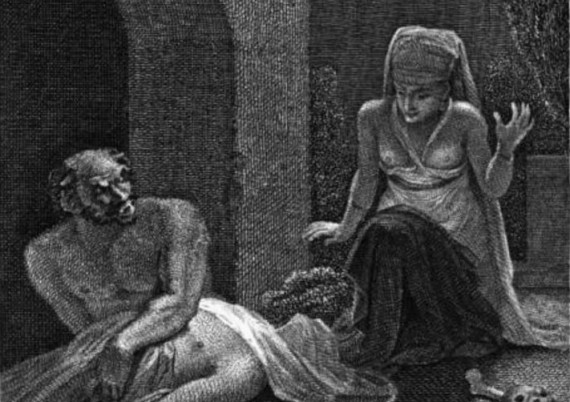
When you were a child, you thought you were just like everyone else: a bit thin and pale, maybe, but thinness and pallor run in your family. It was only as an adolescent that you began to realise that most of your friends didn't have a locked door in their cellars with something thumping and hissing behind it; that the racks of cleavers and mortuary knives in your mother's kitchen were not ordinary cooking equipment, and that it wasn't normal for a family mausoleum to contain nothing but empty coffins and gnawed bones. As a teenager, you began to join the dots: the allusions in your great-grandfather's journal to how he'd never been the same after his encounter with some kind of weird creature out in the ruins, your grandmother's maddening vagueness over exactly how your family survived the great famine year, the fact that your uncle had to move out in such a hurry just after those clerics arrived in town. Was your great-uncle really an eccentric foreign nobleman? If so, why did your mother always head north-east when she said that she was going to visit him, when everyone knows that there's nothing out there except the old burial grounds? Why are your nails so strong? Why are your teeth so sharp? Why do you feel so hungry all the time?
You know that people are talking about you behind your back. You can smell their fear - but since when could you smell fear? - whenever you walk into the room. Maybe it's time you followed your uncle's example and left town...
B/X Class: Ghoul-Blooded
(Should also work for ghul-blooded characters in Middle Eastern-inspired settings.)
To-Hit: As per Fighter.
Hit Dice: 1d6
Weapons, Armour, and Saves: All as per Thief.
Hit Dice: 1d6
Weapons, Armour, and Saves: All as per Thief.
Experience Per Level: As per Magic-User.

Night Vision: You can see perfectly even in very dim light. At level 3, you gain the ability to see even in total darkness.
Teeth and Claws: Your nails and teeth are strong enough to be used as weapons, allowing you to attack for 1d4 damage even when unarmed. At level 5 this rises to 1d6 damage, and at level 9 it rises to 1d8.
Enhanced Smell: Your sense of smell is extremely sensitive. If any scent could possibly be detected by a human nose, you detect it automatically. At level 6 you can track people by their scent like a dog.
Foul Feasting: At level 2, you may eat raw and/or rotten meat without ill effects; doing so never makes you sick, and nourishes you just as much as if it was cooked and fresh.
Paralytic Venom: At level 4, your unarmed attacks (only) inject paralytic venom into your target, requiring them to save or be paralysed for the next 1d6 rounds. Elves are immune to this effect, as are undead, creatures not made of flesh and blood, and anything larger than an ogre. You also become immune to the paralytic venom of regular ghouls.
Cannibal Cookery: At level 5, you gain the ability to cook human or humanoid body parts into meals that fill whomever eats them with unholy vigour. The bonus granted depends on the body part cooked:
- Brain: Grants +1 Intelligence.
- Eyes: Grants
+1 Wisdom. - Heart: Grants
+1 Strength. Lungs: Grants +1 Dexterity. Liver: Grants +1 Constitution. Tongue: Grants +1 Charisma. Stomach: Grants +1 to all saves.
Preparing one portion of such a meal takes one hour, and no-one can benefit from more than three such meals at the same time. (Breakfast, lunch, and dinner!) The effects last for 24 hours.
Gravedigger: At level 7 you gain the ability to tunnel through the earth with your claws like a mole. You can dig through the earth at a rate of 10' per minute, but your tunnel will collapse behind you unless someone else is crawling behind you and shoring it up as you go.
Call the Clan: At level 8, you may call your undead kindred to you. You must go out to a graveyard on the night of the new moon and sing a keening, whistling song; 1d3 hours later, 1d6 ghouls will burrow their way out of the soil around you. These ghouls will obey any non-suicidal orders for as long as you keep them supplied with carrion, and will serve you until destroyed or until the night of the next new moon, whichever comes first.
Atavism: At level 9, you shed your humanity. You are now an unliving monster; you no longer need to eat, sleep, or breathe (although your hunger for carrion is as strong as ever), and you are immune to poison and disease. You also cease to age, and will live forever unless killed. Because you are not truly undead, however, you cannot be turned by clerics.
Abilities Summary:
- Level 1: Low-light vision, enhanced smell, claws 1d4.
- Level 2: Foul feasting.
- Level 3: Darkvision.
- Level 4: Paralytic venom.
- Level 5: Cannibal cookery, claws 1d6.
- Level 6: Track via scent.
- Level 7: Gravedigger
- Level 8: Call the clan
- Level 9: Atavism, Claws 1d8
Sunday, 17 July 2016
Moon Elves

(This post has nothing to do with Central Asia or ATWC. It's just an attempt to draw together a bunch of ideas I've had rattling around for a while, now...)
They say they came here from the moon, and maybe they did, but if so they have lost or forgotten the way back to it; the old moonbeam bridges are all gone, now, their silvery remains long since tumbled away into the interstellar spaces, and all that remains of the great moon-bats of the ancient world are a dwarfish and degenerate breed, quite incapable of crossing the gulfs between the moon and the earth. Stuck here, on Earth, they pine for lunar glories they have never seen, for the silent spires of their silver cities and the great white sails of the ships their ancestors piloted across the endless seas of sparkling dust. The sun's light pains them, here, and so they live in shadowy places, favouring heavily wooded valleys where there is always something to stand between them and the midday glare. Seen by daylight, they are an unimpressive bunch, pale and scrawny and miserable; but by moonlight, they become luminous. They become glorious.

Their skin is moon-white. Their hair is too, usually, although in some it bears the ghost of another tint: a very, very pale red, or violet, or gold. Their eyes are green or golden or purple. Their bodies are thin, and seem as insubstantial as moonbeams. They know the languages of owls, and bats, and foxes, and all the nocturnal creatures of the forest night, and those creatures know them and love them and serve them out of reverence for their great mother the moon. Humans who see them out in the moonlight often fall in love with them; but such loves seldom end happily, for the moon elves are fickle and faithless, changeable as the moon and tides. They know a secret art for weaving cloth out of moonlight, and another for swimming through dreams as though they were water, going down and down and down like pearl divers until they find the mind of the dreamer whom they seek. Many a comely human has experienced an entire relationship with a moon elf lover without ever being aware of it as anything other than a particularly intense series of erotic dreams.
Their playful love of dreams and shadows hides an intense and chilling purpose. If they cannot return to the moon, they plan to make the earth serve as a substitute. In their secret souls, they dream of roaming a world reduced to a single vast desert of silver dust, beneath a dark and star-filled sky in which the sun will never rise again.
Moon Elf: AC 16 (agility and mooncloth - see below), 2 HD, +2 to-hit, sword 1d8 + 1d6 moonfire (see below), elfshot 1d6 + lunacy (see below), saves 12, morale 7.
All moon elves have the following supernatural abilities:
Moon Elf Knight: AC 18 (agility and moonbeam armour - see below), 4 HD, +4 to-hit, sword 1d8 + 1d6 moonfire (see below), elfshot 1d6 + lunacy (see below), saves 10, morale 9.
Moon elf knights usually ride giant owls, bats, or foxes, or huge white wolves. They have all the same abilities as regular moon elves, as well as the following additional abilities:
- They can communicate with nocturnal animals, who will obey any orders given to them that will not obviously cause them serious injury or death.
- They can communicate with anyone they have ever met via their dreams. (If someone is aware that a moon elf is contacting them in this way and wants them to stop, they can force the interloper out of their dreams with a successful save vs. spells.)
- By running their fingertips across a metal object, they can make it erupt with cold white flames which burn for as long as the moon elf carries on holding it. If used on a weapon, this inflicts an extra 1d6 moonfire damage on every hit: this counts as either fire or cold damage, whichever the target has less resistance to.
- They can weave moonlight into mooncloth, a luminous white fabric as soft as silk and as hard as steel. Mooncloth garments provide the same defence as chainmail, and weigh virtually nothing. If touched by sunlight they turn into dingy white linen, ugly and worthless.
- They can make enchanted arrowheads ('elfshot') which, when used by moon elves, induce lunacy in those struck by them. Anyone hit with one must save vs. spell or suffer uncontrollable insanity for as long as the moon is above the horizon.
- They can sculpt moonlight and shadows into illusionary vestments which, when thrown over a creature or object, change its appearance: so a handsome man could be made to look ugly, a stick could be made to look like a sword, a stone could be made to look like a jewel, and so on. The illusionary appearance must be chosen when the weave is created, and must be of something of roughly the same size and shape - so a sheep could be made to look like a wolf, but not like a horse. These illusions dissolve immediately if touched by sunlight.
Moon Elf Knight: AC 18 (agility and moonbeam armour - see below), 4 HD, +4 to-hit, sword 1d8 + 1d6 moonfire (see below), elfshot 1d6 + lunacy (see below), saves 10, morale 9.
Moon elf knights usually ride giant owls, bats, or foxes, or huge white wolves. They have all the same abilities as regular moon elves, as well as the following additional abilities:
- They can interact with insubstantial and illusionary objects as though they were real: walking across a chasm on an illusionary bridge, punching ghosts in the face, and so on. This includes objects created with their own ability to sculpt moonlight and shadows: the 'armour' that most such knights wear is actually just cloth covered with a layer of moonweave illusion, which protects them like steel but will function like cloth for anyone else.
- They can command werewolves, and other shapechangers whose changes are compelled by the phases of the moon. Any such creature they encounter must save vs. spell or obey them without question for as long as the moon is in the sky.
- By touching someone on the head - a kiss is traditional, although not compulsory - they may inflict a terrible lunar madness upon them. The victim must save vs. spell or spend each night of the full moon convinced they are a wild beast, roaming the woods naked, howling at the moon, and attacking anyone who comes near them with their teeth and nails. Unless the knight chooses to remove it, the affliction is permanent until removed by a Remove Curse spell or the death of the knight who inflicted it.

Friday, 15 July 2016
Clockwork Monkeys and Other Mechanical Devices
More clockpunk tech for ATWC. Most of the stuff I've written so far has been pretty utilitarian: these are a bit more eccentric, the sort of thing you might find in the workshop of an imaginative engineer with too much time on her hands. Is it really worth building a clockwork monkey to carry your messages for you when you could just send a man on a horse instead? Probably not; but if you're the kind of person who just really loves building clockwork monkeys, that might be rather besides the point...
 |
| Clockwork monkey miniatures by Westfalia Miniatures. I love these guys. |
Mechanical Messenger Monkey: A 1' high mechanical monkey, designed for use in carrying messages from place to place. A rolled-up message is placed inside its mouth, and it is then assigned a direction, a distance, and - optionally - a landmark to look out for (e.g. 'a tower 20 miles to the north-west') by turning control keys in keyholes set into the sides of its head. As soon as its objective is locked in, the monkey immediately sets off in the assigned direction at a run, scampering, climbing, or swinging over anything in its way, and nimbly dodging (Dex 18) anyone who tries to stop it; it stops for nothing until it has covered the assigned distance, at which point it stops dead and its jaw springs open to reveal the message inside. (If the message needs to be kept secure, then its jaw can be locked instead, opening only to someone who possesses the appropriate combination or key: after three failed unlocking attempts, the monkey 'eats' the message by shredding it with its internal gears.) Fully winding a messenger monkey (by hand or autowinder) takes four hours, and allows it to run for up to fifty miles at a speed of five miles per hour. It has AC 17, 3 HP, and no attacks. Tech difficulty: O1 M3 R4 C5.
Harpoon gun: Like a one-shot, but much bigger, this is basically just a 5' sturdy metal tube with a very powerful spring coiled up inside it. Winding the spring, by hand or by autowinder, takes ten minutes; you then drop something down the shaft (usually a harpoon, but it could also be used to launch a fist-sized stone, a sturdy jar full of oil or acid, or anything else which is small enough to fit down the tube and strong enough to survive being launched out of it) , point it at your target, and pull the lever on the side to launch the projectile. If used as a weapon, it inflicts 2d8 damage and ignores 2 points of physical AC (the harpoon just punches straight through it), but it's so clumsy that attacks on man-sized targets suffer a -2 penalty to hit. It can also be used as a kind of 'grapple gun': tie one end of your rope around the top of the harpoon, fire it into a tree, a wall, etc, and then swing across. The harpoon gun must be fully rewound before it can be used again. Tech difficulty: O0 M0 R1 C2.
Small Submarine: A fish-shaped submersible made from wood, metal, and glass, capable of carrying two crewmen, who propel themselves through the water by operating a pedal-powered treadmill; clockwork-powered propellers, which are wound up before entering the water, provide additional thrust when more speed is required. The biggest limitation is the air supply; the sub only contains about twelve man-hours worth of breathable air, so a two-person crew would be unwise to stay underwater for more than six hours at a stretch. The sub is quite sturdy (AC 18), but almost any damage that does breach its hull will make it flood rapidly. Cautious submariners may wish to attach racks of harpoon guns to the sides of their vehicle in case of encountering underwater trouble. Tech difficulty: O2 M3 R4 C4
Large Submarine: Like the small sub, but capable of carrying six people, at least four of whom will need to pedal constantly to keep it in motion. It also has a thicker hull, giving it AC 20. Contains 36 man-hour o breathable air. Tech difficulty: O3 M3 R4 C5

Steel Spider: An experiment in non-humanoid mech design, the steel spider consists of a spherical 5' command module (within which the pilot sits) which travels on eight sturdy 6' metal legs, usually with a swivel gun mounted on the front. It's much better able to handle difficult terrain than a tank, and much harder to trip than a normal mech, but its lack of hands means that its pilot can only interact with the world by climbing over things and/or shooting them. Controlling all those legs is also far trickier than the much more intuitive task of operating a mech's legs with your own, and the lightly-armoured spider is much more fragile than a regular mech, with AC 18 and 20 HP. Steel crabs, which swap out the front two legs for claws capable of crude manipulation, are also possible. Tech difficulty: O1 M3 R4 C5.
Cogworm: The clockpunk equivalent of stealing electricity by hooking a power line, a cogworm is a flexible three-foot snake made of gears. One end is attached to the exposed machinery of any large clockwork device, such as a bronze horse or yaga, and the other end is attached to a smaller device's winding key; every turn of the cogs in the first device turns all the gears in the cogworm, which winds up the second device, draining power from the former to the latter. (Treat this as an autowinder, except it requires no fuel; all the power is provided by the first device, which loses power at the same rate as the second one gains it.) Given that the total amount of energy committed to the two devices remains the same as if you'd just charged them both up individually, there are only two reasons to use a cogworm: laziness (you can just throw a bunch of fuel into the furnace of your yaga and then let it power all the rest of your devices via cogworms, rather than having to feed fuel into them all individually), or theft (stealing someone else's power means never having to buy your own fuel again - at least until you get caught). The ingenious but perpetually impoverished apprentice clockworkers of the Wicked City are infamous for the use of cogworms in the latter fashion, and are quite expert at surreptitiously opening up large machines and attaching cogworms to their internal workings in order to leech off their power for their own purposes. Tech difficulty: O1 M3 R4 C5.
Chattersword: Basically a large wind-up chainsaw. (It has to be big, due to the bulkiness of the mechanism.) An hour's winding (by hand or autowinder) will allow it to run for ten minutes: the mainspring unwinds very quickly, causing the gears within to spin rapidly and setting the jagged metal teeth around the edge of the blade whirring with great speed. Can be used to carve through wooden obstacles, or used in combat as a (clumsy) two-handed melee weapon; it inflicts 2d6 damage, but whenever its wielder makes an unsuccessful attack against a target wearing metal armour the chattersword teeth have a 1-in-3 chance of snagging, snapping, or otherwise becoming unusable until repaired. Tech difficulty: O1 M2 R2 C2.
Harpoon gun: Like a one-shot, but much bigger, this is basically just a 5' sturdy metal tube with a very powerful spring coiled up inside it. Winding the spring, by hand or by autowinder, takes ten minutes; you then drop something down the shaft (usually a harpoon, but it could also be used to launch a fist-sized stone, a sturdy jar full of oil or acid, or anything else which is small enough to fit down the tube and strong enough to survive being launched out of it) , point it at your target, and pull the lever on the side to launch the projectile. If used as a weapon, it inflicts 2d8 damage and ignores 2 points of physical AC (the harpoon just punches straight through it), but it's so clumsy that attacks on man-sized targets suffer a -2 penalty to hit. It can also be used as a kind of 'grapple gun': tie one end of your rope around the top of the harpoon, fire it into a tree, a wall, etc, and then swing across. The harpoon gun must be fully rewound before it can be used again. Tech difficulty: O0 M0 R1 C2.
Small Submarine: A fish-shaped submersible made from wood, metal, and glass, capable of carrying two crewmen, who propel themselves through the water by operating a pedal-powered treadmill; clockwork-powered propellers, which are wound up before entering the water, provide additional thrust when more speed is required. The biggest limitation is the air supply; the sub only contains about twelve man-hours worth of breathable air, so a two-person crew would be unwise to stay underwater for more than six hours at a stretch. The sub is quite sturdy (AC 18), but almost any damage that does breach its hull will make it flood rapidly. Cautious submariners may wish to attach racks of harpoon guns to the sides of their vehicle in case of encountering underwater trouble. Tech difficulty: O2 M3 R4 C4
Large Submarine: Like the small sub, but capable of carrying six people, at least four of whom will need to pedal constantly to keep it in motion. It also has a thicker hull, giving it AC 20. Contains 36 man-hour o breathable air. Tech difficulty: O3 M3 R4 C5
Steel Spider: An experiment in non-humanoid mech design, the steel spider consists of a spherical 5' command module (within which the pilot sits) which travels on eight sturdy 6' metal legs, usually with a swivel gun mounted on the front. It's much better able to handle difficult terrain than a tank, and much harder to trip than a normal mech, but its lack of hands means that its pilot can only interact with the world by climbing over things and/or shooting them. Controlling all those legs is also far trickier than the much more intuitive task of operating a mech's legs with your own, and the lightly-armoured spider is much more fragile than a regular mech, with AC 18 and 20 HP. Steel crabs, which swap out the front two legs for claws capable of crude manipulation, are also possible. Tech difficulty: O1 M3 R4 C5.
Cogworm: The clockpunk equivalent of stealing electricity by hooking a power line, a cogworm is a flexible three-foot snake made of gears. One end is attached to the exposed machinery of any large clockwork device, such as a bronze horse or yaga, and the other end is attached to a smaller device's winding key; every turn of the cogs in the first device turns all the gears in the cogworm, which winds up the second device, draining power from the former to the latter. (Treat this as an autowinder, except it requires no fuel; all the power is provided by the first device, which loses power at the same rate as the second one gains it.) Given that the total amount of energy committed to the two devices remains the same as if you'd just charged them both up individually, there are only two reasons to use a cogworm: laziness (you can just throw a bunch of fuel into the furnace of your yaga and then let it power all the rest of your devices via cogworms, rather than having to feed fuel into them all individually), or theft (stealing someone else's power means never having to buy your own fuel again - at least until you get caught). The ingenious but perpetually impoverished apprentice clockworkers of the Wicked City are infamous for the use of cogworms in the latter fashion, and are quite expert at surreptitiously opening up large machines and attaching cogworms to their internal workings in order to leech off their power for their own purposes. Tech difficulty: O1 M3 R4 C5.
Subscribe to:
Posts (Atom)