Showing posts with label Devonshire. Show all posts

Wednesday, 18 August 2021

Local gods and the spiritual technology of rulership

There's a legend about the Battle of Brunanburh, at which King Aethelstan confronted the allied kings of Scotland, Dublin, and Strathclyde in 937 AD. Before the battle, one of Aethelstan's soldiers was lying sick: he happened to be a Devonshire man, so in his sickness he prayed to his local saint, the martyr St Nectan, to heal him. That night he had a vision of St Nectan, and in the morning the sickness was gone and he was well enough to fight.

The interesting bit isn't the healing: it's what happened next. The Devon man told everyone about his miraculous recovery, and soon word reached King Aethelstan. Aethelstan was understandably nervous about the coming battle, so he asked the soldier which saint it was who had proven so receptive to his prayers. The soldier told him about Saint Nectan, and assured him that Nectan was always swift to intercede on behalf of those who had faith in him. Aethelstan prayed to St Nectan, won the battle, and was a generous donor to the cult of the saint thereafter.


Just think for a moment about what this sequence of events implies about Aethelstan's mindset. He's king of a sparsely-populated nation made up of hundreds of scattered communities, each with their own local shrines and saints and martyrs and holy wells, most of which have never been heard of by anyone outside their local area. He takes it as given that these saints are capable of interceding with God on his behalf, and that some of them are more likely to do so than others, but crucially he doesn't know which ones. The obscure hermit-saint revered in some provincial village might turn out to be exactly the guy you need to pray to in order to resolve a major national crisis. Working out who to pray to under which circumstances isn't a matter of set dogma, established long ago and handed down by recognised authorities: instead, it's a work in progress, to be figured out by trial and error. Building up a working knowledge of all your national saints, and cultivating suitable relations with their respective cults, becomes a potentially important element of kingship. 

This is a mindset that would, I think, have made intuitive sense to the Tengriist and Shamanistic cultures in the history of Central Asia, for whom the question 'which spirits have authority here?' was one that every nomadic people had to confront regularly as they roamed from place to place. It would have made sense to the Romans, for whom working out which set of local gods to buy off was an integral part of the process of conquest. It is, however, a mindset that seems to be very rare in D&D and associated games, where most fantasy religions seem to have completely codified understandings of the sacred rather than the more experimental approaches that have historically been so commonplace. This strikes me as a bit of a pity - there's so much more gaming potential in the latter!

Imagine if, instead of being a fully worked-out institutional religion like counter-reformation-era Catholicism, your cleric's faith was something closer to Aethelstan's version of Christianity, a hacky work-in-progress always subject to revision based on the latest discoveries. A huge amount of your adventuring could be motivated simply by the desire to learn more about different local gods or saints or spirits, which you would do by visiting lots of different shrines and making lots of different offerings just to find out which ones work best. In a world where most people stick close to home, worshipping their local gods, an adventuring cleric who's been all over the place could become a real asset simply because of their breadth of spiritual experience. ('Actually, my liege, over the mountains they have a saint that they pray to in exactly this sort of situation...') 


Probably the easiest way to represent this mechanically would be to have knowledge of certain spiritual practises grant access to new cleric spells. In most cases these spells might only be available to clerics who'd actually gone to the trouble of visiting whatever remote shrine they are associated with, but sometimes just knowing the name and rituals of the associated god or saint might be enough. Imagine the prestige to be gained in being the cleric who brings such knowledge back to their cult centre and thus unlocks a new spell not just for themselves, but for their entire religion!

And it works for quest-givers, too. Obviously every ruler is going to want to have the latest, sweetest spiritual technology on their side. Obviously they'll want to aggressively investigate rumours of holy sites, obscure shrines, sacred springs, and so on, in the hope of giving themselves and their clergy an edge over their rivals. Everyone knows about all the most famous gods and saints, so they just cancel out: the real advantage is to be gained from being the first one in on a hot new discovery, and they're almost always going to come from way out in the hinterlands, or someone would know about them already. Of course it's going to fall to your party to make the long, dangerous journey through the wilderness to the half-ruined shrine of some obscure local spirit or hermit, so that your cleric can check whether they have enough spiritual mojo to be worth adding to the national liturgy.

Just think of the adventure opportunities!


1d10 local god adventure opportunities

  1. The king wants to develop a new industry, but because it's not been historically practiced in his kingdom he doesn't know who the appropriate gods/saints/spirits are who oversee these things. Your job is to go to some foreign land where this trade is already established and surreptitiously steal all their knowledge about how best to honour, petition, and placate the relevant spiritual beings, all without giving away the secret of the king's economic plans. You'll get a bonus if you can learn the secret rites their guildsmen carry out behind closed doors!
  2. In your grandfather's day there was a weird old hermit living in the mountains. Now people are claiming to see him in their dreams and there are rumours of miracles occurring near the remote cave where he once lived. Your job is to get out there, try to work out if he really has become a legitimate god/saint/spirit, and - if he has - find some way to integrate him into the local religion. (Maybe a shrine could be built in his cave? Or maybe you could find his bones and take them to the local temple as holy relics?)
  3. The king is trying to integrate a recently-conquered frontier region into his kingdom, and he needs someone to do a spiritual survey. Your job is to roam from shrine to shrine among a resentful and rebellious population, cataloguing their local gods/saints/spirits and working out which of them, if any, might be worth adding to the national cult. 
  4. Old chronicles speak of a god/saint/spirit who once bestowed powerful blessings upon their worshippers, but its cult centre has long since fallen into ruin, and no-one remembers the rites by which it was once honoured. Might there be something out there worth salvaging? You'll have to voyage though the wilderness to its abandoned shrine and start making experimental offerings to find out!
  5. The king has a major project planned and he needs as much sacred mojo as possible. Your job is to visit the shrines of the relevant gods/saints/spirits, obtain their sacred items and holy relics by whatever means necessary, and bring them to the capital to ensure the project's success. Naturally, you can expect the locals to violently resist the removal of their treasures.
  6. As 5, but from the other side. A bunch of thugs with a royal warrant just rode into your local shrine and carried off the relics of your local god/saint/spirit to the capital, claiming that the king needs them more than you do! Now your community looks to you to steal them back, and to establish a new, secret shrine where they can be safely kept in future.
  7. The king is planning to hold a major religious festival to bring the blessings of heaven upon his newly-built navy. It's going to cost him a fortune, and he needs to be sure that he's getting the maximum bang for his buck. Your job is to roam the remote storm-wracked islands and pirate-haunted headlands where all the best gods/saints/spirits of the sea seem to have their shrines, and find out which ones are most worth honouring in the festivities. Expect every single priest you meet to try to hustle you about this.
  8. There's been a disaster - but all the priests insist that they've been carrying out their ceremonies perfectly! Clearly some unknown god/saint/spirit is offended - but which one? Your job is to divine which obscure spiritual entity has been neglected, make a pilgrimage to their remote place of power, and make whatever offerings they require in order to slake their wrath before the kingdom suffers even further calamities.
  9. Sometimes the god/saint/spirit you need to pray to has their holiest shrine in a really inconvenient place, like the other side of a monster-haunted wilderness or the middle of an enemy kingdom. Your job is to undertake the perilous journey there to make offerings on behalf of your king, so that he can win their favour for his latest scheme.
  10. Out in the wilderness the remains of some forgotten shrine to a god/saint/spirit have been discovered, but no-one recognises the names carved on its ancient stone. Is it holy or unholy? Does power still reside here, and if so, is there enough of it to make it worth re-establishing whatever vanished cult once built this place? Best do your research first: trial-and-error offerings may risk causing offence that your kingdom can ill afford...

Sunday, 2 July 2017

Tunnels and tunnel fighting

This week, I had the opportunity to walk (and, at some points, crawl) through the medieval tunnels under Exeter.

Me in a tunnel, as photographed by the person behind me.

The tunnels were dug in the 14th century, so that plumbers could access and repair the lead pipes which carried water to Exeter cathedral without having to dig up the road every time they needed to patch a leak. Visiting them thus gave me an enlightening insight into what medieval Europeans considered to be an adequate amount of space for people to move around in underground.

It turns out the answer is 'not very much'.

In those parts of the tunnels which weren't expanded during later centuries, they averaged about five feet high and two to three feet wide. In a few places they sank to about three feet by three feet - crawling room only. If you'd had to fight down there, there's no way you could have used axes or crossbows, let alone longbows or two-handed swords; knives and maybe shortswords would have been much more appropriate. You couldn't have used big shields or bulky armour, although a small shield would have been incredibly valuable, as there would have been no room for your enemy to strike around it. You couldn't have run, or even walked quickly - there were too many places where you'd have to edge your way sideways or crawl instead. And everyone would have been hitting their heads on the ceilings every few seconds.

It made me think about those standard low-level D&D enemies, goblins and kobolds and giant rats, and how terrifying it would be to have to fight them in an environment like that. How they could move quickly and easily through spaces where adult humans could only inch back and forth. How vulnerable you'd be while edging through a narrow space, and how easy it would be for something small and vicious to run up and slice through your tendons while you were basically incapable of defending yourself. I'd much rather have fought an orc than a goblin in those tunnels. Orcs would have had the same problems we did. Goblins would be stabby death on legs.

Tunnel passage
'Just go down there and kill ten giant rats, he said...'

The standard Gygaxian 10' square dungeon corridor isn't historically realistic - in fact, my experience this week suggests it's about eight times as wide as real medieval tunnels - but it endures partly for this precise reason: it gives the 6' 8" half-orc with a greataxe enough space to fight side-by-side with the 4' halfling with a dagger. You'd never want to make 5' x 2' the standard size of a dungeon passageway, partly because it would enormously disadvantage anyone who wanted to play a big (or even normal-size) character with a big (or even normal-size) weapon, and partly because it would turn the game into a tedious exercise in dealing with the same set of practical problems over and over again. But once in a while, sending a party into a warren of tunnels like the ones under Exeter could make for a very tactically interesting scenario, especially if it pitted them against under-sized enemies like kobolds. It creates a whole bunch of asymmetries: you're strong but slow, they're fast but weak. You want the fighting to happen where the tunnels are widest; they want it to happen where the tunnels are narrowest. If one of them gets injured or killed, you can probably step over it; if one of you gets injured or killed, then that person will block the entire tunnel. Your most powerful weapons and armour are also the ones which are hardest to use effectively. 'Do I use a knife or a longsword?' becomes an actual choice for once.

(Zombies would be another good option: having to run away from a bunch of Romero-style shamblers in an environment like that would be a nightmare, especially as they, unlike you, won't care how often they whack their heads on the ceiling. And yes, sure, you can use fire: but then what about smoke inhalation? You need to breathe and they don't...)

Anyway. Medieval tunnels. Really fucking narrow. You might want to leave the battleaxe at home. 

Sunday, 11 June 2017

I wrote most of a thing and you can buy it! (Although not from me.)


What's that? Fifth edition? What madness is this?

So, funny story. A while back Benoit de Bernardy, who runs the D&D 5e website Goblinstone, put out an open call for people to submit adventures for him to publish. I'd never played 5e - B/X is more my style - but I'd heard people say it wasn't that different to the older editions; so I wrote a scenario and sent it in, and to my surprise Ben liked it enough to buy it off me. He then sorted out the art and the maps and the layout, and made some changes to the adventure, to make it bigger and more fifth-edition-y: I'd written the whole scenario as essentially one big puzzle for the PCs to solve, and Ben's rewrite added more action and combat and whatnot, as well as all that fifth edition 'roll this skill to get some information' stuff. He then put the resulting project up as a kickstarter, which you can see here.

Anyway. The module is called The Chapel on the Cliffs; it's set in a thinly-disguised version of late medieval south-west England, and it's a Gothic horror adventure about getting chased around a haunted village by a fuckload of angry skeletons. It's a 5e module, but it should be easy to run in B/X D&D instead, especially as B/X was what I wrote it for in the first place. It also features art by the rather talented Raluca Marinescu, who painted both the images featured in this post. Five euro gets you a pdf, and ten euro gets you a print copy. Money goes to Ben, not me, but he deserves it for getting the damn thing into a publishable state...

If anyone runs it, I'd love to hear how it goes!

The Shrine of Saint Sidvela

Thursday, 2 February 2017

More Devonshire folklore for The Coach of Bones

Last August, I half-seriously suggested writing an adventure for Lamentations of the Flame Princess, set in Devon during the chaotic aftermath of Monmouth's 1685 rebellion and provisionally entitled The Coach of Bones. Since then, my work commitments have kept me from getting very far with it, but I do still keep an eye out for material I might want to use in it from time to time. In November I posted a list of 20 Dartmoor legends for potential incorporation into the module, and since then I've gathered a bunch of other Devonshire folktales and ghost stories which I feel could fit right into a spooky D&D adventure. If you used everything from both lists you'd have enough material to stock an entire hexcrawl set in seventeenth-century Devon - which is pretty much what I may end up writing, if The Coach of Bones ever gets beyond the drafting stage...

If anyone's interested, I mostly got these from Devon Ghosts (1982) by Theo Brown.

Image result for tavistock abbey
Tavistock Abbey, circa 1784.

The Tunnels of Tavistock Abbey: According to local legend, there is a hidden network of vaults and tunnels beneath the ruins of Tavistock Abbey, stretching out beneath Tavistock itself. A local clergyman once found an entrance to these tunnels, and walked in them for some way before being surprised by the sudden appearance of a pair of monks, who bowed politely to him before disappearing back into the darkness. Spooked by this encounter, and deeply uncertain whether the 'monks' he had just met were ghosts or living men, he left the tunnels, and was never afterwards able to locate their entrance.

Squire Cabell: Wicked Squire Cabell of Brook Manor used to abduct local girls, whom he imprisoned in his house at Hawson, just across the valley; he was also rumoured to have sold his soul to the devil. When he lay dying in 1677, the demonic 'wish hounds' of Dewer the Huntsman gathered around his house, howling horribly; and they have howled for him ever since, calling him to join them in their hunts. The people buried him outside Buckfastleigh church, with a large stone slab over his grave to stop him climbing out of it, and a heavy stone tomb on top of the slab to weigh him down even further. In the side of the tomb is a solid oak door with a large keyhole, a door which is never opened or unlocked. The local children sometimes dare one another to place their fingers inside the keyhole, to see if Cabell will bite them off...

Related image
William De Tracy and his comrades murder St Thomas Becket, 1170.

William De Tracy:
After the murder of St Thomas Becket, one of his killers, Sir William De Tracy, is said to have hidden himself in a cave near Ilfracombe, where he was sustained by the provisions that his daughter lowered down to him in a basket. He later died in the Holy Land; but his ghost is said to have returned to Ilfracombe in death, where on stormy nights he rides furiously back and forth across the Woolacombe Sands.

The Spreyton Haunting: In 1683, the residents of a house in Spreyton were tormented by a malicious spirit which appeared sometimes as a woman, sometimes as a horse, and sometimes as a monstrous, fire-breathing hound. Under its influence windows broke, objects moved, laces crawled across the ground like snakes, and a cravat attempted to strangle its wearer; once a man was even hurled bodily into the air, only to be found later hanging from the branches of a tree in a nearby bog, apparently in a state of trance. Finally, a bird flew in through a window carrying an odd brass object, with which it struck one of the household on the head. The people broke this brass object into pieces, and shortly afterwards the haunting apparently came to an end.

The Sokespitch Barrel: The Sokespitch family of Marsh Barton, who held the same land from the twelfth to the nineteenth century, were at some point granted a magical beer-barrel by the pixies, which was enchanted never to run dry. They kept this barrel for many generations, until one day a curious maidservant opened it up to look inside it. Within she found only masses of cobwebs, and beer never flowed from the barrel again.

Image result for frithelstock priory
The ruins of Frithelstock Priory.

Our Lady of Frithelstock: In 1351, the monks of Frithelstock Priory were condemned by the Bishop of Exeter for their unauthorised erection of a stone chapel containing a statue of a woman, which had rapidly become an object of veneration among the surrounding population. The monks claimed that the statue was a representation of the Virgin Mary; the bishop, unconvinced, replied that it looked more like 'proud and disobedient Eve or unchaste Diana', and ordered the destruction of both statue and shrine. Odd psychic phenomena have occurred intermittently in the area ever since.

The Hairy Hands: The road across Dartmoor from Princeton to Moretonhampstead is haunted by something which manifests as a pair of huge, hairy hands. The hands grab travellers, throw people from carts and horses, and scrabble at windows after dark: all who see them are filled with instinctive horror, and feel intuitively that they are malevolent to human life. Some locals speculate that the area was once home to a race of hairy men, who inhabited the region before the humans came, and whose spirits still hold a grudge against the people who displaced them.

The Roborough Down Cannibal: A man was once travelling across Dartmoor with his two children in a severe snowstorm when he chanced across an isolated house, inhabited by a single old woman. He and his children sheltered with her for the night, and he then left his children in her care while he proceeded to Plymouth through the snow: but upon his return she claimed they had gone missing during the night. Subsequent investigations revealed that she had killed and eaten them, and that she had in fact been murdering and eating vulnerable travellers for some years. After her death, her house was allowed to fall into ruin, and is now said to be haunted.

Image result for beetor cross
Beetor Cross.

Beetor Cross: Beetor Cross was once the site of a gibbet, posted to deter the highwaymen who used to lie in wait there for travellers. Presumably the ghost of one of them still lingers there, as travellers encounter an unseen presence which seizes hold of them as they pass, sometimes attempting to drag riders from their horses. Then again, the haunting may be much older, as local traditions claim that the area was once the site of a great battle between the Saxons and the Celts...

The Battle of Fenny Meadows: In 1549, the Prayerbook Rebels were massacred by the king's army on the banks of the River Otter, near Fenny Bridges. On moonlit nights the old battlefield can sometimes be seen to fill with phantom horsemen, wading knee-deep in human blood.

The Phantom Cottage: Near Buckfastleigh once stood a cottage inhabited by an elderly couple, who had a very evil reputation with the local people. After they died, the cottage decayed until only its foundations remained; but travellers at twilight sometimes see it still standing on its old site, with the old man and woman still sitting inside it, warming their wicked hands by the fire.

Tantrobobus: A gigantic ghost by this name is said to roam the North Devon coastline.

The Headless Goat: A headless goat wanders Dartmoor in the region of Sherril, blood dripping from its severed neck. Sometimes it leaps out of hedges to surprise passing travellers.

Image result for longaford tor
Longaford Tor.

The Foxes of Longaford Tor: The foxes of Longaford Tor have a taste for human flesh, sometimes attacking lone travellers in the winter, tearing their bodies apart, and dragging their bones down into their holes. They are especially active around midwinter, when the locals are careful to avoid them for fear of being devoured.

The Dark Men of Dartmoor: Small, dark-skinned men dressed in animal skins are occasionally glimpsed on Dartmoor, sometimes in the act of climbing out of or disappearing into hidden holes. Locals disagree on whether these are the ghosts of the land's original inhabitants, or an actual lost race which has remained hidden underground ever since.

The Village of Changelings: In a village near Chudleigh, it was noticed that the villagers tended to be unusually small. The people of the surrounding region attributed this fact to a long-ago pixie raid in which all the children in the village were stolen away and replaced with changelings, whose fey blood and diminutive stature was naturally inherited by their descendants.

Cutty Dyer: This river-giant lives in the River Yeo. During the day, Cutty Dyer sleeps beneath the water, under the shadow of bridges; but at night he sometimes rises up and tries to pull passers-by into the water to drown them, or else grabs them from behind, cuts their throats, and drinks their blood before throwing their corpses into the water. It is said that he was once a miller named Christopher Dyer, although how he came to take on his current monstrous form is unclear. His grim exploits are remembered in a local children's song:

Dawn't'ee go down the riverzide:
Cutty Dyer du abide.
Cutty Dyer ain't no gude:
Cutty Dyer'll drink yer blood!

Related image

Saturday, 8 October 2016

Dungeon description, 1843 style

First off: in case you've not seen it already, Frog God Games are doing a new printing of Swords and Wizardry, with new art by Abigal Larson, Gennifer Bone, Jenna Fowler, and others. Pledge one dollar and you get the full-art pdf version. One dollar. Think of it as a way to pay them back for all those times you downloaded the free version of their rules for nothing.

You can find the kickstarter here.

Anyway. My reading for The Coach of Bones rolls on... slowly. Most recently, it has brought me (via a rather circuitous path) to the works of Theodosia Garrow, a minor poet who was born on the South Devon coast in 1816. Most of her work isn't very interesting, but in 1843 she published a long poem called 'The Doom of Cheynholme', and the first section of it caught my eye.

It is, very obviously, a description of a dungeon.

Seriously. You could print this out and hand it to your players and say 'This is a song you hear some old guy singing in the tavern one night', and that alone would suffice as an adventure set-up. It gives you a description of a dungeon (the ruins of Cheynholme Hall), its history (the seat of a dynasty of murderous lords who followed 'the ancient faith'), a reason to go there (they looted the surrounding countryside and some of their loot may still be in there), a bunch of things to watch out for while exploring it (snakes, poisonous swamps, marble statues which might contain the souls of the dead lords of Cheynholme), and some very ominous suggestions about what once happened there (are 'blood-cemented wall' and 'crime-stained roof' just poetic figures of speech, or are they horribly literal?). It's a bit long, but you could always just use stanzas 1, 3, and 6 if you wanted a shorter version.

Anyway. Here it is.

Image result for ruins painting

The Doom of Cheynholme (Theodosia Garrow, 1843)

Cheynholme Hall is a ruin lone
Dank with ivy, and furrowed by age;
     In the turrets tall
     Of its mouldering wall
The white owl maketh his hermitage;
And beside the edge of its broad hearth-stone,
(Whereon the sluggish mosses creep
In many a full and silken heap,
Like graves of household pleasures gone),
The dark-grey viper and her brood
Bask in the sunny solitude.

Cheynholme Park is a dismal swamp,
Nought remains of its forest wide,
Save four old trees, which side by side
Blacken and pine in the noxious damp;
Scarred, and stained, and shattered, and bare,
They stand like landmarks of despair
Pointing aloft through the heavy air;
The frog's dull croak, the bittern's shriek,
And the voice of the boughs that wearily creak,
And the rush of the dusky waterfowl,
Winging to rest on the reedy pool,
The plashing beat of the mournful rain,
And the wind with its childish moan of pain—
These are the only sounds that rise,
And with their slow monotonies,
Make such poor mockery of life,
     As shivers and wanes
     In a sick man's veins,
When the departing fever strife
Hath spared but enough of sense and breath
To shudder and gasp at approaching death!

Fierce, stern, haughty, and bold,
Were the lords of Cheynholme in days of old;
None had a sharper sword in fight
To strike for the wrong, and to vanquish the right;
None had higher and wilder blood
To spur them to evil—to blind them to good;
None could ravage, and burn, and kill,
For the ancient faith, with a hotter zeal;
None could wring with a steadier hand
The last slow mulct from the fainting land.
Brave—proud—reckless and bold—
Fit to be types of the barons of old—
Evermore thirsting for bloodshed and gold.


Now the cry of the poor grew strong and deep;
The hands that toil, and the eyes that weep,
And the mouths that fast, and dare not speak,
Sad day by day—chill week by week,
Rose at last, as the waves arise
When the tempest wakens their energies,
And head over head they bound and roar
'Gainst the black cliffs of the towering shore—
     So loud—so vain,
     Were the threats of pain,
The gasp of fear—the curse of hate,
And the bursting cry of the desolate,
Which rang thro' Cheynholme's large domain;
For the evil seed throve none the less
Within their ancient mansion pile;
Bearing the fruits of bitterness,—
     They sinned and died
     In pomp and pride,
Deaf as their marble forms which press
The tombs of Cheynholme's aged aisle,
And as their generations passed,
Each one more mighty than the last,
And, with a brow of harder pride,
Looked in the face of Heaven, and lied,
And revelled, and squandered, and slew amain.

The hearts of the lowly sank again,
They ceased to strive beneath the yoke,
Or wonder at their fate of woe,
Or pray against the want which broke
Their spirits with its torment slow;
But a dull, hopeless unbelief
Palsied the supplicating hand;
     They deemed the seal
     Of God's high will
Chartered those vultures of the land.
They thought it were a fruitless strife
To wrestle with the rooted sway,
Which, ivy-like, drained forth their life,
And flourished on their hopes' decay,—
So died into their parent soil,
Like dumb o'erlaboured beasts of toil!

But there is judgment for the strong,
And there is justice for the weak,
And there is unrepented wrong,
And crime so venomous—so long,
That its foul mass at last must break.
Dire and swift did vengeance fall
On Cheynholme's blood-cemented wall;
Root and branch, and budding spray
Were hewn from the ancient trunk away;
Their lofty name is borne by none;
Their hearths lie open to the sun;
Their rich domain of field and brake
Is blasted for their guilty sake,
And of their proud oaks' sylvan court
The fierce-eyed lightning makes his sport.
Listen! ye of the stony heart—
Listen! ye of the bloody hand;
For the ruthless deed shall have its meed,
And the crime-stained roof its kindling-brand.

Thursday, 1 September 2016

Twenty Dartmoor legends for The Coach of Bones

The Lych Way (oil on linen-backed map)
'Lych Way', by Ethan Pennell

From Central Asia to South-West England... People really seem to like the idea of The Coach of Bones, so I think I'm actually going to try to write it at some point. (If James Raggi doesn't want it, I can always just put it up for free on the blog.) To do that, though, I'm going to need to do a whole lot of research into Devonshire folklore first.

Here's a start: a bunch of local legends from Dartmoor which strike me as the sort of things that could easily be slotted into a D&D game. Feel free to borrow them for your own games the next time the PCs find themselves in some remote moorland village...

(If anyone's interested, most of these come from the second, expanded edition of Ruth St Leger-Gordon's Witchcraft and Folklore of Dartmoor, which was published in 1972.)

Image result for childe's hunter dartmoor
  1. Each night, Lady Howard's ghost rides from Tavistock to Okehampton Castle in a coach of bones. The coach is drawn by four black horses and accompanied by a bloodhound. Sometimes she takes the form of a huge black dog with a single burning eye in the middle of its forehead.
  2. Many parts of the moor are haunted by black phantom dogs, believed to be the ghosts of the sinful dead.
  3. A horned huntsman named Dewer rides across the moors with his pack of demonic 'Wish Hounds' on stormy nights, hunting unfortunate travellers and the souls of the unbaptised. They are most often found in the vicinity of Wistman's Wood.
  4. Between the Ancient Tenements of the Forest of Dartmoor and the church at Lydford lies the Lych Way, along which the corpses of those who died on the moors were once carried for burial. (When the winter made the road impassible, the residents of the Ancient Tenements were said to preserve their dead in salt or brine until spring.) Ghostly processions of mourners carrying corpses can still be seen along the length of the path at night. 
  5. According to local legend, Sir Francis Drake was able to transform himself into a seagull in order to do battle with evil spirits.
  6. The pixies of the moors love to lead travellers astray into bogs and mists. Those who are 'pixy-led' can clear their heads of enchantment by drinking the waters of Fice's Well. 
  7. Some of the sheep, cows, and ponies on Dartmoor are not what they appear to be. No-one's sure what they are, but an experienced hand can sense them by instinct. Such creatures look like animals, but are actually something else, and must not on any account be rounded up with the rest of the herd or flock: otherwise, disaster is sure to follow.
  8. After being hanged for sheep-stealing, the spirit of Binjy Gayer, five times mayor of Okehampton, was banished to the pool at Cranmere. He's not alone in there; the spirits of other malefactors have been bound into the pool over the years, and their sighs and wails may be heard there on stormy nights.
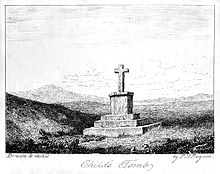
  9. At the tomb of Childe the Hunter, a medieval nobleman who froze to death on Dartmoor, bands of ghostly monks may sometimes be seen searching for his corpse.
  10. Something lives beneath the surface of Bradmere pool, and its influence makes all those who gaze too long upon the pool want to throw themselves into the water.
  11. The River Dart demands the death by drowning of at least one person each year. ('Dart, Dart, wants a heart.')
  12. At dusk, a moaning voice may be heard over Crazywell Pool, announcing the name of the next person who will die in the district.
  13. On a stone bridge over the Blackaton Brook, the sound of ancient phantom battles may sometimes be heard. 
  14. An old bridge over the River Bovey is haunted by an amorphous creature with long waving arms, which chases travellers by night. 
  15. A murder was once committed at Bloody Corner in Drewsteignton; and now, every year on the anniversary of the crime, a stream of blood trickles out from beneath the cottage door and into the road outside.
  16. There is a phantom cottage in Haytor, which can sometimes be seen from a distance but can never actually be located. 
  17. A supernatural white bird appears to each member of the Oxenham family of South Tawton shortly before their death.
  18. A great wealth of gold lies at the bottom of the Roman Mine at Challacombe Down, watched over by an ancient raven which is said to be the same one which accompanied Noah on the Ark. Any who descend the mineshaft to search for the treasure will have their ropes cut by knife-wielding arms reaching out of the walls, which presumably belong to the evil spirits that dwell there. Their broken bodies will be found laid out on the heather the following morning.
  19. When walking on Great Hound Tor, some people experience sudden surges of inexplicable dread. Those that ascend it alone sometimes come back down it in a state of trance, speaking in ancient Hebrew.
  20. Wicked Squire Cabell is buried outside Buckfastleigh church, with a large slab of stone across his grave to ensure that he can't get out of it. His ghostly hounds may be heard by night baying for him along the road outside.
Image result for dartmoor lady howard

Wednesday, 10 August 2016

James Raggi Should Totally Hire Me...

...because I have a brilliant idea for a Lamentations of the Flame Princess adventure.

Lamentations has done a whole series of adventures set in seventeenth-century England: No Salvation for Witches, Death Love Doom, Forgive Us, England Upturn'd, and The Squid, the Cabal, and the Old Man. I've not read them all, but I think I'm right in saying that they are all set in the eastern part of England, which is over-populated and flat and boring. Everyone knows that D&D adventures should be set in hills and forests and mineshafts instead.

SO:


The setting is Devon in the autumn of 1685. The Duke of Monmouth's rebellion against King James II has just ended in bloody ruin at the Battle of Sedgemoor; in reprisal, Judge Jeffreys is riding from town to town with his judicial murder roadshow, the Bloody Assizes, and mass executions of actual and suspected rebels follow in his wake. The Second Tangier Regiment has been unleashed upon the civilian population. The hacked-off limbs of quartered traitors, painted with tar to preserve them, now stand impaled on pikes in the market squares of miserable Devonshire villages. Corpses dangle from the trees and hang in clusters from the gibbets, their chains clinking in the wind.

Into this chaotic situation stumble the PCs, lured by stories of ancient treasure hidden in the Devon hills. From the Doone Gate in Exmoor, where a clan of cannibal bandits guard the entrance to a hidden valley, to the wilds of Dartmoor, where the ghost of Lady Howard rides over the hillsides in her coach of bones, they will hunt among Druidic megaliths and the secret stashes of Sir Francis Drake while trying very hard not to get executed for being in the wrong place at totally the wrong time. But they're not the only ones looking for the treasure, and the infamous commander of the Tangier Regiment, Colonel Kirke, has send a team of his most merciless minions out to follow the trail on his behalf. Will the PCs find gold and power among the hills of Devonshire? Or will they, like the Duke of Monmouth, end their careers under Jack Ketch's axeblade up on Tower Hill?


The Coach of Bones: coming probably-never from Lamentations of the Flame Princess. Pirates, witches, ghosts, cannibals, magic, treasure, standing stones, large-scale violence, lame 'Captain Kirk' jokes... this one's got it all!