Showing posts with label Character classes. Show all posts

Monday, 11 March 2019

New B/X Class: The Gothic Villain

My reading has taken me, once again, back to the Gothic fiction of the late eighteenth and early nineteenth centuries, where the villains have dark eyes, the heroines have white dresses, the castles have secret passages in every room, and the plots make no damn sense whatsoever.

This class is my tribute to the absurdist horror fiction of yesteryear. It should bring a touch of melodramatic lunacy into any campaign.

[Edit: Dandibuja has now drawn an illustration to accompany this class! You can view it here.]
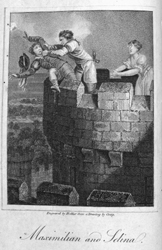
Gothic Villain

Related image

To-Hit and Hit Dice: As Fighter.

Saves: As Thief.

Weapons and Armour: Gothic Villains can use any weapon, but cannot use shields or any kind of heavy armour, as these would get in the way of their dramatic gesticulation.

XP per level: As Magic-User.

Dark Secret: All Gothic Villains harbour Dark Secrets, although at the beginning of their career they only know a fragment of the terrible truth. At level 1, roll 1d10 on each of the following tables to generate a secret, as follows:
  1. I...
  2. My husband / wife...
  3. My mother...
  4. My father...
  5. My brother...
  6. My sister...
  7. My son...
  8. My daughter...
  9. My whole family...
  10. My one true love...
  1. ...murdered...
  2. ...stole the inheritance of...
  3. ...committed adultery and/or incest with...
  4. ...was deliberately driven mad by...
  5. ...usurped the rightful title of...
  6. ...imprisoned and faked the death of...
  7. ...was ruined and degraded by...
  8. ...was tricked into committing treason by...
  9. ...was lured into heresy and blasphemy by...
  10. ...was seduced into a life of shameful vice and crime by...
  1. ...me.
  2. ...my husband / wife.
  3. ...my mother.
  4. ...my father.
  5. ...my brother.
  6. ...my sister.
  7. ...my son.
  8. ...my daughter.
  9. ...my whole family.
  10. ...my one true love.
(If this results in something totally bizarre, like someone usurping their own title, then just roll with it. Maybe everyone involved was drunk and/or mad at the time.)

Every time the Gothic Villain goes up a level, they will discover another fragment of the horrible truth. Roll again on all three tables. If this results in something they should really have known already, like the fact that their own daughter murdered them years ago, then feel free to include however much amnesia and mistaken identity is required to make the whole thing work.

Example: Eduardo rolls 1, 7, 5, so his initial Dark Secret is that he was ruined and degraded by his own brother. When he reaches level 2 he rolls 6, 4, 9, and discovers that his whole family also conspired to drive his sister mad. On reaching level 3 he rolls 4, 1, 9, and learns that whole family - who he's been regularly interacting with since the campaign began - were actually murdered by his father. Maybe all these people are ghosts? Or impostors? Maybe they faked their own deaths? Or maybe he's just going mad? Just another day in the life of a Gothic Villain...
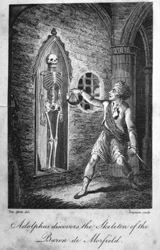
Related image

The Home of My Ancestors: The Gothic Villain starts play as the owner of a decayed castle, abbey, or manor house, located somewhere horribly inconvenient, such as the top of a mountain, the depths of a forest, or the middle of a swamp. Bits of it keep falling down, and its once-fine furnishings are warped and worthless, but its staff of servants (all of whom are too old, inbred, sycophantic, and/or insane to leave) maintain it well enough to prevent it from actually collapsing. Although it is instantly obvious to everyone else that this building is a total liability, the Villain will be insanely proud of it, and must always devote at least 50% of all treasure earned to restoring their family home. No matter how much money is spent on it, however, the house will remain the same rickety deathtrap it has always been.

While on the grounds of their estate, the Villain may mobilise a number of family retainers equal to their Charisma multiplied by their level. These retainers are normal 0-level humans, but they are extremely devoted to the Villain (morale 10) and obey the Villain without question. They cannot be brought more than a day's journey from the estate, as the outside world bewilders and terrifies them.

If the Villain dies without naming an heir, the House will be abandoned by its servants and sink into utter ruin within 1d6 months.

Obey Me, Miscreant!: The Gothic Villain begins play with a single cringing minion, who obeys them out of greed and fear. Each time they go up a level, they gain an additional minion. If a minion dies, then the Villain will automatically obtain a replacement after spending 1d6 days in any inhabited area, as malcontent weirdos with strange deformities are attracted to them like moths to a flame.

Generate each minion by rolling 2d12 on the following tables.
  1. A fighter (half your level, round up) who...
  2. A thief (half your level, round up) who...
  3. A cleric (half your level, round up) who...
  4. A magic-user (half your level, round up) who...
  5. A slow-witted brute (STR 15+1d3, INT 2+1d3, HD equal to half your level, round up) who...
  6. A well-trained ape (HD equal to half your level, round up) who...
  7. A seductive harlot (equal chance male or female, CHA 15+1d3) who...
  8. A disgraced scholar (INT 12+1d6, has mastered a number of fields of knowledge equal to half your level, rounded up) who...
  9. A master infiltrator (capable of disguise, ventriloquism, imitating voices), who...
  10. A Scooby-Doo villain (dab hand at faking apparitions with aid of wires, phosphorous, and magic lanterns), who...
  11. A corrupt detective (capable of spotting clues and following trails, can try to frame people for crimes with a success rate of 10% per level), who...
  12. A band of ruffians (a number of 0-level thugs equal to your level+1) who...
  1. ...has hideous facial deformities.
  2. ...is covered in distinctive scars.
  3. ...is missing a body part (roll 1d4: 1 = eye, 2 = arm, 3 = leg, 4 = ear). 
  4. ...is a dwarf, giant, or hunchback (equal chance of each).
  5. ...is always drunk.
  6. ...is addicted to horrible narcotics.
  7. ...has some kind of weird psycho-sexual obsession with you. 
  8. ...is a kleptomaniac.
  9. ...is a pyromaniac.
  10. ...is a compulsive liar.
  11. ...is a slave to their bizarre sexual fetishes.
  12. ...experiences irrational bursts of rage at inconvenient moments.
Minions will put up with most forms of ill-treatment, but will not obey orders that are obviously suicidal. Their base morale is 8, adjusted for Charisma as usual. 

Related image

Dread Gaze: At level 2, the gaze of the Villain grows so powerful that it can leave people transfixed with fear. If the Villain catches the eye of an intelligent target (including animals), the target must save or be effectively paralysed for as long as the villain carries on staring at them. During this time the Villain cannot take any action other than walking, talking, and staring, and the effect ends at once if either the Villain or the target takes any damage. Once someone has successfully saved against this ability, it cannot be used on them again for the next 24 hours. 

Full of Scorpions is my Mind: By level 4, the Villain has uncovered so many Dark Secrets about themselves and their family that by brooding on them for 1d6 minutes they can throw themselves into a frothing rage, during which they gain a +2 bonus to-hit, damage, and saves vs. mind-affecting powers. This rage lasts for a number of minutes equal to the Villain's level. During this time the Villain will rant, rage, and literally chew the scenery, making any kind of stealth impossible until they have calmed down. 

Everything I Own Is Poisoned: At level 6, once per day, the Villain may retroactively declare that any object within their power or possession that someone has just interacted with - the dagger they just stabbed someone with, the glove they were wearing while shaking hands with someone, the doorknob someone just turned, whatever - was actually covered in poison. The person who touched it must save or take 1d6 damage per level of the Villain. If the poison was on something they ate or drank, then the damage rises to 1d10 per level. 

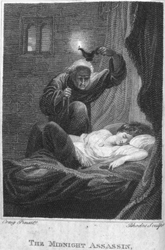
Illustration from the Midnight Assassin

Into the Oubliette! At level 8, once per month, the Villain may send a lettre de cachet to mysterious allies of his family. The next time the person named in the letter leaves their home, a band of mysterious masked men will attempt to abduct them. They must make a saving throw: if they pass, the attempt fails, and the lettre is wasted. If they fail, however, they will be dragged off with a bag over their head and thrown in a secret dungeon somewhere, where they will be kept for 1d6 days per level of the Villain before being pulled out and released without explanation at a random location 1d100 miles from their home. (Roll 1d8 for direction: 1 = 1d100 miles north, 2 = 1d100 miles north-east, and so on.) The location of their prison is so secret that even the Villain will not be able to locate them during their imprisonment. 

Ruin Has Come: At level 10, the Villain may enter some kind of institution (a castle, a temple, a university, etc) accompanied by his full retinue of minions, and simply... self-destruct. Unless the leader of the institution is higher level than the Villain, then over the next 1d6 days the institution disintegrates into crime, madness, factional warfare, corruption, and vice, before collapsing into spectacular ruin in a final institutional flame-out that consumes the lives of the Villain, his minions, and (1d6 x 10)% of the institution's members, including its entire senior leadership. All sane and decent people will abandon the institution immediately thereafter. 1d6 weeks later, one scion of this fallen institution will return home, seize control of whatever remains of it, and begin their career as a new level 1 Gothic Villain. 

Image result for mysteries of udolpho

Thursday, 17 May 2018

B/X class: the Rake

Not the one from Creepypasta. That would make for an extremely odd D&D game. ('Leave the ogre to me, guys! I'll sneak into his house and spend three months whispering subliminal messages to him in his sleep!')

I've always thought it was a pity that D&D lacked a proper 'socialite' class. (Bards don't count. Everyone hates bards. Even you.) Having spent the last week marking essays on Restoration-era literature, it occurred to me that the classic 'stage rake' of the period might actually be a pretty good fit: after all, these are people with no meaningful attachments who go wandering around the world, getting into stupid adventures, and then talking (and, if necessary, fighting) their way out of them. They imply a seventeeth- or eighteenth-century-style setting rather than a strictly medieval one, but it's not as though D&D isn't super-anachronistic already.

The trick of modelling all this is to find a way of doing it that doesn't involve any kind of social skill system or 'social combat', as either of those would be powerfully antithetical to the OSR principle of primarily representing talking to people by talking to people rather than rolling dice. So here's my attempt, which is built on the assumption that what makes a good social specialist isn't bonuses to numbers, but talents that let you get into situations where you can use those social solutions in the first place...

Image result for fop gun kate beaton
From the inimitable Kate Beaton.

The Rake

To-Hit, Hit Dice, Saves, Experience Per Level, Weapons and Armour: All as per Thief.

Silver Tongue: You get +1 to reaction rolls from anyone who you can talk to in a language that they can understand. 

Ways of the World: Starting at level 1, pick one talent from the following list. Pick an additional talent each time you advance a level. The talents you can choose from are as follows:

Actor: You have a talent for performance and impersonation. If you can present yourself in some kind of plausible disguise within a situation where it makes sense - dressed as a priest within a temple, dressed as a servant in a large house, etc - then people will always assume that you are who you appear to be unless and until you give them a strong reason not to. If you take an injury which reduces you to less than half your maximum hit points, you can attempt to 'play dead' by rolling 1d20: if the result is equal to or less than your Charisma + your level, then you will appear to be dead until you move or are closely inspected, which can be handy for setting up getaways or sneak attacks.

Connected: You know a guy who knows a guy. If you want something (items, information, invites to parties, etc) which could possibly be obtained in your location for the right price, then you know someone who can obtain it for you. (Of course, there's no guarantee that you'll be able to afford it!) Even if you find yourself in a completely alien environment, you will somehow manage to establish a network of guys who know other guys within 1d6 days of your arrival.

Disguise Artist: With the aid of a box of makeup and a bag of props, you can quickly and effectively disguise yourself as belonging to a gender, ethnicity, or medium-sized humanoid species other than your own. Your disguise won't pass close inspection, but it will pass muster in any casual encounter unless the people you meet already have reason to be very suspicious of you. Can be used in conjuction with 'Actor' to get into places you really shouldn't be.

Drunkard: You have a phenomenal ability to consume alcohol, and do so constantly. You suffer no ill-effects for being drunk, and once per day you can heal yourself (1d6+1/level) HP by taking a drink 'for medicinal purposes'. You are also a wonderful drinking companion, and anyone who you spend a few hours drinking with will regard you as a friend unless and until you give them a strong reason not to.

Duellist: All those fencing lessons paid off after all! Whenever you're in a one-on-one battle with a single opponent, you get +1 to hit and damage: this bonus ends as soon as either of you attacks or is attacked by anyone else. Anyone who sees you fight a formal duel (whether to first blood or to the death) will regard you as a person of courage and honour unless and until you give them a strong reason not to.

Expensive Education: You know one first-level magic-user spell, which you can cast once per day. You also have a head full of famous quotations and random bits of vocabulary in old languages. By dropping a few learned remarks, you can give the impression of being an expert on any given subject, which will last until you do something to make it obvious that you are not. (A real expert, however, will see through your charade as soon as they put it to the test.)

Fast Talk: Through dazzling use of wit and word-play, you can persuade people of all kinds of crazy shit... briefly. Listeners get a saving throw: if they fail, they will believe your lies and excuses unless it is obviously impossible for them to be true. 1d6 minutes later they will realise that it's all nonsense, at which point they'll be very angry with you, and will be immune to subsequent uses of your fast-talk ability. Make every second count!

Image result for the man of mode


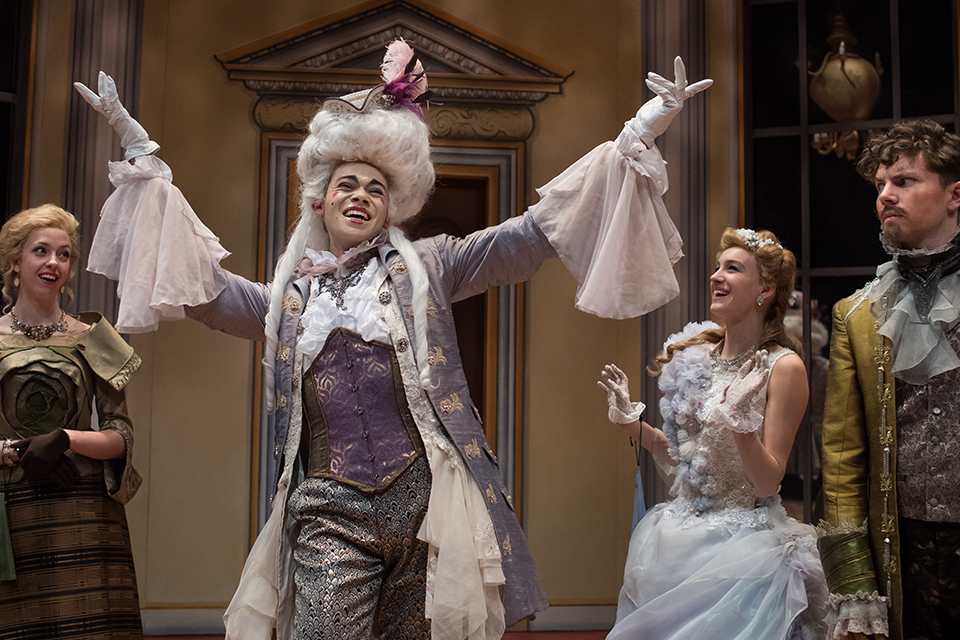
Fop: You have such beautiful clothes... and you wear them so very, very well. If you are wearing something awe-inspiringly fashionable and impractical (which precludes the wearing of armour), you will always automatically be the centre of attention wherever you go, and cannot be upstaged by anything short of actual disaster or attack. 

Hauteur: You behave with such natural authority that everyone will always assume you're in charge unless it's really obvious that you're not. In any kind of emergency situation, people will naturally look to you to tell them what to do, and will usually go along with your plans unless they're obviously terrible. Your hirelings and followers gain +1 morale.

Libertine: You pride yourself on your mastery of sex and seduction. If an NPC might plausibly be interested in a casual sexual encounter with someone like you, then you can seduce them in 1d6 hours. (They get a saving throw if they want to but know they really shouldn't.) If you then spend another 1d6 hours showing them a good time, they will be very positively disposed towards you for as long as you continue to shower them with attention, affection, and sex, and will grant any reasonable requests or favours you might ask of them. Their attitude towards you will reverse as soon as they become aware that you have taken another lover (unless they're into that sort of thing, of course), or as soon as you begin to neglect them. 

Mohock: Your misspent youth was spent as an aristocratic street thug and hellraiser, terrorising the city streets by night. You gain +1 to-hit and damage with clubs and knives, and take no penalties for fighting in poor light, although full darkness blinds you just like anyone else. Once in your life you may call in a single favour from the Emperor of the Mohocks, a shadowy and near-mythical figure who is said to wield great influence in aristocratic and criminal circles. 

Raconteur: You are a master story-teller, capable of holding an audience spellbound (and thus distracted) for up to 1d6 hours. Any vaguely plausible stories you tell about your own exploits will always be believed unless and until evidence is presented to the contrary. 

Rover: You've been everywhere, and you are very, very good at fitting in. Even if you have no language in common, you can always establish basic communication with any intelligent creatures through a combination of gesture and pidgin speech. If a group or a population is negatively disposed towards you because of your ethnicity, religion, species, etc, then after 1d6 hours of non-violent interaction with them you'll have picked up so many of their mannerisms that they'll regard you like one of their own. (They still might not like you, of course, but it'll be because of what you've done rather than because of who you are!) 


Image result for the man of mode

Tuesday, 20 June 2017

Foes of the Wicked City 7: The Bog Folk

If most people think of the endless bogs of the north-west at all, it is in relation to the most famous things to be found in them, the bronze gods of the frog men: immense clockwork Wisdom Engines built by a now-vanished civilisation, which are revered as divinities by the amphibious humanoids who now live in the region. But something else inhabits the vast wetlands: and the few travellers who visit the region sometimes speak of weird encounters with bizarre, squelching creatures that seem to be composed entirely of freezing mud. They call them the Bog Folk, or the Mud Men.

Image result for mud man

The Bog Folk were born from the ruins of the same ancient culture which built the Wisdom Engines. Among the wonders that they created was an enchanted fountain, whose waters were capable of healing injuries and curing disease; and while long ages have passed since the fountain fell into ruin, its magical waters still trickle through the rubble which once formed its basin, soaking into the surrounding mud and peat. Its power has dwindled over the centuries, and the waters now possess only minor healing properties; but the slow infusion of their life-giving energies into the earth has gradually charged the surrounding bogland with a kind of dim, instinctive life. Today, the marshes around the ruin in which the fountain once stood are filled with a weird vitality; they move, they quake, they sprout waving limbs, they form crude half-faces which attempt to speak in gurgling voices. And it is from this weird half-alive morass that the Bog Folk are born.

They are a magical accident, arising from the vain attempts of the fountain's magic to 'heal' the surrounding peat bog back into a human form that it never possessed in the first place. They look like roughly humanoid figures made of icy peat; the kind of thing a child might sculpt, with crude pits for their mouths and eyes. They don't so much walk as shamble, and their voices are horrible gurgles which sound as though they're drowning in mud. The frog men fear and avoid them, as do the very occasional human visitors to their lands; but despite their disturbing appearance, the Bog Folk are not a violent race. If anything, they tend towards a phlegmatic stoicism, as though rather bemused by the fact of their own existence. They feel no pain, or cold, or lust, or hunger, so they have nothing much to drive them into action. Most of them just doze their lives away, vaguely contemplating the passage of the seasons across the marsh, mostly mistaken for simple lumps of peat by passers-by.

Related image

Thus they would have remained, little more than a local curiosity, until an expedition arrived in their territory from a far-off land. Its original aim had been to locate the Wisdom Engines, but an encounter with the murder machines built by the Mad King's worshippers forced them into a change of plans; and now all that the demoralised and desperate survivors were looking for was to escape the bogs with something to show for all their suffering. Mud men seemed as good a prize as any; so they scooped a group of them up into the sealed crates in which they had once hoped to bring back components of a Wisdom Engine, before fleeing the marshes with dozens more of the creatures on their heels.

The stolen Bog Folk were traded from hand to hand; first as oddities and then, after the healing properties of their mud were discovered, as a source of medicines and cosmetics. It was for this purpose that they were ultimately sold to a group of alchemists in the Wicked City, who keep them locked in a sealed lab, and regularly harvest their mud for use as a rejuvenating skin cream popular among the city's elite. By then they had gone through so many owners that no-one was really sure where they had originally come from; and while the competitors of the alchemists who owned them would very much have liked to undermine their monopoly, they had no idea where to start looking for mud men of their own.

But the Bog Folk were more persistent. Hiding their faces of frozen peat in filthy rags stolen from the settlements on the edge of the swamp, they stumbled from village to village, town to town, asking after their lost brethren in their horrible, gurgling voices. It took years for them to pick up the trail, but they had no shortage of time. They learned. They travelled. Gradually, they became more skilled in imitating the humans among whom they moved. From the swamps to the taiga they went, and from the taiga to the steppe, and from the steppe to the desert - until finally, after many years and many, many miles, they came to the gates of the Wicked City.

They will find their stolen kin. And they will bring them home.

Image result for swamp thing

There is a Master of Mud: You can play one of the Bog Folk, if you want to, although you'll want to keep your true nature hidden under concealing clothing most of the time, lest you be carried off by profit-crazed alchemists and used to manufacture soothing, rejuvenating face creams for the very rich. Game information is as follows:
  • You are proficient with simple weapons, and with all forms of armour (although you will need to be careful about drying out - see below). You are not proficient with shields. 
  • You gain a bonus to all your to-hit rolls equal to half your level, rounded down.
  • You gain 1d10 HP per level.
  • You don't feel cold, hunger, pain, or exhaustion; you are immune to disease and poison, and you never need to breathe or sleep. Any cold damage you take is halved, rounding any fractions down.
  • You are vulnerable to drying out if you get too hot. Hot, wet conditions (e.g. a tropical monsoon) don't bother you, but hot, dry conditions will require you to constantly replace your lost moisture, at the rate of about a pint per hour. (Extremely hot and dry conditions, such as a shadeless desert under the summer sun, may require two or three times this much.) For every four pints of moisture lost and not replaced you take 1 HP of damage, which cannot be healed by any means until you get good and soggy again. You take double damage from heat and fire.
  • Being saturated with magical healing waters, your mud has soothing, healing properties. Anyone who rubs it onto their injuries will heal an extra 1 HP per day, in addition to any bonuses they may already be receiving from medical care. 
  • Your body is made of flowing, metamorphic mud and sodden peat. You are immune to damage from piercing weapons such as knives, spears, and normal-sized bullets (although a cannon or a blunderbuss will still splatter you). 
  • You can stretch out your arms and legs to double their normal length at the cost of halving their effective strength: so if you normally have strength 10 and a 2' reach, then you could stretch out your arm to reach something 4' away, but would only be able to grasp it with a strength of 5. By stretching out your legs to double their normal length you can massively increase your stride length, allowing you to keep pace with a jogging human - which is convenient, because you can't really run. Lost body parts can be regenerated given enough time and mud, but the magic animating you dissipates if you take enough damage to kill you. 
  • You can squeeze yourself through very small entrances, although doing so may involve leaving some or all of your equipment behind. By narrowing your head and body you can squish yourself through a gap just 3" across, although it will take some time to squeeze your whole body through. This ability means that you cannot be effectively restrained with normal ropes, chains, snares, straitjackets, etc.
Bog Folk Summary Table

Level
Hit Points
To Hit Bonus
Fortitude save (FORT)
Reflex save (REF)
Willpower save (WILL)
1
1d10
+0
14
14
14
2
2d10
+1
13
13
13
3
3d10
+1
12
12
12
4
4d10
+2
11
11
11
5
5d10
+2
10
10
10
6
6d10
+3
9
9
9
7
7d10
+3
8
8
8
8
8d10
+4
7
7
7
9
9d10
+4
6
6
6
10
10d10
+5
5
5
5

Starting equipment: Thick, concealing robes (+1 AC), club (1d6 damage), stolen pistol (1d8 damage, 3 rounds to reload), extremely tolerant riding camel, 1d6x10 sp.

Related image

Sunday, 12 February 2017

New B/X class: the faerie

One thing I rather liked about Mazes and Minotaurs was the idea of having 'nymph' as one of the core character classes. If you're aiming to evoke Greek mythology, then this makes pretty good sense: nymphs turn up everywhere in those stories, to the point where there might be almost as many nymphs in Greek myths as there are actual human women. (Take a look at the sheer length of the list here, for example.) At the same time, though, as a character concept it comes with a lot of limitations: you have to be female, you have to be beautiful, you're probably going to spend a lot of time swimming around naked, and so on. It made me wonder: what might a less restrictive version of the 'sexy nature spirit' concept look like as a character class? And then I got thinking about how the D&D elf really has very little in common with the elfin knights and fae ladies of medieval literature and folklore, and I came up with this...

Image result for la belle dame sans merci

The Faerie

To-hit and hit dice: As per cleric.

Saves: As per elf.

Weapons and armour: Faeries can use any weapons, but are too frail to fight effectively in metal armour.

XP per level: As per elf.

Fae Traits: All faeries bear some physical marks of their inhuman heritage, marks which become more pronouced as they increase in power. Roll 1d20 on the following table at level one, and again at each subsequent level. If you roll the same trait more than once, it becomes much more pronounced (e.g. green-tinted skin becomes leaf green, hip-length hair becomes ankle length, and so on). High level faeries tend to look both freaky and fabulous. 

  1. Inhuman hair colour (e.g. blue, green, violet).
  2. Inhuman skin tone (e.g. tinted green, blue, or purple). 
  3. Flowers grow naturally in your hair in all seasons.
  4. Songbirds and butterflies follow you around whenever possible.
  5. You eyes resemble those of a cat, brilliant green with a vertical slit pupil. 
  6. Your body has a pleasant but distinctive floral aroma, noticeable whenever you walk into a room.
  7. You are extremely androgynous, and could easily pass as male or female unless completely naked.
  8. You have extremely long hair (hip-length or longer) - if cut it grows back at 1d6 inches per day.
  9. Your smile literally lights up the room. (Illumination equivalent to a candle, although it's uncomfortable to maintain it for too long.)
  10. You are very, very tall. 
  11. You are very, very thin.
  12. You appear slightly translucent when seen in moonlight or starlight.
  13. You have extremely long fingernails, which oddly do not interfere with your manual dexterity.
  14. Instead of tears, you weep tiny, transparent crystals, which shatter when they hit the floor.
  15. Your shadow takes the shape of different wild animals, depending on your current mood.
  16. When happy, you start to levitate several inches off the ground.
  17. Your limbs are extraordinarily flexible, as though they had several additional joints.
  18. Your ears are long and sharply pointed.
  19. Your teeth are long and sharply pointed.
  20. Whenever your blood falls upon the earth, stands of beautiful, vivid-red flowers spring up 1d6 minutes later.
Image result for jareth the goblin king

Night Vision: Even the faintest moonlight or starlight allow you to see as well as full sunlight, although complete darkness will still blind you.

Soulless: You cast no reflection in mirrors, and suffer a -1 penalty to all rolls while standing on ground consecrated to a Lawful deity. Beneficial cleric spells (including Cure spells) have only half their normal effect when cast upon you.

Glamour: Glamour is the illusion-magic of the fae. You have a number of Glamour points equal to your level: a Charisma of 13 or higher grants +1, and a Charisma of 16 or higher grants +2. You may spend one point of glamour to entrance someone with your otherworldly charisma, as per a Charm Person spell. Your glamour pool refreshes each day at sunset.
  • At level 2, you may spend 1 Glamour to cast Sleep.
  • At level 3, you may spend 1 Glamour to cast Phantasmal Force.
  • At level 4, you may spend 1 Glamour to cast Obscuring Mists.
  • At level 5, you may spend 2 Glamour to cast Hold Person.
  • At level 6, you may spend 2 Glamour to cast Invisibility.
  • At level 7, you may spend 2 Glamour to cast Mirror Image or Suggestion.
  • At level 8, you may spend 2 Glamour to cast Confusion.
  • At level 9, you may spend 3 Glamour to cast Hallucinatory Terrain.
  • At level 10, you may spend 3 Glamour to cast Invisibility 10' Radius.
  • At level 11, you may spend 3 Glamour to cast Massmorph.
  • At level 12, you may spend 4 Glamour to cast Geas.
  • At level 13, you may spend 4 Glamour to cast Mass Invisibility.
  • At level 14, you may spend 4 Glamour to cast Polymorph Self or Polymorph Other.
  • At level 15, you may spend 5 Glamour to cast Mass Charm or Power Word Blind.


Image result for tilda swinton only lovers


The Old Speech: You gain the ability to speak to birds at level 2; at level 4 this extends to other animals, at level 6 to insects, and at level 8 to plants. Any creature you can talk to (including giant and magical versions) with hit dice equal to or less than your own also counts as a 'person' for the purposes of your Charm Person and Hold Person abilities. Suitably large charmed animals will usually consent to be used as mounts.

Weave Gossamer: At level 3, you gain the ability to weave flowers, leaves, and spiderwebs into fantastical garments that never tear, never get creased or muddy, and look amazing. Any time you wear gossamer garments instead of armour, you get +1 to reaction rolls from all intelligent creatures. If anyone other than you attempts to wear your gossamer clothes, they will instantly realise that they aren't nearly pretty enough to pull off your look successfully, and must save or be thrown into a deep depression for 1d6 hours. Making a set of gossamer clothes takes 12 hours.

Changeling: At level 5, you gain the ability to change your appearance to match someone else's. Spending 1 Glamour allows you to maintain this disguise for a number of hours equal to your level. Spending 1 additional Glamour also allows you to mimic their voice for the duration.

Makeshift Men: At level 7, you can spend one hour and 1 Glamour sculpting a heap of leaves, sticks, and mud into a roughly-humanoid shape, which then comes to life as an ugly, goblin-like being. Makeshift men have the same statistics as goblins, and maintaining their animation costs 1 Glamour per day. They're not very bright, but will obey you to the best of their ability, because they know that their continued existence depends upon your will. If killed or de-animated, they collapse back into twigs and dirt.

Related image

Sunday, 18 December 2016

New B/X Class: The Tinker (AKA 'MacGyver in D&D')

So, um, this is going to be one of my sillier classes. Derek Holland asked me to write a B/X MacGyver class. I've never seen any MacGyver, but I knew the general idea, and Derek gave me a brief: an engineer class which tinkered its way out of situations using devices cobbled together on the spot, rather than relying on a portfolio of prior inventions. So here it is.

Note that, by its very nature, this class requires the GM to be very lenient when it comes to accepting what can be built out of what. The question of exactly how the PC turns a heap of bones and leaves into a fully functional hot air balloon simply by hammering at them for a few minutes is really best not looked into too closely...

Also note that, with the exception of their stronghold (see below), all the devices built by the Tinker have a strictly limited lifespan. When it comes to building things that actually last for more than a few hours, their ability is no greater than that of any other talented engineer of the appropriate tech level.

Image result for what would macgyver do

The Tinker

To-hit, saves, hit dice: As per thief.

Weapons and armour: As per thief, but you are also proficient with any improvised weapons or armour you create yourself (see below).

XP per level: As magic-user.

Mechanical Aptitude: You have the same ability to pick locks and find or remove traps as a thief of equal level.

Inspiration Pool: You have a number of inspiration points equal to your Intelligence score plus five times your level. (So a level 3 tinker with Intelligence 12 would have 27 inspiration points.) Your inspiration pool refills every time you get a good night's sleep.

Scavenger: You can't build your devices without a suitable heap of bits and pieces - fragments of metal, scraps of cloth, bits of wood and bone, whatever - to build them out of. Luckily, you have an uncanny knack for finding random bits of junk wherever you go. By searching for 10 minutes and spending 1 point of inspiration, you can always find enough stuff to build the thing you want, unless it would be obviously and entirely impossible for you to do so.

Image result for what would macgyver do

Improvise Weapons: By spending 1 point of inspiration, you can turn any random bit of junk into an effective improvised weapon by working on it for one minute. In your hands, the resulting weapon will deal 1d8 damage if it's a ranged or one-handed melee weapon, or 1d10 damage if it's a two-handed melee weapon. It will fall apart after being used in one fight.

Improvise Armour: You can cobble together any old random junk into weirdly effective improvised armour. 1 inspiration and 1 minute's work grants a +1 AC bonus to you or one other person; this may be increased to any extent, but the cost in time and inspiration doubles for each extra point of AC. (So granting someone +3 AC would cost 4 inspiration and take 4 minutes.) The resulting armour will fall apart after a number of hours equal to your level.

Improvise Tools: You may spend 1 inspiration and 5 minutes to cobble together nearby junk into a crude but effective version of any normal tool: a lockpick, a snorkel, a water clock, and so on. (At the GM's option, this may also allow you to cobble together things like magnets and small electrical generators.) If your toolkit is taken away from you, you can use this ability to tinker up replacement tools out of sticks and stones. The resulting tools will function for 10 minutes of use per level before falling apart.

Improvise Chemicals: You may spend 10 minutes to convert some totally innocuous-looking nearby substances into either slippery stuff, a phosphorescent fluid, a powerful explosive, a powerful corrosive, or a poisonous gas. You also create a fragile container to store it, which will break if thrown, trodden on, etc. Effects are as follows:

  • Phosphorescence: When container is broken, whoever or whatever is splashed with it will glow brightly until it is washed off. Costs 2 inspiration to make.
  • Slippery Stuff: When broken on the floor, creates a 10' puddle so slippery that anyone who walks on it must save or fall over. If broken over a person instead, they become effectively impossible to grapple. Lasts for 1 minute for every 2 inspiration spent making it. 
  • Corrosive: When container is broken, whoever or whatever is splashed with it takes 1d6 damage for every 2 inspiration spent making it. (Save for half damage.) Maximum damage is 1d6 per level. Can also be used to melt holes through metal barriers and destroy small metal objects
  • Poison gas: When container is broken, everyone within 10' must save or suffer either incapacitating sickness or confusion (your choice) for 1 round per 3 inspiration spent making it.
  • Explosive: When container is broken, explodes in a 10' blast radius, inflicting 1d6 damage for every 5 inspiration spent making it. (Save for half damage.) Maximum damage is 1d6 per level.
The chemicals you create will decay and become inert after 1 hour per level.


Image result for what would macgyver do

Build Artillery: You may spend 5 inspiration and 10 minutes to turn a random heap of junk into a crude but effective man-portable catapault, ballista, cannon, mortar, or similar device. Its target must save or take 2d6 damage: you may increase its damage by spending 5 inspiration for each additional 1d6, so a cannon which inflicts 4d6 damage costs 15 inspiration, and so on. You can also upgrade it to an area effect by spending additional inspiration equal to the desired blast radius in feet. The resulting weapon can be fired once per level before it breaks; it will also fall apart after a maximum of 1 hour per level if it has not already done so. If your artillery is used by anyone other than you, each shot taken counts as two shots towards its maximum limit.

By spending an extra 5 inspiration, you may give your artillery an automated firing mechanism, which will trigger either after a certain length of time (e.g. 'ten minutes after I set the timer') or when a connected tripwire or pressure plate is triggered. Once the automated artillery is triggered, it will fire once per round at whatever it's currently pointing at until it falls apart.

Note that artillery may also be used for non-combat purposes, such as launching grappling hooks across chasms, throwing halflings over walls, breaking down doors, and so on. Just ask your GM how many 'damage dice' worth of artillery power the effect you want would require!

Build Decoy: You may build wheeled decoys (normally human-sized, although you can choose to make them smaller), which you can use as trap-springers, distractions, or even improvised cover. An unpowered decoy which has to be physically pushed from place to place costs 2 inspiration; a wind-up decoy (can run for up to 1 minute per level) costs 4 inspiration, and a motorised decoy (can run for 10 minutes per level) costs 8 inspiration. The decoy has AC 5 and 2 HP per level. Note that you may use decoys as delivery systems for chemicals or automated artillery (see above). If not otherwise destroyed, decoys fall apart after 1 hour per level.


Image result for macgyver hot air balloon

Build Transportation: You may turn a random heap of junk into a crude but effective vehicle. Different vehicles cost different amounts of inspiration, as follows:
  • 1 inspiration: Sled, snowboard, skateboard, surfboard.
  • 2 inspiration: Rowboat, cart, bicycle, hang-glider.
  • 4 inspiration: Chariot, carriage, sailboat.
  • 8 inspiration: Hot air balloon, diving bell. 
  • 16 inspiration: Pedal-powered gyrocopter or submarine.
  • 24 inspiration: Motorised cart, speedboat, or snowmobile. (Don't ask what's powering them. Probably a spring or something.)
  • 32 inspiration: Motorised crane, bulldozer, steamroller, jet ski, or biplane.
  • 48 inspiration: Motorised hovercraft, helicopter or submarine. 
  • 64 inspiration: Mole machine (can dig through earth, sand, or rubble, although not through solid stone), jetpack. 
  • 80 inspiration: Space capsule (complete with steering thrusters and heat shielding capable of surviving re-entry.) 
The vehicles you build will function for 1 hour per level before they fall apart, although you may double their effective lifespan by increasing their inspiration cost by 50%. By default, they are one-person vehicles, but you may add space for additional passengers by increasing the vehicle's inspiration cost by 2 per extra person. (So a five-person speedboat would cost 32 inspiration.) Building time is 5 minutes per point of inspiration cost. 

Emergency Construction: If you're in a real hurry, you can scavenge for parts or build devices at double normal speed by increasing their inspiration cost by 50%. Round up any fractions.

Scrapheap Stronghold: Upon reaching 10th level, you may build a stronghold. Doing this requires 1d6 months work, at the end of which you will, by mysterious means, have built yourself a castle-sized stronghold guarded by a number of 0-level men-at-arms equal to your total inspiration pool. Upon close inspection, both the castle and the guards will turn out to be built out of sticks, duct tape, bits of corrugated iron, and similar unlikely objects, but they function just like a normal fort guarded by normal men. If your men-at-arms are killed, they can be replaced at a rate of 1 per day of work spent rebuilding them. If a year ever goes by in which you do not devote at least one full week to maintaining and repairing your stronghold, both fort and men collapse into heaps of scrap. 

Image result for macgyver hot air balloon

Friday, 25 November 2016

200th post spectacular: the big book of B/X classes!

B/X D&D is a beautifully simple, elegantly minimalist masterpiece of RPG design. So what better way to show your appreciation of its grace and clarity than by throwing twenty-two new and totally unplaytested classes into the mix?

A while back, Chris Tamm (of Elfmaids and Octopi) said he'd like to see a book of my classes: so here, in celebration of ATWC's 200th post, I present a free downloadable pdf document containing ALL TWELVE of the B/X classes I've written for the blog over the last year-and-a-half, along with TEN of the classes I've written for ATWC itself, translated out of the weird B/X variant I actually use in my games and back into standard B/X D&D terminology. None of them have been playtested, but I've tried to keep them balanced with the default core classes. if anyone out there does use them in a game, I'd love to hear how it goes!

Aside from The Extras, who really do need a bit of explanation to make any sense at all, I've only included the actual rules information for these classes. If anyone downloads this and then finds themselves wondering what, say, the Sirtya actually are (and why they ride around on clouds by singing to them), then feel free to look up the original posts in the blog archive, all of which present these classes with at least a little bit more context...

I'll get around to that Rise of the Runelords thing later.

So, with no further ado, I present:

Image result for group of monsters


Containing: 

  • Angels!
  • Blue Folk!
  • Brass Men!
  • Children of the Pines!
  • Clocktopi!
  • Deep Ones!
  • Disciples of the Word!
  • Extras!
  • Ghouls!
  • Goblins!
  • Half-Trolls!
  • Inquisitors!
  • Mesmerists!
  • Noncombatants!
  • Orcs!
  • Patchwork Girls!
  • Renunciates!
  • Sandshapers!
  • Sirtya!
  • Snake people!
  • Skaven!
  • The Unkindness!

This book truly has something for everyone! Download it! Ruin your B/X campaign today!

Monday, 26 September 2016

B/X Class: The Extras

I was reading through issue three of Brave the Labyrinth (get it! It's free!) when I came across the Grimp character class. The idea behind the class is that, rather than playing one character, you play a whole group of tiny imps (grimp, geddit?), all standing on one another's shoulders, using limited telepathy and acrobatic skills to coordinate their actions as though they were one creature. The number of imps in your 'body' is equal to your hit points: so if you have ten HP, you're a pile of ten little imps, and so on.

Now, I really liked this idea, but it made me think: could the idea of one player playing a group of characters, all of whom collectively act as one character, be taken further? And then my eye fell upon my Pirates of the Carribean DVDs, and I came up with this:

B/X Class: The Extras

You aren't one person at all: instead, you are playing an indeterminate mob of nameless minor characters who follow the other PCs around. You might be a pirate crew, a band of Merry Men, a bunch of faceless stormtroopers, or anything else, but two facts remain constant: there are a lot of you (although exactly how many seems to vary from scene to scene) and, despite your numbers, collectively you only manage to achieve about as much as each of the main characters does individually. At best. 

Image result for pirates of the caribbean crew
You're not playing Barbosa. You're playing the other guys.

The essence of playing as The Extras is that you aren't playing as a specific group with clearly-defined numbers and capabilities (e.g. 'the six archers Alice hired in the city'): use the regular henchmen and followers rules for those. Instead, you're playing as that bunch of guys who are milling around in the background in every scene. Every time you get in a dangerous situation, one or more of you probably dies just in order to show that things are serious; but, mysteriously, these deaths never seem to affect your overall numbers. If, for any reason, it ever becomes necessary to determine exactly how many of you there at a given moment, then roll 1d12+6; but the number rolled has no effect on how many of you there are in the next scene, or indeed in the next combat round. 

Game rules for playing The Extras are as follows:

Hit Dice: 1d12. The Extras aren't individually very tough, but there are a lot of them. 

To-hit, Hit Dice, Weapons and Armour, Saves: As per Fighter.

Experience Per Level: As per Magic-User.

Safety In Numbers: Apart from named characters (see below), The Extras always go around in a single big mob. If you use a battle grid or similar, assume that this mob of extras takes up an area 20' square whenever possible. (In a 5' wide tunnel, they'd form a single line 5' wide and 80' long.) They always move as a single mass, and can attack or be attacked by anything within 5' of the mob.

Inverse Ninja Rule: Even though there are so many of them, The Extras only get a single action per round: so a whole mob of Extras attacking a monster is resolved with a single attack roll, and so on. (The exception is Named Characters - see below.)

Many Hands Make Light Work: Whenever they're performing some kind of unskilled labour - e.g. standing watches, digging ditches, carrying treasure, rowing oars, etc - The Extras can accomplish the work of ten men. Even though there are more of them than that. Probably. Most of the time. 

Image result for merry men 1938
'Who are you people? Why do you keep following me around?'

Share the Pain: The Extras have a single HP total. Any healing or damage done to any of them affects them all. Weirdly, area-of-effect damage only damages them once rather than many times, almost as if they really were just a single creature...

Arm the Troops: For The Extras to gain mechanical benefits from new equipment, they must obtain at least ten copies of the equipment in question: so once they have ten swords they can make sword attacks, and so on. If they have less than ten, then some of them can be described as carrying the equipment in question, but they gain no mechanical benefit from it. (Oddly enough, this does not extend to consumables like rations and ammunition, which The Extras consume as though there was only one of them present.)

Image result for ben hur extras
Too bad these Extras only have five sets of legionnaire gear! No bonuses for them!

Magic For the Masses: The Extras can collectively have any number of magic items 'equipped' at once, but they can only gain the mechanical benefit from each item once per scene. (The guy with the magic sword steps up to take a swing, or the guy with a magic shield steps up to block a blow, and then they just fade back into the mob.) If the item in question is assigned to a Named Character (see below), then its benefits also apply to any independent actions they may take.

Named Characters: At level 1, give one of the Extras a name and a personality, just as you would for a normal PC. This character (whom the other Extras will usually call 'Sarge') acts as the 'face' of the mob, and is the character who you will play during social interactions and similar roleplay-focussed scenes. (Naturally, the rest of the Extras never get any lines.) 

Once per scene, you may have this character take an action independently of The Extras: so The Extras could attack an orc while Sarge ran off to warn the other PCs, or whatever. This is the only exception to the rule that The Extras must always act as a single unit, and it effectively gives you two actions for that round only. Next round, Sarge is assumed to have been absorbed back into the general group, and will spend the rest of the scene acting as part of the mob.

Each time you level up, you may create one more Named Character, by giving one of The Extras a name and a single distinguishing characteristic. (E.g. 'Private Wilkins, always drunk'.) Just like Sarge, each of these named characters may also take one independent action per scene, but only one named character may take such an action per round. 
  • Example: Kat's Cutthroats (level 3) have three named members: Kat herself (their Sarge), No-Ears Jake (their musician), and Silver Fork Sarah (who claims, and may actually believe, that she is secretly a princess). When they get into a fight with some goblins, the Cutthroats may act twice on up to three rounds of the ensuing combat: the Cutthroats take one collective action per round, in one round Kat can take an action, in one round Jake can take one, and in round Sarah can take one. Once all three Named Characters have taken one action each, the Cutthroats revert to their normal single collective action per round. 
Image result for dead stormtroopers

Die All, Die Merrily: If The Extras are ever reduced to 0 HP, describe them all dying in some suitably tragi-comic fashion. The only survivors of this massacre will be the Named Characters. The person playing The Extras can immediately continue play as Sarge, who can be assumed to be a Fighter of one level lower than The Extras; the other Named Characters will be fighters of half the level of The Extras, rounded down, who will instantly become Sarge's henchmen (or someone else's, if this would take Sarge above their limit.) Each of these characters emerges from the general massacre with only (1d6x10)% of their maximum HP.
  • Example: Kat's Cutthroats (in the example above) are reduced to 0 HP by the goblins. The only survivors are Kat (who becomes a level 2 fighter, and a new PC), and Jake and Sarah (who become level 1 fighters, and Kat's henchmen). 
If all the named characters survive the adventure and make it back to town, they may recruit a new band of faceless followers and regain their status as The Extras. If this happens, then the Named Characters merge happily back into the new mob. If, on the other hand, Sarge or any of the other Named Character goes on to die before a new band of Extras can be recruited, then the remaining ones decide sorrowfully that It Would Never Be The Same Without Them and remain as ordinary PCs and henchmen forever.

Image result for muppet treasure island pirates

Monday, 8 August 2016

Denizens of the Wicked City 10: Clockwork beasts (AKA 'My new character will be DOCTOR CLOCKTOPUS!')

Clockwork frog by ClockworkFrog.

I have a clockwork robot character class. I have a talking animal character class. The next step seems pretty damn obvious.

Not all of the Brass Folk are built in humanoid shape, although most are. But sometimes someone installs a Brass Man brain in a different body: the body of a Bronze Horse, for example, or the body of a Mechanical Messenger Monkey, creating a clockwork robot with human-level intelligence housed inside a non-human body. Even weirder custom jobs are possible: mechanical dogs, mechanical octopi, mechanical insects... whatever you can tinker up, really. The more conservative Brass Folk disapprove of such experimentation, insisting that the Cogwheel Sage gave them human shapes for a reason, and that each new generation should imitate her prototypes as closely as possible; but many others, especially those whose association with the Steel Aspirants has given them a rather freewheeling approach to radical body modification, take a more liberal attitude. If a given Brass Man or Woman decides they wants their 'child' to be a giant mechanical frog, what business is that of anyone else?

So here are the rules for playing them.

All Clockwork Beasts have the following traits:
  • You gain a bonus to all your to-hit rolls equal to your level.
  • You gain 1d8 hit points per level (except large clockwork beasts - see below).
  • The whirring and clanking of your heavy brass body makes a hell of a lot of noise. Your enemies are never surprised, and you always fail any attempts to move silently.
  • You do not need to eat, drink, or sleep, and you are immune to poison and disease. 
  • You need winding up in order to function. All clockwork beasts have steam-powered auto-winders, normally built directly into their bodies at a point where they can easily reach it with their paws or mouths; when fed a supply of wood or coal, these auto-winders will spin rapidly, turning the beast's key in the process. They must sit still during the winding, or else they risk damaging their delicate internal machinery. One hour's auto-winding will power three hours of activity. If fuel for it is unavailable, the key may be turned by hand, but doing this takes six times as long, is amazingly boring, and risks causing strain injuries. For obvious reasons, they cannot wind themselves up.
  • When you have been wound for a number of hours equal to your Constitution score (thus permitting three times your Constitution score in hours of continuous activity), your main-spring is fully wound and further winding has no effect. If you reach the end of your 'powered' time without having a chance to rewind, you can stumble on for one extra hour, getting slower and slower: you have -4 Dexterity and Strength during this time. At the end of this extra hour, you shut down entirely until rewound. 
  • Your paws (or tentacles, or whatever) can be unscrewed and replaced with a pair of  human-like clockwork hands which you carry with you, allowing you to perform tasks requiring opposable thumbs. Unscrewing one paw and replacing it with a hand (or vice versa) takes five minutes. (This is to ensure that the clockwork beast can eventually build itself clockwork 'offspring', if it so desires. Building a beast without access to hands would be like deliberately sterilising your child at birth.) 
  • You do not feel pain. Normal healing does not help you, but as long as you have your hands on you can repair yourself when damaged, regaining 1 HP per day for field repairs carried out on the march, and 3 HP per day for a day spent doing nothing else. These numbers each rise by 1 if there is someone with a technology bonus of 3 or higher around to lend a hand. 
  • If you are reduced to 0 HP, you are too badly damaged to be repaired in the field, but with the right tools and expertise you can still be repaired in a well-equipped workshop, and will retain your memories and personality unless your clockwork brain has also been damaged or destroyed. 


Large clockwork beasts (e.g. clockwork lions, clockwork bears, clockwork horses, etc) have the following additional traits:
  • You must have a strength and constitution of at least 12 to play a large clockwork beast.
  • You cannot use weapons or armour, but you have a natural AC of 15, and inflict 1d8 damage with your huge, heavy claws. (You can have a gun built into your body, but unless you have your hands on you'll need someone else to reload it.)
  • You gain 1d10 hit points per level instead of 1d8.
  • You are huge, heavy, and enormously strong: capable of smashing light wooden buildings and furniture to splinters, and doing serious damage to heavier ones. A man-sized character could ride you. A swivel gun could be mounted on your back. (You couldn't fire it, though.) You can smash anything that a large metal animal should be able to smash, with no roll required. 
  • You can carry four times as many objects as a human with the same strength score.
  • You gain a +1 bonus to technology rolls.
Smaller clockwork beasts (e.g. clockwork wolves, giant clockwork rats or mice, etc) have the following additional traits:
  • You cannot use weapons or armour, but you have a natural AC of 14, and inflict 1d6 damage with your metal teeth and/or claws. (You can have a gun built into your body, but unless you have your hands on you'll need someone else to reload it.)
  • You can run twice as fast as a human, although doing this unwinds your spring at double normal speed. (If you are a clockwork frog or similar amphibious design, this is replaced by an ability to swim at double normal speed.)
  • You gain a +1 bonus to REF saves.
  • You gain a bonus to technology rolls equal to half your level, rounded up.

Clockwork insects (e.g. clockwork spiders, giant clockroaches, etc) have the following additional traits:
  • You cannot use weapons or armour, but you have a natural AC of 13, and inflict 1d4 damage with your metal fangs. (You can have a gun built into your body, but unless you have your hands on you'll need someone else to reload it.)
  • Your legs end in sharp metal hooks, allowing you to climb along walls or ceilings as easily as the floor. 
  • You gain a +2 bonus to REF saves.
  • Once per day per level, you can use your bite to inject a dose of corrosive venom, inflicting an extra 2d6 damage (FORT save for half).
  • You gain a bonus to technology rolls equal to half your level, rounded up.

Clocktopus by Westfalia miniatures.

Clockwork octopi have the following additional traits:
  • You cannot use armour, but you have a natural AC of 14, and inflict 1d6 damage with your metal tentacles. You can also use these tentacles to wield melee weapons and/or shields, but you cannot make a weapon attack and a tentacle attack in the same round.  (You can have a gun built into your body, but unless you have your hands on you'll need someone else to reload it.)
  • You can swim twice as fast as a human, although doing this unwinds your spring at double normal speed. You can also climb just about anything that will support your weight.
  • In an emergency you can just flip out and start thrashing your metal tentacles around randomly. Everyone within 5' of you must make a REF save or take 1d6 damage, and any fragile inanimate objects nearby will be smashed to pieces. 
  • You gain a +1 bonus to technology rolls.

Friday, 29 July 2016

Pdf Phrenzy 2: Pdf Harder

I had a slow morning at work so I made pdf versions of my six recent B/X classes: Deep One Hybrid, Goblin, Half-Troll, Orc, Ghoul-Blooded, and Skaven Engineer. Which would make for a pretty great adventuring party, now I think about it, although the ghoul and the half-troll would constantly be fighting over who got to eat the monsters!

Pdf versions of my first five B/X classes - the Inquisitor, the Mesmerist, the Angel, the Sandsculptor, and the Patchwork Girl - as well as my introductory ATWC adventure, the Tower of Broken Gears, can be found here. Feel free to download or print anything you fancy for personal use...