Saturday, 4 July 2015

Denizens of the Wicked City 6: The Serpent Folk (playable class)

So. Serpent Folk.


Do not allow this man to cook your dinner.


The Brass Men and the Steel Aspirants will tell you that the Cogwheel Sage worked alone, in splendid isolation. What need could so perfect an intellect have for any other? But the Serpent Folk tell a different story. They say that there were two sages, the Sage of Cogwheels and the Sage of Gold: artificer and alchemist respectively, who studied alongside each other, searching for the secret of eternal life. In this search, they claim, the Cogwheel Sage was ultimately unsuccessful; all she managed to create was a mechanical duplicate of herself, convincing enough and almost indestructible, but with no continuity of consciousness with its original creator. But the Sage of Gold had better fortune: he perfected an elixir which allowed him, like the serpent, to shed his own skin and thus renew his youth, year after year after year. They say he is still out there, somewhere, working his cosmic alchemies, gradually purifying the universe into a higher and better form. It will take him hundreds of thousands of years, of course; but what's the hurry? He will live forever, after all...

The Serpent Folk believe that they are the descendants of the Sage's apprentices, given diluted versions of his elixir as a reward for their faithful service. (Many other people suspect that they're actually the descendants of the sage's failed test subjects, but saying that within earshot of a serpent man is a good way to end up with seven different kinds of poison in your dinner.) They have forked tongues, pointed teeth, and scaly skin; their spittle is blinding venom, and they have a taste for small birds and little furry animals, both of which they prefer to eat alive. As they get older, they repeatedly shed their skins, regaining some of their lost vitality each time; but each time they do they get sleepier and more sluggish, longing ever more strongly to sleep forever in the sun. It's not at all clear whether it's actually possible for them to die of old age, but after a century or so they become so somnolent that they only wake up a few times a year, their hearts beating so slowly that they seem almost dead. The vaults beneath the oldest Serpent Folk  strongholds are stuffed, not with corpses, but with slumbering ancestors, who wake perhaps once a year, devour a basket of small animals, and then turn over and go back to sleep. It is sometimes possible to wake them up and seek the benefit of their wisdom, but the really old ones seem to be able to sleep through damn near anything.

Like their creator, the serpent folk are great alchemists, and their services are in high demand as chemists, doctors, drug-manufacturers, and poisoners. Unsurprisingly, they have found no lack of customers for their skills in the Wicked City. 

Game information for the Serpent Folk is as follows:

  • You must have Intelligence and Dexterity 12 or higher. 
  • You can only use simple weapons, and cannot use shields, or any armour heavier than heavy leather (+3 AC).
  • You get 1d6 HP per level.
  • You gain a bonus to all attack rolls (melee and ranged) equal to one-half of your level, rounded down.
  • You get +2 to all REF and WILL saves. (Included in table below.)
  • Your scales grant a +1 bonus to AC.
  • You may try to spit blinding venom into your opponent's eyes. (This has an effective range of only a few feet, and can thus only really be used in melee combat.) This requires a ranged to-hit roll at a -2 penalty, but if it hits then the victim must save vs. poison or be blinded until they get a chance to rinse their eyes out thoroughly. (If the venom isn't rinsed out within 1d6 hours, the blindness will be permanent.) 
  • You are completely immune to poison. You can automatically identify any poison you encounter, and will know how to make the antidote (if there is one).
  • You are a master poisoner. You can create poisons which, if ingested, will kill, blind, or paralyse their victim (your choice) within 2d6 hours unless a FORT save is passed. You can also create contact poisons with the same effects, which force a save if handled with bare skin or injected into the bloodstream via a sharp weapon attack, but these are less potent, permitting the victim a +4 bonus on their save. If your victim receives medical attention before the venom takes effect, they can be cured if their doctor passes an intelligence check with a penalty equal to your level. You can always cure the effects of your own poisons.
  • You have an incredible knowledge of drugs and chemistry. Given access to a suitably-equipped lab, you can brew up a variety of drugs (including morphine), as well as useful chemicals such as phosphorous. You also know a great deal about medical pharmaceuticals, so all injured characters in your party (including you!) recover one extra HP per day for as long as they take whatever you're dosing them with. (Having multiple serpent folk in the same party does not increase this bonus.)
Serpent Folk Summary Table


Level
Hit Points
To Hit Bonus
Fortitude save (FORT)
Reflex save (REF)
Willpower save (WILL)
1
1d6
+0
14
12
12
2
2d6
+1
13
11
11
3
3d6
+1
12
10
10
4
4d6
+2
11
9
9
5
5d6
+2
10
8
8
6
6d6
+3
9
7
7
7
7d6
+3
8
6
6
8
8d6
+4
7
5
5
9
9d6
+4
6
4
4
10
10d6
+5
5
3
3

Starting equipment: Heavy ceremonial robes (treat as light jacket, +1 AC), staff (1d6 damage), locked wooden box containing portable alchemical equipment, 1d6 antidotes to common poisons, 1d6 much rarer poisons (plus their antidotes), 2d6 glass vials, 3d6x10 sp.

Friday, 3 July 2015

On romantic fantasy and OSR D&D

When most people think of the older editions of D&D, 'romantic fantasy' is not the first genre that comes to mind. OSR D&D tends to get used to run games which are either about grim, violent, sword-and-sorcery fantasy-horror, or borderline-absurdist kitchen-sink science-fantasy weirdness. Sometimes both at once.

But I think it's a good fit. And I'm going to explain a bit about why.

* * *

Here is the default plotline of most heroic fantasy narratives:

'One day, the Forces of Darkness found a big stick. They used the stick to beat everyone up! It was terrible! So the Forces of Light had to go on an Epic Quest to find an even bigger stick, which they used to beat the Forces of Darkness back down again. Then everyone lived happily ever after, except the Forces of Darkness, who had all been beaten to death. The end.'

Might makes right. The good guys don't win because they're good; they win because they are able to attain a greater capacity for acts of spectacular mass violence than their enemies. The world remains shackled to a treadmill of violence. Viewed with even the slightest cynicism, the whole narrative starts to look deeply suspect, the kind of story that victorious empires always tell about their origins: 'Of course we're the good guys! We won, didn't we?' This is probably one reason why world-weary amorality is so common in OSR fantasy games; strip away the genre conventions and it's easy to see the Forces of Light and the Forces of Darkness as little more than two interchangeable warbands, flailing away at one another with whatever physical and rhetorical weaponry happens to come to hand.

Romantic fantasy narratives, by contrast, are usually built around defeating evil by means other than overwhelming lethal force. Consider a story like Ghibli's Spirited Away. Chihiro is thrown into a supernatural world dominated by cruelty and injustice, but she doesn't defeat it by hoarding magical power-ups until she's strong enough to punch Yubaba in the face. She wins because she's brave and clever and empathic enough to make friends and build alliances, and at the end of the day her courage and emotional intelligence prove to be more than a match for Yubaba's evil sorcery. By the end, when she leaves Yubaba's realm, everyone is cheering for her - even the frog- and slug-people who have been making her life a misery since she arrived. She has changed her world for the better. She didn't even have to beat anyone to death along the way.

Mission accomplished!

Now, you don't have to like those kinds of stories. You might even think they're 'unrealistic'. (It's certainly true that, in reality, love and courage don't always win out - but then, in the real world, overwhelming violence doesn't usually do much real good either, does it?) But if that is a style of story-telling you're interested in... why would you use OSR D&D to run it?

1: The reaction System

If you're using the old B/X reaction roll system, there is only a one-in-thirty-six chance that any given monster encounter goes straight to violence. Anything else gives you some room to manoeuvre: to talk, bluff, make a bargain, offer a bribe, whatever. If you want a fight you can have one, but you almost never actually have to fight. (And hell, even if they do attack, you can always just run away.) This is very different to later editions of D&D, which assumed that monsters would always attack on sight and usually fight to the death.

If you use the reaction system, then instead of the dungeon becoming a series of tactical combat challenges, it becomes a network of social challenges. What does each group want? What does it need? What can you offer them, and what can they offer you? With a bit of quick thinking and a lot of heart, you can talk your way through a dungeon much more effectively than you could ever fight your way through it.

2: The morale System

Even if a fight breaks out, the B/X morale system ensures that only crazy fanatics and mindless undead are actually likely to fight to the last man: everyone else is much more likely to try to run or surrender once you start killing their friends right in front of them. As a result, violence tends to be limited: bullets fly, bodies drop, the balance of power changes, and then you go back to negotiation again. You can kill 'em all if that's what you really want to do; but if you don't want that, if you'd actually quite like to find a better solution, then the morale rules give you a way to end fights while there's still someone left to make peace with. 

3: The combat system

As the saying goes, if you've got a big enough hammer, then everything starts looking like a nail. If you've spent hours building your character from half-a-dozen sourcebooks, and you have a giant heap of hit points and a list of combat abilities as long as your arm (as can easily happen in certain other editions of D&D), then why wouldn't you want to solve problems with violence? By allowing players to create characters who fight like action heroes, later editions also encourage them to think like action heroes - and action heroes solve all their problems by killing people. Usually lots of people.

OSR D&D isn't like that. At first level you probably have about four hit points. Even at third or fourth level you can still be killed outright by a couple of lucky hits. Getting into anything resembling a fair fight is a terrible idea.

For the 'amoral sword and sorcery' style of OSR game, that acts as an incentive to seek out unfair fights: poison them, ambush them, stab them in the back. That's great. But it can also work to incentivise less violent solutions. Like Chihiro, PCs don't have the option of simply brute-forcing their way through situations. They need to find other, better ways to succeed.

4: The retainers system

I love hirelings and retainers. Again, if you're playing grubby amoral OSR murderhobos - and you can! There's nothing wrong with that! I've done it myself! - then your hirelings and retainers are luckless saps who you bring along to do your dying for you. But they can do other things, as well.

Later editions of D&D, with their higher-powered protagonists, encourage PCs to rely on no-one but each other. The model is the superteam or the spec ops squad: a small group of badasses who are so much tougher than ordinary people that anyone else would just get in the way. OSR D&D, with its squishier PCs, isn't like that. Every other person you have with you - even ordinary, 0-level people - can make a real difference to your survivability. You can't just wander off on your own: you'll die out there. You need other people. 

OSR PCs build communities. Each PC has their own hirelings and retainers; a party of six PCs could easily have another twelve or fifteen people tagging along with them. This ensures that each PC is enmeshed in a whole network of relationships with other people, people who they rely upon - and who rely upon them - in life-or-death situations. Rather than just an atomised individual, caring about nothing except his +3 sword and his bag of loot, the PC has to become a leader, a friend, a companion-in-arms - because if they don't, hireling morale will plummet, and they'll desert you when you need them most. 

* * *

The cumulative impact of these four systems is to create situations which heavily favour relationship-building and non-violent forms of conflict resolution. Of course there will still be fights; of course the PCs will occasionally just say 'fuck it' and shoot a bunch of guys in the head. Of course there are going to be some people who just need killing. But mass violence isn't the default solution, and it usually isn't the best solution. The best solution is talking: treating your potential enemies like people, negotiating, finding common ground. With a bit of work, you can turn them into allies instead of enemies, leaving the encounter stronger than you were when you came in.

And if that doesn't work, and they really won't listen, then you can always circle back later, wait until they're sleeping, and murder them in their beds. Romantics can be pragmatists, too!

Thursday, 2 July 2015

The King's Tower (Continued)

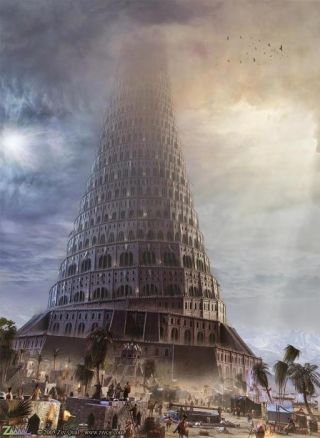
The tower is the size of a city block, and ascends so high that its summit is lost to view. Over ten thousand people work in the tower, and more than half of them also live inside it; the rest, mostly lowly government clerks and scribes and the servants who feed and assist them, troop in each morning from their homes elsewhere in the city. Security on the main gate is lax, and it's not very difficult for would-be infiltrators to gain access to the lower levels.

Each level includes offices, storerooms, kitchens, guardrooms, and servant's quarters. The higher levels, whose denizens mostly live in the tower as well as working there, also contain extensive living quarters. The rooms get bigger and more luxurious the higher you go. Seniority has its advantages.

The internal contents of the tower is as follows:

Levels 1-8: Government Offices

These rooms house the bureaucrats and administrators who carry out the day-to-day running of the Wicked City. They're not that different from the offices of any other government, except that there are rather more armed guards everywhere and everyone seems weirdly tense and nervous all the time. This sense of tension increases the higher you go; by the time one reaches level eight, it's at fever pitch. Everyone seems to be waiting for something awful to happen, all the time.

Occasionally, a squad of masked, heavily-armed secret policemen burst in, grab someone, and drag them away upstairs kicking and screaming. No-one else dares to comment on this. The next day, a replacement is appointed. The people who are taken never come back.

Levels 9-15: Junior Management

Clerks, scribes, and administrators who distinguish themselves in the service of the city get promoted to junior management. If the atmosphere below is tense, up here it's positively feverish: everyone is convinced that everyone else is just waiting for a chance to sell them out in order to prove their loyalty, and they're usually right. The office politics are a miasmic swamp of intrigue that sometimes turn literally murderous. Nervous breakdowns are frequent, as are rather frantic workplace affairs that usually end badly for everyone involved. You get a nicer desk, though.

Levels 16-19: Middle Management

Anyone who's made it this far up the Tower is probably some kind of paranoid workaholic. Most of them have rooms up here; those that don't mostly sleep at their desks. They alternate between frenzied bursts of productivity and agonised hours spent attempting to second-guess what everyone else might be up to. Alliances break and reform with dizzying rapidity as rival cliques try to outmanoeuvre one another in a constant effort to look good at everyone else's expense. The price of failure is disappearing in the night and never being heard from again.

At this rank, you get a nice salary, a luxurious office, and a personal staff of attractive servants of the gender of your choice. It's not worth it.

Levels 20-22: Senior Management

The senior managers are the people whom the ministers hold ultimately responsible for the fulfilment of the orders from Higher Up. This means that most of them live lives of abject terror. They all hate each other, and try constantly to undermine each other's work. Most of them have barricaded themselves into their suites of rooms, ordering their guards to kill anyone who tries to enter without their explicit permission. When things go wrong, the lucky ones commit suicide by jumping out of the windows. The unlucky ones get grabbed by the secret police before they have the chance.

Levels 23-30: The Lesser Ministries

Each of these floors is given over to one of the Wicked City's eight lower-ranking ministers, each of whom bears ultimate responsibility for one aspect of the city's management. Each of them has their own staff of servants, guards, and administrators. They can make anyone from the lower levels simply vanish, just by passing their names upstairs to their 'friends' in the secret police. As a result, on the rare occasions when they descend to the lower levels, they are treated to sycophantic displays of loyalty and adoration wherever they go.

The Lesser Ministers are quite fantastically corrupt. They live in debauched splendour, abusing their powers in whatever way happens to amuse them most. They regard one another with a kind of cordial loathing, but they at least recognise one another as people of consequence - unlike everyone below them, who are merely toys to be played with and discarded at will. Each of them secretly believes that they deserve promotion to the ranks of the Greater Ministers, and they are willing to ruin any number of lives to help them achieve this end.

Levels 31-45: The Greater Ministries

The five Greater Ministers of the Wicked City rule private fiefdoms of three floors each, attended by small armies of servants, soldiers, and scribes. They think themselves untouchable, virtual gods amongst men; indeed, many of them demand actual worship from their retinues, as living avatars of the Wicked King himself. They are cruel and capricious pantheon, however, constantly demanding outrageous demonstrations of loyalty from their followers and petitioners. Their favourite pastime is finding new ways to humiliate the Lesser Ministers on the floors below.

Most of the orders which the residents of floors 1-22 spend their lives trying to follow originate with the lesser and greater ministers. Most of them. But some come from substantially higher up.

Levels 46-58: The Ministry of Information

This is the stronghold of the secret police: a vast warren of prisons, interrogation rooms, torture chambers, barracks, armouries, and secret tunnels. Everyone here uses code-names. Everyone here wears masks. No-one pays attention to all the screaming that constantly emanates from behind various locked doors. The organisation of the Ministry is completely opaque to everyone outside it: even the Lesser and Greater Ministers have no idea how it actually functions, or who within it answers to whom. At high-level meetings, the Ministry is represented by a masked individual calling themselves Captain Six, who is transparently a different person every time. When asked about the existence and relative seniority of captains one through five, Captain Six will only reply that this is classified information.

The Ministry of Information is not answerable to any of the other ministries. It can make anyone, of any rank, simply disappear: even the Greater Ministers are not exempt. Its position in the tower reflects this.

From time to time, someone inside the Ministry of Information opens a hatch in the outside wall of the tower and throws out a heap of human corpses; they fall into a deep pit outside, the five hundred foot fall ensuring that they are completely unrecognisable once they hit the ground. Of course, given what the Ministry gets up to, most of them were probably unrecognisable already.

Levels 59-70: The 'Specials'

Levels 71-80: The 'Extraordinaries'

Above level 58, any semblance of sane and functional government disappears - but the tower keeps going up. Officially, levels 59-70 are for 'special advisers', and levels 71-80 are for 'advisers in extraordinary'. In practise, they are a bedlam realm of the desperate and the insane.

From time to time, orders come down from on high that certain people are to be promoted to 'Special' or 'Extraordinary' status. Sometimes these orders come from the Specials and Extraordinaries themselves, because they're bored and lonely and want new friends or victims. Sometimes they come from even higher up: useless though they are, something up there seems to have an interest in keeping the population of these floors at a 'healthy' level. This is a one-way trip: the Ministry of Information lets no-one back down again. Once there, the new arrival will be assigned to some kind of interminable (and often seemingly pointless) administrative work detail. Their new colleagues will tell them never to leave their room by night.

By day, these floors are a hive of bizarre activity; but by night, they are the hunting grounds of the Men Without Faces (see below). As the sun falls, the residents of each office barricade all the doors and hide in corners, quivering with terror. Mostly, the Men Without Faces content themselves with picking off those unwise enough to roam the corridors by night. Mostly.

Trapped in this bizarre hunting ground, six hundred feet up in the air, with no hope of escape except by suicide, most of the 'specials' and 'extraordinaries' go more than a little mad. Roll 1d12 to determine what kind of craziness is currently being practised by any given group:

1: Personality cult. One charistmatic lunatic has seized control of this group, and all others worship her like a god. Absolute obedience is demanded at all times, on pain of death.

2: Cannibal crew. This ghoulish band spends their time gleefully writing out requisition orders for more special advisers, citing 'pressing necessities of the state'. New arrivals are killed and eaten.

3: Workaholics. This group labours endlessly to complete some enormous backlog of administrative paperwork, desperately hoping that if they complete it all they will be allowed to leave. New arrivals will be forced to help, by literally chaining them to their desks if necessary. The completed paperwork is hoarded like treasure, in preparation for the day when it will be handed over to semi-mythical figure of 'the auditor', who will reward them for their faithful work. (Needless to say, the auditor is never going to arrive.)

4: Aesthetes. This group are busy painstakingly covering every inch of the walls, floor and ceiling of their section of the tower with elaborate carvings, in line with the artistic vision of their leader, who is convinced that it will be his masterwork. New arrivals are enslaved and set to work on the carvings.

5: Paranoids. This group is convinced that all outsiders are agents of the Men Without Faces, and that any kind of communication from outside is just a trick to try to get them to lower their guard. They have barricaded themselves into a defensible area and will try to kill anyone who comes near them.

6: Savages. This band has regressed to primal savagery, and now roams the hallways hooting and roaring like beasts. Strangers will be hunted down like animals.

7: Conspiracy theorists. This group is obsessed with working out who is really responsible for their miserable fate. They have covered the walls of their offices with an endless scrawling diagram of some fantastical conspiracy, convinced that every new addition gets them closer to the truth. New arrivals who seem less than persuaded of this will be thrown out of the windows as agents of the conspiracy.

8: Petitioners. This group has assembled an enormous list of grievances, and is determined to present it to the Wicked King himself, sure that when he finds out what has been done to them he will punish all responsible. Each day they sneak out of their rooms and head upwards as far as they dare, searching for a safe path through the upper levels, or trying to climb up the tower's outside wall. (Those who try to climb down just get picked off by the secret police.) Their rooms house a treasure trove of maps, but most of them have been deliberately altered to be dangerously misleading, as they are terrified of anyone else finding their way up to the Wicked King first.

9: Hedonists. This band has given up on both life and work, and are now just keen to have as much fun as they can before the Men Without Faces get them. They send endless requisition orders downstairs for more food, drugs, wine, and attractive new colleagues, and pass their time in an interminable party-cum-orgy. Newcomers who refuse to participate will be locked out when night falls.

10: Mystics. This group spends all its time in meditation and bizarre ritual behaviour, convinced that their ceremonies serve to keep the Men Without Faces at bay. They believe that if only they can attain a sufficient level of enlightenment, they will be able to levitate out of the windows and return to their homes. Newcomers are regarded with grave suspicion as potential threats to their ritual purity.

11: Mechanics. This band is trying to build a flying machine with which to escape the tower. They constantly send requisition orders downstairs for tools, parts, and engineers. New arrivals will be pressed into service and forced to work on the machine.

12: Relatively normal people. This band hasn't gone crazy yet; they just try to get each day's work done, stay safe in the night, and try to figure out a way to escape. In a few years time, those of them that aren't dead will probably be as mad as everyone else.

Levels 81-???: The Hunting Grounds

Above level 80 are the homes and hunting grounds of the Wicked King's ultimate enforcers, the Six Men Without Faces. They roam through level after level of abandoned rooms and offices, seeing without eyes and hearing without ears, dragging packs of mutilated human hunting dogs behind them on chains. If they catch you they will bolt a featureless iron mask over your head, and then you won't have a face, either. Don't get caught.

Level ???: Head Office

Something passes messages down to the Specials and the Extraordinaries, carried by little clockwork beetles that go crawling up and down the stairs. It's not the Men Without Faces, so there must be some kind of office above even them. Where it is, and who inhabits it, are topics of rampant speculation.

Level ???: The King's Retinue

When the Wicked King ascended the tower, he didn't go alone; his wives and his concubines and his favourite servants and his cooks and his viziers and his jesters and his most sycophantic yes-men all went with him. Are they, or their descendants, still up there somewhere? Certainly none of them ever came down again...

Level ???: The Hall of the King

When the Tower was completed, the Wicked King climbed to the very top of it and locked himself into his throne room. That was fifty years ago. He hasn't been heard from since. What's in there now is anyone's guess.

Wednesday, 1 July 2015

Districts of the Wicked City 1: The King's Tower

There's no point in trying to draw a map of the Wicked City; it's too huge, too sprawling, and anyway the buildings move around when they think that no-one's looking. But it can be divided into six basic zones: the Tower, the Cobweb, the Districts, the Slums, the Rubble, and the Maze.


The Tower is the seat of the Wicked King. His worshippers claim it goes all the way up to heaven. Everyone else thinks that's crazy-talk, but it certainly is very, very, very high: one hundred stories at the very least. (It's impossible to count them accurately from the ground.) Anyone with any knowledge of engineering or architecture can tell at a glance that there's no way a structure that tall should be able to stay standing; it should have collapsed under its own weight before the builders got even halfway up. And yet here it stands.

The Tower is the heart of the Wicked City's government. An army of ministers and bureaucrats work there, attended by a second army of servants, and watched over by a third army of soldiers, guards, and secret policemen. Enormous quantities of food are carried in through its front gates every morning. In return, it spits out laws, orders, and the occasional highly-armed death squad with sealed orders and suicide pills in their pockets. As you ascend the Tower, the administrators get more senior, the intrigues get more complex and deadly, and the spies and soldiers get more omnipresent. By the time you reach level ten, the office politics alone are enough to drive you crazy. By the time you reach level twenty, the whole system seems to have collapsed into a maze of mad, feral bureaucrats, their eyes wild with paranoid dread, who will literally murder anyone who comes into their offices without a prior appointment. And there are at least eighty more levels to go after that.

Burj Khalifa.jpg
The Burj Khalifa in Dubai. Dubai is basically like the Wicked City except real.
The Wicked King went into the Tower about fifty years ago. He never came out. It is entirely possible he has been dead for decades. Nevertheless, something is up there, passing down orders to the lower levels. Something keeps this whole insane system from totally falling apart. You can ascend through thirty, forty, fifty levels, and in between carving memoranda on each other's skulls the gibbering tribes of arch-administrators will still assure you, looking upwards with expressions of sickly dread, that the boss is up there somewhere. Messengers come down from even higher levels with orders and instructions. People who disobey them are never seen again.

Given that lighter-than-air flight exists in ATWC, smart PCs will want to avoid climbing through one hundred levels of increasing craziness by just flying right to the top of the Tower. Unfortunately, the Tower is absolutely bristling with anti-aircraft defences. On the lower levels you just need to watch out for all the sharpshooting musketeers and cannon emplacements, but higher up things get weird: gargoyles come to life and fly out on stone wings (how?) to attack incoming airships, holes in the walls turn out to contain concealed flamethrowers, weird pale-faced men will throw themselves out of windows onto your ship and start suicidally attempting to sabotage it, screaming incoherently the whole time. Eventually, even the bravest airship captain will get the message. Whatever is up there does not want to be disturbed.

Of course, you can skip at least the first forty levels or so by entering through the Cobweb. But that's a subject for another post.

Foes of the Wicked City 1: The Children of the Sun


In the deserts to the south of the Wicked City, there are places where the sunlight becomes so heavy that it can almost be grasped. In such places - the Sun's Anvils, as the desert tribes call them - to speak of the sun 'beating down' starts to seem less and less metaphorical; each sunbeam feels almost like a solid physical object, pushing downwards from the sky. On really hot days, at the very heart of the sun's anvils, that sunlight doesn't just fall: it coalesces, becoming a shimmering, liquid mass, too bright to look at, too hot to touch. Put your hand into a pool of liquid sunlight and it will burn right off. All day the pool of sunlight will churn and seethe and bubble; but when night falls, most of it will drain away, evaporating into the cooling air. Left behind at the bottom of the pool will be a new-born Child of the Sun.

They look like humans, the Sun's Children, but their skin is the colour of bronze and their hair is the colour of bright molten gold. They have no childhood: they are born as either gleaming maidens or as splendid youths, apparently in late adolescence, and with an instinctive knowledge of languages and all the basic arts of life. They do not need to eat or drink, feeding solely upon the sun's glorious radiance; if they are deprived of sunlight, they weaken and die. They are strong. They are stern. They carry the Way of Solar Righteousness in their hearts. 

All through history, the Children of the Sun have come down from their desert plateaus and mingled with humanity, trying to teach them the Way of Solar Righteousness. All through history, they have retreated in shock and sorrow from the inability of humans to put the Way into practise. The Way teaches that you must never lie, never cheat, never steal, never commit any act of unrighteous violence or deception, and never, ever break your oath. Most humans agree that those are pretty good moral guidelines, but they keep going on about 'exceptions' and 'edge cases' and 'white lies' and 'extenuating circumstances', and the Children just don't understand that at all. There is righteousness, and there is unrighteousness. There is nothing in between. 

Unsurprisingly, most Children of the Sun soon end up wandering back out into the desert, where they can practise the Way of Solar Righteousness with their own kind in peace. They live in austere, roofless monastery-temples, every room open to the sun. Occasionally, idealistic humans get it into their heads that they should seek out one of these temples and try to join it. The tough ones last a week.

A few of the Children, however, refuse to give up on us. Year after year they remain in the world, trying by word and deed to impress upon the people around them the importance of the Way. Some of them gather cults of followers. Some of them build temples. Sometimes they are enlisted by communities to act as judges: they may be harsh and unsympathetic, but they are also totally incorruptible. Some of them roam from place to place, into lands far from their native deserts, enduring for our sake the long nights and the cold winters when they scarcely glimpse the sun. Wherever they go, they act as scourges of evil and teachers of righteousness. And they hate the Wicked City with every grain of their molten hearts.

You can play a Sun Child if you want to, but make sure the whole group is OK with the idea first: most PCs tend to be very morally flexible people, and constantly getting lectured about your moral failings can get really old really fast. (The rest of the players are also soon going to get bored of having to sneak around behind your back every time they want to do something devious.) Mostly, they're intended for use as NPCs: allies for whom the question, for once, is not 'can we trust them' but 'can they trust us?' (A Sun Child who discovers that she's been tricked into acting unrighteously won't get all torn up about it - she knows her heart was pure - but she will refuse to have anything more to do with the people who deceived her.) Game information is as follows:
  • You must have Constitution and Wisdom 12 or higher.
  • You can use any weapons and armour. You can wear the heaviest armour on the hottest day without discomfort.
  • You gain a bonus to all your to-hit rolls equal to your level.
  • You gain 1d6 HP per level.
  • You cannot be blinded or dazzled by flashes of light or similar effects, and are immune to damage from heat or fire. (Gunpowder explosions damage you normally: it's the blast, not the heat, which messes you up.)
  • You get +2 to your WILL saves. (Included in the table below.)
  • You are totally incapable of moral compromise, and will never, ever, knowingly behave in a deceptive, unrighteous, or dishonourable manner. 
  • You feed on sunlight. You do not need to eat or drink, but you must spend at least one hour a day standing in full sunlight, soaking up rays. (If only weak sunlight is available, you might need two or three hours instead.) You will die if deprived of sunlight for a number of consecutive days greater than your Constitution score.
  • When you are cut, you bleed sunlight. This may be an issue if you're trying to sneak around in the dark!
Sun Child Summary Table

Level
Hit Points
To Hit Bonus
Fortitude save (FORT)
Reflex save (REF)
Willpower save (WILL)
1
1d6
+1
14
14
12
2
2d6
+2
13
13
11
3
3d6
+3
12
12
10
4
4d6
+4
11
11
9
5
5d6
+5
10
10
8
6
6d6
+6
9
9
7
7
7d6
+7
8
8
6
8
8d6
+8
7
7
5
9
9d6
+9
6
6
4
10
10d6
+10
5
5
3

Starting equipment: Helm and breastplate (+5 AC), heavy shield (+2 AC), sword (1d8 damage), longbow (1d8 damage), holy golden amulet (worth 50sp, though you'd never sell it), extremely irritating sense of total moral superiority, 1d6x10 sp