Wednesday, 29 August 2018

Bringing Down the Hammer, part 4: Spires of Altdorf, Karak Azgal, Realms of Sorcery

My WHFRP 2nd edition read-through continues. (For an explanation of what this is all about, see here.)

Spires of Altdorf (September 2005)

Image result for spires of altdorf

Paths of the Damned, part 2. The first part describes the city of Altdorf, using a format in which each location is first given a general description, followed by sub-sections on 'Fights' (things that might happen if you get in a fight there), 'Social Situations' (things that might happen during social interactions there), and 'Stealth' (things that might happen if you're sneaking around there). It's not an inherently bad idea, but the implementation leaves much to be desired. First it's applied to generic locations - streets, markets, tenements - with the result that most of the content is things you could have thought of yourself. (Did we really need to be told, under the 'Social Situations' subheading of 'A Walled Estate', that 'Elegant drawing rooms with carpets and chairs upholstered in the owner's colours are a fine location for a meeting'?) Then it's applied to various centres of magical or political power, which leads to entry after entry explaining: 'Fights: you can't have a fight here or the wizards will kill you. Social: no-one here will talk to you. Stealth: you can't sneak around here', and so on. Seldom have form and content been so obviously ill-adapted to one another.

All this is followed by an adventure, which picks up where 'Ashes of Middenheim' left off. This adventure clearly wants to be Power Behind the Throne when it grows up, as it involves the PCs running around a city investigating dark deeds, initially unaware that the wizard who seems to be their ally is secretly their greatest enemy. It starts badly, with yet another rigged fight in which the PCs seem doomed until a powerful NPC wizard swoops in and saves them - as if they won't have had enough of that in part 1! - although, in this case, the inevitable resentment that will create among the players will ultimately pay off when they finally discover he was evil all along and get to murder him.

The adventure opens out once it gets to Altdorf, with a large number of NPCs whom the PCs can interact with in any order while being harassed by the minions of a psychotic chaos cultist with a grudge. It still has awful railroady moments like 'if the PCs try to attack the NPCs, an infinite number of watchmen and bodyguards arrive to stop them', or 'if the PCs are losing their fight with the wizard, he suddenly devolves into a chaos spawn', and at 55 pages it's far too long, but it is trying. A strong edit could probably turn this into quite a good social adventure. I might even have a go at writing a condensation of it at some point.

Finally, I rather liked the addition of the 'Lamplighter' and 'Newssheet Vendor' careers. Those are exactly the kind of careers that WHFRP characters should have.

Karak Azgal (October 2005)

Image result for karak azgal

This is a WHFRP mega-dungeon. Giant ruined dwarf hold with shanty town on the surface for PCs to rest and restock, and huge underground area divided between skaven, undead, orcs, goblins, and finally chaos demons right at the very bottom. Not fully mapped: key areas are detailed, but it's up to the GM to decide exactly how they join up, and to generate the dungeon zones between them. It's not bad, and the three-bodied autophagous mutant at the very end should at least make for a memorably horrible encounter, but the whole set-up hardly seems to play to WHFRP's strengths. (What's are a Burgher and a Newssheet Vendor supposed to do in a Mines of Moria knock-off?) If you like this sort of thing then I'd suggest just running it in D&D instead.

Realms of Sorcery (November 2005)

Image result for realms of sorcery 2nd

The second edition magic book. Explaining its contents will require a brief discussion of the history of magic in Warhammer.

In WHFRP 1st edition, the magic system was obviously based on D&D. It featured the usual D&D suspects - wizards, clerics, druids, and illusionists - to which it added alchemists, necromancers, elementalists, and demonologists, all of whom had probably also appeared in D&D in one form or another by 1985. Spellcasters learned spells from a suspiciously D&D-like spell list and cast them by spending magic points. There were a few distinctive spells - 'Protection From Rain' is iconic - but aside from the tendency of evil wizards to gradually pick up deformities from using their magic, very little about the system really resonated with WHFRP's supposed theme of dark early modern fantasy-horror.

In 1992, Games Workshop released an expansion set for the Warhammer wargame called 'Battle Magic'. For the first time (I think), this introduced the idea that the Warhammer World had eight colour-coded 'winds of magic' - probably a reference to Pratchett's The Colour of Magic (1983), in which there was an eighth colour that only wizards could see - and that each individual human wizard would be attuned to one of them, allowing them to use the corresponding form of magic. The wizards who could perceive each colour all tended to be the same sort of people - so people keyed into Bright magic would be rash and passionate, people keyed into Amethyst magic would be grim and spooky, and so on - and they clubbed together in groups, giving rise to eight 'colleges of magic', each of which supplied the Empire with colour-coded 'battle wizards'. As you'd expect from a wargame, the spells that these battle wizards could cast tended to be big and spectacular: lightning bolts, meteor strikes, balls of purple energy that turned everyone they touched into amethyst statues, that sort of thing. It also introduced eight other kinds of magic used by various nonhuman races, but it's the colour magic system which is important right now.

Image result for realms of sorcery 1st ed

The task of reconciling these two very different conceptions of Warhammer magic fell to Ken and Jo Walton, the authors of the first edition Realms of Sorcery book. This book had a famously complicated development history, being announced as 'forthcoming' in 1986 and then not actually appearing until 2001, by which point magic in the Warhammer world had been repeatedly rewritten. (Like many WHFRP fans, I spent the second half of the 1990s patiently waiting for it to appear before finally giving up on it.) Realms managed these contradictions by asserting that colour-based battle magic was a relatively new innovation, having been taught to humans by the High Elves just two hundred years before to help them fight the forces of chaos, and that it coexisted with the older, less martial forms of magic described in the 1st edition core book.

This was fine as far as it went, but it led to something of an over-proliferation of magic types. The eight new ones were layered on top of the eight old ones even though they had massive thematic overlaps, and then yet another form of magic, hedge wizardry, was added for good measure. The distinction between a Jade Battle Mage and a druid, or a Celestial Battle Mage and an air elementalist, or between a Gold Battle Mage and an alchemist, mainly seemed to be that the battle magi were better at blowing things up. The fact that you had to already be a powerful wizard before you could even start learning colour magic also created difficulties for both the lore and the mechanics. Who knew the Emperor had this many high-level wizards to call upon? And how many WHFRP campaigns last long enough for anyone to advance through five levels of battle magic?
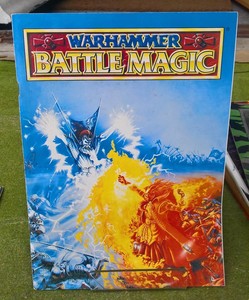
Image result for warhammer battle magic

The second edition Realms of Sorcery book - which, let us recall, appeared just four years after the first one - tried to cut down on this over-duplication, but it did so by prioritising colour magic over all the other kinds. No longer could you be a 'generic' wizard: you had to pick one colour and stick to it. No more alchemists, only Gold Battle Wizards. Elementalists got merged with hedge wizards. Illusionists got merged with Grey Battle Wizards, who were forced to stop being Gandalf and start being 'shadowmancers' instead. These changes had the advantage of emphasising the more distinctive and, well, colourful aspects of WHFRP magic over its more generic elements, but it also meant locking all wizard PCs into an extremely restrictive system of wizard colleges, wizard licenses, vows of loyalty to the Emperor, and so on, with imperial witch hunters apparently having carte blanche to execute any wizard who steps out of line. Reading the first and second edition versions of Realms of Sorcery side by side, it's striking how much more lassiez-faire the first version is about wizards just wandering off to do normal PC stuff, rather than having to be continuously answerable to the Imperial authorities. Maybe people who didn't want to engage with that sort of thing were supposed to play hedge wizards, instead? (Not a great idea in the 2nd edition setting, with the witch hunters now an officially-sanctioned government organisation with authority to burn non-collegiate magic-users on sight...)

The book is 248 pages long, and it suffers from the standard 2nd edition issues of word bloat and vagueness. The 1st edition book, for all its issues, knew how to keep things sharp and vivid. In first edition, the Amber College is a doorless, windowless tower, marked with mystic runes which inform those sensitive to amber magic of the hidden caves in the wilderness where the true masters of the order can be found... but that's gone in 2nd edition. In 1st edition, amethyst mages never speak, and are taught their magic in a silent, secret language; that language is then used to teach amethyst adepts a second secret language in which their higher secrets are communicated, and the second language is used to teach the order's masters a third secret language, in which their highest arcana are recorded... but that's gone in 2nd edition, too. The gold college abducting the beggars attracted by their wealth and sacrificing them in rituals to turn lead into gold... gone. Colour magic being a deliberately crippled form of magic taught by the elves to the humans in order to ensure they never became too much of a threat... gone. It's all simultaneously more high-fantasy - complete with invisible colleges hidden behind magical barriers - and less... hardcore, maybe? It's also much less complete than the first edition version, with other types of magic - clerical magic, chaos sorcery, ice magic, skaven magic, etc - all reserved for future supplements.

I did like some of the new material. The overall magic system is much more thoroughly worked-out than before: high magic is all eight colours carefully harmonised, colour magic is one colour distilled from the rest to avoid dangerous impurities (which is why it's the only form of magic that can be safely practised by people who aren't capable of high magic), dark magic is all eight colours haphazardly mixed together (which is why hedge magic is dangerous), and true dark magic is high magic backwards, with all eight colours forced together through the unholy exercise of will. The idea that monoliths and henges channel the winds of magic, and evil magicians sometimes deliberately cut the flows so that henges just become pools of stagnant magical awfulness, is the kind of setting detail which allows players to figure out the villain's evil plans (and their own possible counter-measures) both in-character and out-of-character simultaneously, which is always a good thing. The idea that each wind of magic gradually leaves its marks on the wizards who channel it is a good and logical extension of the physically warping effects of dark magic in 1st edition. (Who wouldn't want their gold wizard to have a lead tongue, golden skin, and quicksilver tears?) I liked the rules for building your own freakish familiar, and there are some good and imaginative potions and magic items. The Boots of Bovva make a welcome return.

The book finishes with a 28-page adventure, about some thieves trying to sell a batch of cursed wine as a weapon. It wants to be an investigation, but in practise the PCs just wander around for a while until an NPC invites them for a drink and tells them what's really going on and what they should do about it. (Tellingly, the author never even seems to have considered the question 'what if the PCs decline the invitation?' or 'what if the PCs don't want to go along with the NPC's plan?') It could also have been easily condensed down to seven pages or so.

Overall: some good material. Obviously necessary if you want to use the 2nd edition colour magic system, but imaginatively weaker than the first edition version, which was itself one of the weaker books in the first edition line. Cutting it down to half the length would have made it a better book.

Next time: Forges of Nuln, Knights of the Grail, and Barony of the Damned.

Monday, 20 August 2018

Bringing Down the Hammer part 3: Adventures, Bestiary, Armoury, Guide to the Empire

My chronological trawl-through of WHFRP 2nd edition continues! This is going to be another fairly downbeat post. I'll get to the good stuff eventually.

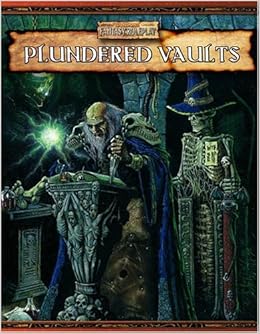
Plundered Vaults (March 2005)

Image result for warhammer fantasy roleplay plundered vaults

This is a collection of six adventures: three reprints from the 1980s accompanied by three newly-written scenarios. The old ones - 'The Haunting Horror', 'The Grapes of Wrath', and the superb 'Rough Night at the Three Feathers' - were written by people who knew how to write adventures, and the new ones were written by people who didn't. The old ones throw down a situation and then leave the decisions about what do about it in the hands of the players. The new ones just force-march the PCs through a series of pre-scripted scenes towards a predetermined conclusion, and are full of terrible advice about how to rig each situation in order to keep the plot on track.

The most frustrating adventure here is one of the new ones, 'Carrion Call', because it is so close to being a good adventure. It has a classic set-up - visit an isolated house in the woods, stay for dinner, get increasingly spooked by the escalating freakiness, try to leave, discover that getting out is much harder than getting in - but spoils it through the use of extremely heavy-handed railroading. Try to find your own way out? No chance: the house is apparently so big and so confusing that it's impossible to find anything without help from one of the residents. Try to escape through the surrounding woods? Nope: you get attacked by infinite numbers of undead wolves until you get the message and turn back. Some minor rewrites could turn this into a rather nice 'dinner at the necromancer's house' scenario, though.

Old World Bestiary (April 2005)

Image result for warhammer fantasy roleplay old world bestiary

Includes most, though not quite all, of the monsters from the wargame, many of whom had never previously appeared in WHFRP. It's a good bestiary, although the fact that the stats are often based on the ones from the wargame leads to some odd results. (Dark Elf corsairs, for example, are only slightly more dangerous than regular human soldiers, so it's unclear to me how they manage to prey upon the Old World with such impunity.) It is, however, not a bestiary which is very well adapted to the kind of 'early modern Call of Cthulhu' style investigations and horror stories that WHFRP was famous for.

If you're an old Warhammer player, then you'll know all these monsters already and have no reason to read this. If you're not, though, then it's well worth a look, because a lot of these monsters are classics. (Skaven! Beastmen! Squigs!) However, the vast majority of them are always going to attack on sight: and most of them, true to their wargame origins, are best defeated by simply stabbing them lots of times. This is fine in D&D, but it's less helpful in WHFRP, or at least in the kind of game that WHFRP had traditionally tended to be. It's not clear how to actually use most of them in any way other than: 'Suddenly, monsters attack!'

Still no fimir. The 2000AD influence grows weak.

Come baaack...

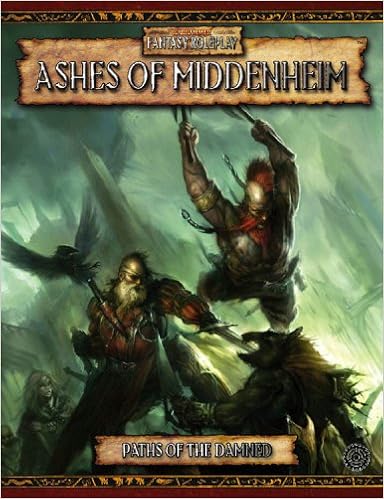
Paths of the Damned Part 1: Ashes of Middenheim (May 2005)

Image result for ashes of middenheim

'Paths of the Damned' was a series of three books, the first part of each of which consisted of a city guide, and the second part of each was an adventure set in that city. I think it was supposed to be second edition's equivalent of 'The Enemy Within'. This is a pretty depressing thought.

First we get a description of Middenheim, which apparently got damaged pretty seriously by the Storm of Chaos. The chaos warriors tried to seize it by sending mutated humans called 'Flayerkin' to climb the walls: they had hooks instead of hands, for easier climbing, and 'heavy iron chains' fused to their spines, to allow the rest of the army to climb up after them. Presumably this gambit failed because every time a bunch of chaos warriors in full chaos armour tried to climb a chain, they ended up pulling the flayerkin's spine out through its back. Anyway, dozens of these rather poorly thought-out creatures still apparently dangle from the walls of Middenheim by their hooks. I mention them because they're the only part of the city's description that stuck in my mind after reading it, as the rest is made up of such paragons of vagueness as this:
The army of Middenheim is currently away from the city, hunting down the rag-tag remnants of Archaeon's chaos forces. Like all the armies of the Empire, it is a diverse and versatile force, with a wide range of infantry, cavalry, and artillery units at its disposal.
That's the entire description of 'The Standing Army'. What was the point of even writing that down?

Image result for storm of chaos
I quite liked this image of the siege of Middenheim, though.
So the 28-page city description is pretty much a write-off, and could easily have been cut to just the two-page map plus two or three pages of keyed locations. (There's a nice bit about the crater from a hellcannon shot now sprouting flowers with human faces, but unfortunately it's a transparent imitation of the description of Praag from WHFRP 1st edition.) The adventure that follows feels like it was written as a kind of compilation of WHFRP's greatest hits: cultists, mutants, witch hunters, corrupt authority figures, beastmen, skaven, sinister conspiracies, etc. Unfortunately it's totally railroaded, heavily reliant on cultists doing generic cultist stuff for no real reason, and features such gems as 'the PCs get arrested and stripped of all their gear, with no chance to avoid it', 'an arbitrary number of beastmen attack, beat the PCs up for a few rounds, and then three super-cool NPCs turn up and save everybody by killing them all', and my personal favourite, 'have the players make a perception test to hear the noise and wake up, but if they all fail then just have an NPC knock over a chair and wake them all up anyway'. (Why? 'In the interests of good storytelling', of course!) The basic material isn't bad, and I quite like the mini-dungeon in the woods, with the flayed ghosts and the fountain of blood, but its author seems to have struggled to string them together into a proper adventure.

Now, here's the kicker: the author is Graeme Davis. (A man who, as Gideon helpfully reminded me, is not the same person as Graeme Morris.) One of the original designers of WHFRP. One of the authors of Shadows Over Bögenhafen and Death on the Reik. The guy who wrote 'Rough Night at the Three Feathers'. There is no question that this is someone who, at least at one time, knew exactly how to write a good RPG scenario. So what happened? Was it a rush job? Was he labouring under restrictions from the line editors? Did his talents wither without Jim and Phil to bounce ideas off? Did he just forget how to write an adventure at some point in the intervening twenty years? I know that he's been actively writing RPG stuff since the 1980s, but I haven't read anything he wrote between 1989 and 2005, so I've got no idea whether this is a one-off aberration or symptomatic of a long-term change in his approach. If anyone reading this is familiar with his other work, I'd be interested in hearing your views...


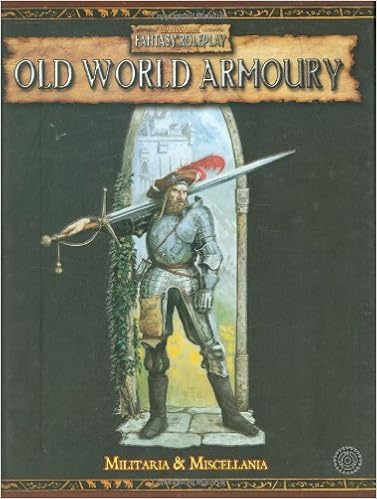
Old World Armoury (July 2005)


Image result for old world armoury

115 pages of information on coins, armour, weapons, guns, equipment, transportation, and hirelings. I have no idea who the target audience is for a book like this. Clearly I am not part of it.

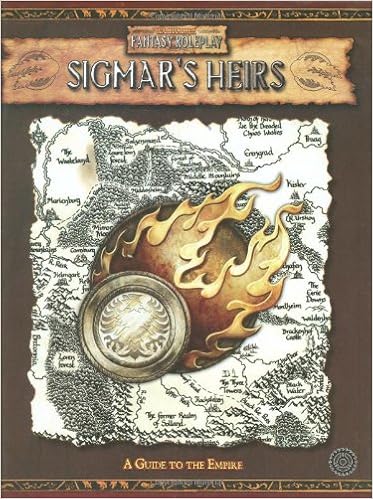
Sigmar's Heirs: A Guide to the Empire (August 2005)


Image result for sigmar's heirs

This book is at least 95% filler. Did you know that many inhabitants of the empire's heavily-wooded provinces make their living from hunting and forestry? Could you ever have guessed that people from rich provinces regard people from poor provinces as ignorant bumpkins, while people from poor provinces regard people from rich provinces as effete weaklings? Would it ever have occurred to you that people who lived right next door to the vampire-dominated province of Sylvania might be unusually nervous about undead? Page after page of stating the obvious. Extremely low conceptual density. Should have been a five-page section in the core book, not a 128-page stand-alone volume. I liked the provincial sayings, though. Unlike the main text, they communicate a lot in a very small number of words.

(Also, the population numbers given are absurdly low. No-one ever seems to notice that, according to the map, the empire is roughly the size of modern Germany, Poland, and the Ukraine put together!)

Next time: Spires of Altdorf, Karak Azgul, and Realms of Sorcery.

Saturday, 18 August 2018

Bringing down the hammer part 2: WHFRP 2nd edition corebook

Here begins my trawl through the books published for WHFRP 2nd edition, which I'll discuss in order of publication. The line got off to a rather disappointing start, so the first couple of posts are going to be fairly downbeat. Better days lie ahead.

Image result for warhammer fantasy roleplay

Warhammer Fantasy Roleplay: A Grim World of Perilous Adventure (March 2005)

The core book of the new edition, and the first one in which the authors had to confront the problem of reconciling WHFRP circa 1985 with Warhammer Fantasy Battle circa 2005. In particular, they had to deal with the fallout of 'the Storm of Chaos', a 2004 Warhammer event which involved the Empire being invaded by a giant army of chaos warriors. The moment WHFRP 2nd edition accepted the Storm of Chaos as canon - presumably under instruction from Games Workshop - it set itself apart from some important elements of the earlier edition. No longer could chaos be something subtle and hidden, like the Mythos in Call of Cthulhu, something that most people could forget about or live in ignorance of or only half believe in. For a citizen of the Empire to not believe in the chaos gods after the Storm of Chaos would be like a Russian not believing in Germans circa 1946.

Related image
The Storm of Chaos, busy storming... something... (Maybe Middenheim? I'm gonna say Middenheim.)

The core of the system - careers, percentile roles, fate points, insanity points, etc - remains intact, though some of the more unnecessary stats have been merged together. Careers still tend towards low-lives, and indeed many of the newly added careers - bonepicker, camp follower, charcoal burner - tilt the balance even further towards the lowest of the low, though some of the weirdest and most colourful first edition careers, like Bawd and Raconteur, have disappeared. Careers are also more international than in first edition, with minor chances of PCs being a 'Kislevite Kossar', 'Norse Berserker', or 'Estalian Diestro' rather than an Imperial citizen. (Whether the addition of three national stereotypes - Russian cossack, Viking berserker, Spanish duellist - represents an actual improvement is another matter.) Skills and talents have been differentiated from each other, and skills can now be taken more than once, though many of the weirder first edition skills - Clown, Embezzlement, Numismatics - have been cut. The combat system is largely unchanged, though I was somewhat sad to see that the infamous first edition critical hit tables have been toned down a bit. Back in my first edition days, my players got so familiar with the tables that they used to chant in unison the magic words: 'Death-from-shock-and-blood-loss-is-IN-STAN-TAN-E-OUS!

The magic system is heavily changed, ditching the old 'magic point' system, and incorporating the 'eight colleges of magic' from Warhammer Fantasy Battle. This gives it a more interesting spell list than the original, which was mostly cribbed from D&D, but at the cost of another concession to high fantasy, with the Empire now apparently maintaining eight different colleges of colour-coded battle wizards. Each religion also gets its own spell list, and Sigmar has been upgraded from a mere 'lesser deity' into the most significant divinity in the setting. Malal and the Gods of Law seem to have disappeared between editions. Magic items have been cut almost entirely - so no more street thugs wearing enchanted Boots of Bovva! This is followed by a very brief introduction to the nations and races of the Old World, a short bestiary - nineteen entries, compared to 110 (!) in the original - and an introductory adventure which is little more than a single encounter swathed in ten pages of needless padding.

Related image
2nd edition career illustrations.

There's nothing wrong with WHFRP 2nd edition, exactly, and its core system looks cleaner and more functional than that of 1st edition. It's not a complete game in the same way as its predecessor - the bestiary and setting information, in particular, are so obviously incomplete that they act as little more than teasers for The Old World Bestiary and Sigmar's Heirs, both of which were published a few months later - but that's just how RPGs tended to be published at the time. (How else were you going to get people hooked on the supplement treadmill?) But if it had appeared first, it's impossible to imagine it having the same impact as the original.

One big problem is the replacement of vivid and specific material with vague and general substitutes. Here, for example, is the top-level critical hit result from the 'Arm' location in 1st edition:
Your blow smashes through the arm and into the chest, caving in one side of the ribcage. The arm is completely destroyed, and blood showers yourself and your opponent. Your opponent collapses dying almost instantly from shock and blood loss.
Here's its uselessly vague counterpart from 2nd edition:
Killed in whatever spectacular and gore-drenched fashion the player or GM cares to describe.
The same retreat into blandness keeps recurring everywhere, with the arguable exception of the magic system. The edge of vivid craziness is gone from the lists of skills and careers: the second edition just won't let you randomly roll up a super-numerate travelling hypnotist who is also an amateur cryptographer, or a dancing beggar with a natural talent for bribery. The fact that WHFRP 1st edition included skills for begging, bribery, public speaking, street fighting, and embezzlement communicated a huge amount about the kind of world it was set in, and their disappearance from 2nd edition is not a trivial loss. [EDIT: Bart Cuppens points out that Public Speaking and Street Fighting are still in 2nd edition, just as talents rather than skills.] All the weirdest stuff from the bestiary chapter - the fimir, the death elementals, the Daemons of Law - is gone, never to return in second edition. And the art, needless to say, is greatly inferior to the original.

Related image
1st edition chaos demon.

A second issue is the altered tone of the setting. WHFRP 1st edition presents a world that is in some ways quite an optimistic place, at least from an Imperial perspective: there's a renaissance underway, humans have discovered gunpowder and the printing press, the New World is being colonised and looted, and there hasn't been a major chaos incursion for two hundred years. But it's also a world which is dangerously complacent, with no-one understanding how much of a threat chaos really is, or realising just how many chaos cults are operating in the shadows, or how soon the chaos warbands may begin the long march south. As the book puts it:
Within the cities of the Old World, and in the unholy groves of the deep forest, decadent humans honour the foul Gods of Chaos. To the majority of humans such things remain a mystery, and few imagine the perils posed by their own kin.
Well, they're not much of a mystery in WHFRP 2nd edition, let me tell you. Chaos has gone from being a hidden threat in the darkness - 'underneath the deepest sewers and culverts, the doom of Chaos gnaws at the bowels of civilisation' - to an overt enemy which everyone is openly fighting all the time, and apparently have been for the whole of history. The result is to turn the Old World, with its distinctive mixture of Renaissance optimism and self-destructive decadence, into something much closer to Generic Sub-Tolkien Fantasy Land, with the embattled forces of Team Good struggling to hold the line against the wicked armies of Team Evil.

Finally, the sample adventure is pretty weak even on its own terms, but looks even worse when placed next to the sample adventure from first edition, 'The Oldenhaller Contract'. The rest of the line would go on to make painfully clear that, whatever their other talents, the second edition's authors had no idea how to write RPG scenarios. Their idea of an 'adventure' was straightforward railroad from one pre-scripted scene to the next, with player agency kept to an absolute minimum. Quite why they thought this when they must have had branching adventures like 'The Oldenhaller Contract' right in front of them is unclear to me. I can only assume that they'd absorbed some very bad GMing advice over the course of the 1990s, and thought that their wretched scene-based railroads represented a genuine improvement over the adventure design of the 1980s, possibly because they had 'stronger stories'.

Image result for warhammer oldenhaller
Image from 'The Oldenhaller Contract'. Now that's how you use a railroad in an adventure!
If I was running WHFRP today, I'd strongly consider using the WHFRP 2nd edition system, albeit with all the weird and wonderful skills, careers, and monsters from 1st edition added back in. But I'd stick with the 1st edition tone, setting, and adventures every time.

Thursday, 16 August 2018

Bringing down the hammer: Warhammer Fantasy Roleplay, 1st and 2nd edition

Last year, Cubicle 7 announced that they would soon be bringing out a 4th edition of Warhammer Fantasy Roleplay. Not long afterwards, pdfs of the entire line of 2nd edition WFRP books were made available on Humble Bundle. I picked up the whole set for $20, and have been browsing intermittently through them ever since.

Now that previews of WHFRP 4th edition have actually been released, I thought it might be an appropriate time to do a post about the game's first two editions: what they achieved, why they mattered, how they differed from one another and from the wargame they branched off from, and so on. But once I got going I discovered I actually had quite a lot to say. So this is going to be a series of posts rather than just one.

Image result for wfrp 2nd edition

Like many British gamers, Warhammer was a big part of my childhood. My older half-brother, Rob, had been a Warhammer fan back in the mid-1980s, when the wargame had just been getting started; but in his late teens he moved onto other, cooler things, like meeting girls and playing the guitar, and when I was about 12 he gave me his collection of old White Dwarf magazines and a couple of beautifully-painted chaos warriors. (He was an artist for a while. I've always envied his skill with a brush.) At the time I was still reeling from my discovery of Dragon Warriors, so giving someone with my recently-acquired love of dark historical horror-fantasy a pile of early White Dwarf magazines, Ian Miller art and all, was like pouring oil on a bonfire. For more years than I like to think about, every penny of hoarded pocket money was spent on buying skaven warriors for Warhammer and tiny plastic orcs for Space Marine. (Remember Space Marine?) I even tried my hand at painting some of them, although I was never very good at it.

So I was playing Warhammer in the 1990s, which I gather counts as 'Oldhammer' by modern standards; but because the gift of Warhammer had come to me by inheritance, I always felt that my Warhammer, the real Warhammer, wasn't the Warhammer in the Games Workshop shops I visited, but the early 1980s version I'd read about in the magazines which had been bequeathed to me. Even then, it was obvious to me that a huge amount had changed between the first edition published in 1983 and the fourth edition version that I was playing in 1993-6: it had been made shinier, more heroic, more kid-friendly, more marketable. There was less historical grounding, less black humour, less sex and violence, less satirical Blackadder-esque grimness and grime. (Warhammer 5th edition, which came out in 1996, took these changes even further, and marked the point at which I started sliding away from the wargame entirely.) With the knowledge I have now, I can retrospectively diagnose it as an example of 1980s British counter-culture being absorbed by 1990s consumerism, and ideologically neutralised in the process. At the time, though, I just knew that something had changed, and that while I liked the version of Warhammer I was playing, on some important level it was not the same. 


Image result for wfrp 2nd edition

As a result of all this, when I finally obtained a copy of the first edition of Warhammer Fantasy Roleplay, it came as a bit of a revelation. My copy was from the 1995 Hogshead reprint edition, but the text was identical to that of the original 1986 version, and thus served to connect me to that almost-vanished world of very early Warhammer which Games Workshop was then trying to expunge entirely. The version of the Warhammer World I encountered in WFRP, and later in the first three parts of The Enemy Within (1987-8, reprinted 1995-7), was so much more vivid than the one that was then being marketed by GW that it won me over almost immediately. I promptly gave up on the Warhammer wargame and turned, instead, to running a multi-year WFRP campaign that remains one of the best and most successful RPG campaigns I've ever had the pleasure of participating in.

The original, 1983-vintage Warhammer World is an extraordinary creation, and I don't think it gets nearly enough credit. Very little in it was genuinely original, in that it just gleefully mashed together early modern history with Tolkien, Moorcock, Hammer Horror, and 2000AD: the skaven and the chaos dwarves are just about the only significant parts of the setting that weren't ripped off from somewhere else. But the resulting mixture was so compelling that it basically invented a new subgenre on the spot, or at any rate reinvented a subgenre that had previously consisted only of a handful of Solomon Kane stories from the 1930s. It provided an enormously influential model of how to combine fantasy with horror: so much so that even today, twenty-five years later, virtually every work of 'dark fantasy' is full of Warhammer pastiches. In particular, the drawings that John Blanche and Ian Miller did for Games Workshop in the early 1980s created an aesthetic that has endured largely unmodified down to the present day.

(Well, apart from the infusion of assorted anime-isms. You can blame Castlevania for those.)

Related image

It helped, of course, that Games Workshop in its early days was lucky enough to include some of the most talented artists and designers who have ever worked in the hobby. Space marines were an instant design classic. So were chaos warriors. So were the Sisters of Battle, who seem to have been based on a random painting by John Blanche. (If you want proof of how good these designs were, take a look at how many other companies went on to produce their own imitation versions.) Orcs as hulking greenskins with tusks have now become so ubiquitous in fantasy that it takes a moment to remember that, before Warhammer, they were usually ugly, scrawny pig-men instead. And so on.

Warhammer Fantasy Roleplay was just as much of a mash-up as its parent game, although in its case the key ingredients were Dungeons and Dragons and Call of Cthulhu. Its biggest innovation was its famous careers system, which meant that instead of the PCs being fighters and clerics and wizards they were usually agitators and rat-catchers and printer's apprentices and whatnot. Again, in retrospect I can see the influence of the British Marxist historiography of the 1970s, here, with its emphasis on 'history from below': but at the time I just knew that its focus on the frantic struggles of the urban poor made the game feel vastly more grounded than Dragonlance or the Forgotten Realms. It was the increasing disconnect between the wargame, which by 5th edition was all about magical superheroes riding dragons, and the RPG, which was more about alcoholic gamblers knifing cultists in slums, which led me to abandon the former for the latter.

Image result for shadows over bogenhafen

Just as Warhammer 1st edition had great good fortune in its artists and designers, so WHFRP 1st edition benefited from the work of three of the best RPG adventure writers of all time. Jim Bambra, Graeme Morris, and Phil Gallager, whom old-school D&D fans will know as the authors of the superb B10 Night's Dark Terror, all helped to write the first edition of WHFRP. [Edit: Graeme DAVIS wrote WHFRP. He's not the same guy as Graeme MORRIS, who wrote Night's Dark Terror. Thanks to Gideon for pointing this out!] They then went on to write the adventures Shadows Over Bögenhafen, Death on the Reik, and 'Rough Night at the Three Feathers'. Brilliant and justly famous as adventures, these modules, along with Carl Sargent's Power Behind the Throne, cemented a model of 'real' WHFRP as being, essentially, Call of Cthulhu in seventeenth-century fantasy Germany. The WHFRP setting notionally contained elves and dwarves and orcs and dragons and all the rest of the trad fantasy paraphernalia that it had inherited from Tolkien and Gygax, but these adventures eschewed such material almost entirely in favour of investigating the dark doings of criminals, cultists, mutants, and demons in grimy early modern cityscapes. The result was a gap between the RPG and the wargame which must have seemed increasingly unbridgeable by the time Games Workshop handed the former over to Flame Publications in 1990.

When the second edition came out in 2005-7, its authors faced at least three problems. The first was the difficulty of reconciling the heritage of 1980s WHFRP with the then-canonical setting of 6th and 7th edition Warhammer, which had become a much more heroic, high-magic, high-fantasy affair. The second was a business model - common in the RPG industry at the time - which required them to churn out as much product as possible, leading them to print twenty-five books for the game in just three years, compared to twelve books in five years for the original Games Workshop edition. The third was the simple fact that they didn't have anyone on their staff capable of creating material on the same level as Bambra, Davis, Gallager, Blanche, Miller, and the rest of the original GW crew. The result is that book for book, adventure for adventure, and image for image, the 2005-7 edition is much weaker than the 1986-1990 original. Moving from the hallucinatory fever-dream of the first edition chaos sourcebook Slaves to Darkness (1988) to the generic 'dark fantasy' filler of its second edition counterpart, The Tome of Corruption (2006), is a pretty depressing experience, while a comparison between the old and new adventures in the 2005 WHFRP adventure anthology Plundered Vaults demonstrates just how many of the principles of RPG adventure design had been forgotten or misunderstood in the intervening years, even by people who clearly had the originals right in front of them.

Image result for plundered vaults whfrp
Did you even read 'Rough Night at the Three Feathers' before reprinting it?

Despite this, however, there were quite a lot of things in WHFRP 2nd edition that I actually rather liked. So over the next few posts I'm going to move briefly through the line, discussing what I felt did or didn't work, and why, and what this might tell us about the strengths and weaknesses of WHFRP as a whole.

I will also be writing quite a lot about skaven.

Once a skaven player, always a skaven player.

Friday, 20 July 2018

The Hexcrawl of Hexcrawls: an Epic (for Trojan Points)


Back in March, Trojan Points set me a challenge in the comments to this post: to put all the good encounters from several different Pathfinder adventure paths onto a single, nation-sized hexmap. 'Can you distil 4000 pages to 20 something?', he asked. I replied:
I've just opened up Hexographer and played around with combining all my hexcrawls into a single map, and then adding the necessary geography for my three non-hexcrawl condensations, and it *almost* works. All it's missing is some kind of big central power in the middle of the map, to be the nation which is currently occupying Westcrown, notionally in charge of the Sundered Kingdoms, able to task the PCs with clearing the forests in Kingmaker, and so on. (Neither Magnimar nor Korvosa really fits the bill.) Condensing one more AP should do the trick.
Last month I wrote a condensation of Iron Gods, and after a bit of reflection I concluded that the Technic League made as good a 'central power' as any other. So I plugged the geography from Iron Gods into my map from March, copy-pasted all the text from my condensations and hexcrawls into a single document, rekeyed them to the new, combined map, and modified them to remove all the implicit and explicit time limits, in order to make them friendlier to hexcrawl-style play. I can't claim to have distilled 4000 pages into 20, but I did get 3500 pages and a 70-hour computer game into 47.

It's a very rough and ready job. The Great Machine material has been rescaled from 10-mile hexes to 6-mile hexes, meaning that everything is improbably tiny and close together. The areas that were written as hexcrawls (the south-western, north-eastern, and south-eastern corners of the map) have things going on in almost every hex, whereas the other areas have large blank spaces. The areas that weren't written as hexcrawls usually have enormously greater amounts of stuff going on in each location: the worst offender is the city of Westcrown, which has an entire adventure path's worth of content crammed into a single hex. If I was doing this from the ground up I'd have extensively rewritten all the material to sprawl more, so as to cover the territory more evenly, while also reformatting the whole thing and adding hyperlinks to make it much more user-friendly - but that sounds like a lot of work. Maybe Trojan Points would like to do it.

Anyway. I've done it now. If you've ever wanted to randomly wander between a whole bunch of different adventure paths, then this is your chance. You can download the damn thing here:

Rise of the Curse of the Council of the Shadow of the Cult of the Crimson Runelords of the Sundered Thrones of the God-Thieves of the Great Kingmaker’s Machine-Kingdoms: A Hexcrawl


Tuesday, 3 July 2018

From the Diaries of Mr Alfred Tennyson, 1848

This blog's been a bit quiet because the Team Tsathogga campaign is on hold for the summer, and I'm trying to finish a book on poetry and insanity in the early nineteenth century, which is currently absorbing most of my mental energy.

Occasionally, however, I chance across something that looks potentially gameable.

These are all real extracts from Tennyson’s journal, written during a trip to Cornwall he made in the summer of 1848. Maybe it’s just his choice of words and imagery, but I can’t help the feeling that there’s some kind of Call of Cthulhu adventure going on in the background. Something to do with caves and slimes, sea-birds and shipwrecks, weird fossils and ruined castles, Arthurian relics and isolated seaside towns. 

I wish I knew who the ‘Ethiopian serenaders’ were on July 19th.

Image result for alfred tennyson
'It's all getting a bit squamous, old boy...'

Anyway. Here it is.
  • May 30th: I go out and in a moment go sheer downward upward of 6 feet over wall on fanged cobbles. Up again and walked to sea over dark hill.
  • May 31st: Walked through Bude and came down on coast, angry waves rushing in.
  • June 2nd: Took a gig to Reverend Hawker at Morwenstow. Walk on cliff with him, told of shipwreck.
  • June 4th: Rainy and bad, went and sat in Tintagel ruins, cliff all black and red and yellow, weird looking thing.
  • June 5th: Went through the sea-tunnel cavern over great blocks. Walls lined with shells, pink or puce jellies. Girls playing about the rocks as in a theatre.
  • June 6th: Slate quarries, one great pillar left standing; ship under the cliff loading; went into a tavern all polished with the waves like dark marble with veins of pink and white. Follow’d up little stream falling through the worn slate, smoked a pipe at a little inn, dined, walked once more to the old castle darkening in the gloom.
  • June 7th: Slaughter bridge, clear brook among alders. Sought for King Arthur’s stone, found it at last by a rock under two or three sycamores, walked seaward, came down by churchyard. Song from ship.
  • June 8th: Walked seaward. Large rich crimson clover; sea purple and green like a peacock’s neck.
  • June 9th: Walked up the rope walk. The two Hewitts rowed me some way up the river, very civil of them, intelligent men, one quoted Milton. Fine bank of wood and echo.
  • June 13th: Wind began to blow cold.
  • June 15th: Mr Peach showed me some of his fossils out of the clay slate.
  • June 17th: Mr Peach showed me zoophytes, corallines, a spider, strange sights through microscope.
  • June 20th: Set off for Polperro, ripple-mark, queer old narrow-streeted place, back at 9. Turf-fires on the hills; jewel-fires in the waves from the oar which the Cornish people call ‘bryming’.
  • June 21st: Lostwithiel. Remains of palace, old castle circular, muffled in ivy.
  • July 1st: Coast looked gray and grand in the fading light. Went into cave, Rembrandt-like light through the opening.
  • July 3rd: Went with candles into great cave, round the rock through surf. Mr S. bore me on his back through surf.
  • July 6th: Went to Land’s End by Logan rock, leadenbacked mews wailing on cliff, one with two young ones. Mist. Great yellow flare just before sunset. Funeral. Land’s End and Life’s End.
  • July 7th: Back to Penzance, sat long with Mr Rodd, birds in drawing room.
  • July 8th: The Lizard, rocks in sea, two southern eyes of England. Tamarisk hedge in flower.
  • July 10th: Glorious grass-green monsters of waves. Into caves of Asparagus Island. Sat watching wave-rainbows. Glorious ranks of waves and billows. By coast to Lizard Point: saw sunset thence.
  • July 11th: Down to Lizard cove. Saw the further ships under Penzance like dark beads threading the sunny shore.
  • July 12th: Bathed, ran in and out of cave. Went and lay over Pentreath beach, thunder of waves to west.
  • July 13th: Sailed, could not land at Kynance. Saw the long green swell heaving on the black cliff, rode into Pigeonthugo, dismal wailing of mews.
  • July 15th: To Truro, Brazilian miner.
  • July 19th: Ethiopian serenaders, sole hope of evening.
  • July 20th: Cotehele old hall, brutal mannered housekeeper, tapestried rooms (grape gatherers, dogs, etc).
  • July 21st: To point of Dartmoor, rain, rain.
  • July 24th: Flea’d at night.
  • July 25th: Mr Talfourd talked of Nature, very interesting evening.
  • July 26th: Pretty railway by the sea.

Tuesday, 12 June 2018

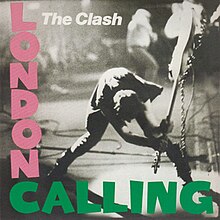
London calling: lyrical encounter tables for lazy GMs

While I was writing my condensation of Iron Gods I was listening to some music, and one of the songs that came up on my playlist was 'London Calling' by the Clash. Noting the similarities between the material I was writing about and the imagery of the song, it occurred to me that, in many cases, it would actually be pretty straightforward to use song lyrics as encounter tables. Just pick something where the imagery matches the appropriate mood and setting, roll a dice, and use that line number as the basis for your encounter. Choruses could either be ignored after the first repetition, or kept in to ensure that some results were more likely than others.

Here's a quick 1d20 post-apocalyptic random encounter table using the lyrics of 'London Calling'. I reckon you could roll on it at least three or four times before most groups realised that you were just running them through the lyrics of a Clash song...

Image result for clash london calling

1: London Calling. A pylon of rusted steel and crumbling concrete leans in the middle of the woods, a speaker sagging from its top. At random intervals the speaker blares into life, emitting bursts of stirring patriotic music and reassuring announcements from men with RP accents insisting that the situation is under control and order will soon be restored. KEEP CALM AND CARRY ON has been stencilled onto the trunk of a nearby tree in red paint. Two skeletons sprawl beneath it, rusty revolvers jammed between each other's jaws, obviously participants in a suicide pact.

2: The Faraway Towns. An isolated settlement. Locals eye you warily, suspicious of anyone they don't already know. The shops shut at 5pm sharp and most of the shelves are empty because of 'the shortages'. Half of the houses are boarded up and abandoned, and there seems to be virtually no-one here below the age of thirty. No-one wants to talk about what is happening in the world outside. 

3: War is Declared. A burned-out truck by the side of the road. A skeleton lolls at the wheel. Its trailer is, by some miracle, still largely intact. Within are bales of yellowing newspapers, tied with fraying twine, the front page of each copy bearing the same one-syllable headline: WAR!

4: Battle Come Down. First, the rattle of distant gunfire. Then, quite suddenly, the woods are swarming with bands of ragged, wild-eyed men wearing the tattered remnants of military uniforms, fleeing from cover to cover while firing poorly-aimed bursts of bullets in one another's directions. What, if anything, they are fighting about is deeply unclear. If captured they refuse to disclose anything other than their names, ranks, and serial numbers, and will escape at the first opportunity. 

5: Calling to the Underworld: A gigantic pit in the ground, seemingly bottomless, surrounded by rusting excavation equipment. A thick coil of electrical wires emerges from a bank of nearby machines and squirms down into the darkness. From far below can be heard the distant echo of recorded voices, speaking on a loop in a language that resembles no human tongue.

6: Come out of the Cupboard, you Boys and Girls. A house in the woods, seemingly deserted although obviously recently inhabited. Two adult human corpses lie in an upstairs bedroom, clearly dead for years. A careful search will reveal five children of various ages hiding in a downstairs cupboard. They speak an odd dialect, barely comprehensible to anyone other than themselves, and become frantic with fear and rage if separated. 

7: The Truncheon Thing. It stumbles through the woods, growling and hooting, all black leather and shiny rubber, a fetishist's dream or nightmare come to life. 'RETURN TO YOUR HOMES!', it howls, in a voice like a klaxon, hefting its weighted truncheon. 'THIS AREA IS UNDER MARTIAL LAW!' Then the beatings begin. It does not move like a human, but it bleeds rich red blood if wounded. It whimpers when it dies.

8: The Ice Age is Coming. The temperature drops. The wind dusts your faces with a swirl of unseasonable snow. From somewhere above you comes the cawing of migrating birds. You have perhaps a week before the ice comes. Make the most of it.

9: Meltdown Expected. Sirens wail mournfully in the distance. In an overgrown ruin in the forests, warning lights flash and flicker across the control panels of rusted machines. A long, long countdown is approaching its conclusion. In a concrete chamber beneath the earth, barely-contained energy roars and snarls like a caged beast. Soon it will be free.

10: The Wheat is Growing Thin. A still-functional farm hidden behind a screen of trees. Hunger-bitten labourers tend the meagre wheat-crop that grows from the blighted earth. At the forest's edge, someone has erected a crude wooden altar, atop which stands a figure of hacked wood representing a pregnant woman with the spreading horns of a stag. The grain of the wood is stained with recent blood.

11: Engines Stop Running. A ragged man stands by a stalled car, kicking it and cursing, virtually weeping with frustration. Within sit a family of pale children, gaunt and hollow-eyed and hopeless, surveying the trees outside with expressions of dull resignation. Safety is far away and night is coming. On the dashboard lies a faded map, depicting these lands as they once were in the almost-unimaginable days before the war.

12: I Have No Fear. An affable giant of a man strolls through the woods, here, cracking nuts and singing old marching songs, a pack and a shotgun slung across his broad and muscular back. For a loaf of bread and a swig of gin he will tell you stories of dead zones and battlefields, of bombed-out cities and miracles of technology hidden in lost bunkers buried beneath the earth. His arms and legs are densely packed with crude tattoos recording the names of his dead comrades. He has lost everyone and everything and now he has nothing left to fear. 

13: London is Drowning. Huge bomb-craters, filled with floodwater, mark the place which was once a city. Leaning wrecks of concrete and steel girders protrude from the lake in a dozen places. On the crater's edge a handful of survivors still live, shoring up homes which constantly threaten to slide into the water. They live by catching the strange fish that swim among the ruins, and by selling the treasures of dead men that they cut from their swollen bellies.

14: I Live By the River. A house on stilts by a swollen stream. A rowboat lies beneath a patched tarpaulin, and the boatman sits on his raised porch, a hunting rifle across his knees, wary and mistrustful of strangers. There is no other way across the river, and he charges whatever he thinks he can get away with. In a kitchen that stinks of smoked fish lurks his wife, tired and resentful, mechanically gutting the day's catch and dreaming green dreams of liberty. 

15: The Imitation Zone. Several acres of land enclosed by a rusting chain-link fence. Inside, everything is fake: plastic grass rustles around fibreglass trees, and styrofoam boulders prop up plywood houses, half-rotted by the rain. Within the houses stand life-sized mannequins, posed in attitudes expressive of distress. In the basement, a cage with cardboard-and-tinfoil bars has been torn open from the inside. Tracks leads off into the woods outside.

16: You Can Go It Alone. A young man with a body like a tensed spring lurks in the trees, watching you with the eyes of a predatory animal. If he ever knew a language then he has forgotten it. He wears a ragged khaki jacket and a pair of old boots, battered and indestructible. He can be coaxed from his hiding-place with offerings of food, but always retreats back into the woods to eat in solitude. On his left bicep is an ambiguous blue mark that might once have been a regimental tattoo. 

17: The Zombies of Death. They were hit by so many different forms of experimental weaponry that it is unclear what animates them. Is it the radiation they glow with? The weird shards of unidentifiable metal embedded in their flesh? The cold, bluish fluids that now course through their veins instead of blood? Their breath smells of distant chemical battlefields. They are still holding out somewhere between the hills and the river, maintaining a ragged perimeter, waiting for orders that will never come. 

18: The One With the Yellowy Eyes. A warbeast prowls the woods here, so warped and maimed that it is hard to guess what kind of animal it might once have been before all the modifications and the scars. Rusting staples connect bulging masses of artificial muscle. Off-yellow eyes state balefully out over a mouth full of mismatched fangs. The people fear it. It has forgotten how to die.

19: I Was There Too. On a crumbling wall in the woods, once part of some bombed-out building, someone has daubed a vast, vivid mural in brightly-coloured paint. In the background, cities burn and topple beneath a sky of flames: in the foreground, armies clash in a swirl of mutual butchery, their blood soaking the earth. In one corner stands a tiny, terrified figure, staring out at the viewer with wide and traumatised eyes. Beneath it someone has painted, in a shaking hand, the words: I was there.

20: I Saw You Running Out. Through the trees, a young woman can be glimpsed running flat out. Her camouflage jacket is several sizes too big for her, and her face and hair are streaked with someone else's blood. A makeshift pack is slung across her back, and a service revolver glints dully in her hand. She has seen you, but she shows no signs of slowing down or stopping. From far away, but getting rapidly closer, something large and implacable can be heard crashing through the forest in pursuit.