Friday, 4 February 2022

Drunken incompetent regional magnates: the purpose of aristocracies

First up, a brief announcement: the kickstarter for Knock! issue three has now gone live, packed with material from the old-school blogosphere's finest. It will also have a couple of my articles in it, so if you've ever wanted to own a physical copy of my d100 problem-solving items table but couldn't be bothered to print it out yourself then this is your chance.

Anyway. Something mildly interesting happened in my game this week: the PCs were negotiating with a king to end a civil war, which had started when the king had framed a mostly-innocent nobleman for his own misdeeds. The PCs wanted him pardoned, and suggested that the king should instead pin the blame on a different, more powerful nobleman, who was (a) actually much guiltier and (b) a drunken wastrel whom nobody liked. The king baulked at this, which somewhat confused some of the players. 'Isn't he a drunken incompetent?' one of them asked. 'Yes', I replied, 'but he's a very rich and influential drunken incompetent!'

The negotiations moved on and a compromise was ultimately reached, but thinking this over I feel there may have been a disconnect between the assumptions that I and (some of) my players were bringing to the table. To them, I think that getting rid of a corrupt lord who was despised by his own people seemed like pure upside, something that should be easily acceptable to everyone who wasn't him. Whereas my assumption, roleplaying as the king, was that openly moving against a powerful regional magnate - even one he personally disliked - would be something that he'd want to avoid unless he felt that there was absolutely no alternative. This isn't the first time I've felt such a disconnect: in reading discussions of fantasy RPGs and similar online, I've sometimes seen the view expressed that pre-modern aristocracies are purely parasitic, something that can be circumvented or done away with without disadvantaging anyone other than the aristocrats themselves. Frequently these seem to be rooted in modern liberal-democratic assumptions that aristocracies are obviously stupid ideas, and that any society that has one would be better off getting rid of it as soon as possible.
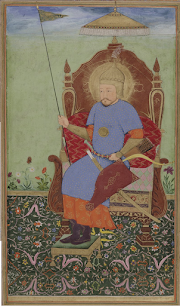
Nice throne, but what exactly is the point of you?

Now, I myself believe in democracy, and I am very glad that I don't have to spend my life bowing and scraping to the guy in the castle down the road. But I also think that social forms develop for a reason, and that if most of Europe and Asia kept circling back to social systems built around powerful land-owning aristocrats for thousands of years, then that probably wasn't just due to some kind of historical accident. When people think of aristocracies, I think they often tend to think of nineteenth-century aristocracies, lounging in their stately homes, expensive and decorative and mostly useless. But pre-modern aristocracies have a function, one that is not easily circumvented before the rise of the modern state, and understanding this function can help in making settings where all the obligatory dukes and barons and whatnot actually have some reason to exist.

Pre-modern life is local. There are no accurate maps, no accurate census data, no accurate statistics: the only way you can properly learn about a region is by living there, not just briefly but for years on end. Learning who lives where, what they produce, what they trade, understanding the social fabric that connects each family or community to those around it... all this requires specific local knowledge, and there are no shortcuts to acquiring it. Under these circumstances, establishing an effective system of resource extraction (taxation, conscription, etc) is often going to be the work of years, if not of generations. Any thug with an army can ride into a major population centre, steal everything not nailed down, and ride off. But if he wants his power to extend into the woods and the hills, the hamlets and villages, then that thug and his family need to be prepared to settle in for the seriously long haul.

This is the service that the local lord provides. If they've been there for long enough, he and his relatives will have wound their tendrils deep into all the prominent local families, bought off or intimidated all the local village 'big men', and learned through a grim process of trial and error roughly what kind of tax burden can be extracted from the region without actually triggering famine and/or revolt. He's probably been hunting and hawking in the area his whole life: he knows where to find all the hidden villages nestled deep in the forests, the ones that will never appear on any official map. His family's grip on the area will often have been decades if not centuries in the making. If you just banish them and install someone else then it might take a long, long time before his successors are able to exploit the region with anything like the same success.
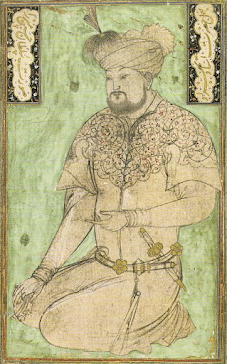
Thus I have made myself INDISPENSABLE!

And above the local lord is the regional magnate, who is playing the same game one level up. As the local lords work their hooks into the local clans and prominent village families, so the magnate works his hooks into the local lords, gradually establishing a network of family ties and legal dependencies and bribes and threats and traditions and alliances that allow him to tap them for resources, and to call upon their aid in times of war. The whole system is intensely local and intensely personal: it's 'I know a guy who knows a guy' all the way down. A really well-entrenched regional magnate can run his domain like a petty king: the royal court can issue laws and proclamations, but the court is far away, and royal power can only extend out into the regions via networks of local intermediaries. In the little hilltop towns that the king has never heard of, the law is usually whatever the local lord says it is.

As a result, for a king to antagonise one of his regional magistrates is a really big deal. That magnate stands at the head of a patronage network that reaches all the way down into miserable, marginal settlements that only a few outsiders even know how to find, and alienating him - or alienating his family by executing or banishing him - risks disrupting the functioning of government across a whole chunk of the kingdom. Dispossessing his whole family and installing someone else could easily be even worse: while they'd presumably be loyal to you, it might take decades for their replacement to get a proper system of leverage up and running to replace the one you've just destroyed. (Remember, all of this is personal - a matter of 'you owe my brother a favour' or 'my cousin married your sister' or 'our grandfathers served together in the war' - and so none of it is straightforwardly transferable to a new candidate.) And of course there's always the risk that the offended magnate (or his family) will simply storm off and rebel, relying on their remote strongholds and local support networks to keep them safe. You'll probably win the resulting civil war - you're the king, after all - but winkling them out of their distant castles is probably going to be a slow and bloody business, and exactly the kind of thing that rival kings love to take advantage of if given half a chance.

So when the PCs in our session this week proposed to King Bahir that he should sacrifice Lord Maruf, I think that what they meant was 'You're the boss, so why don't you pin this whole mess on this under-performing middle manager?' But what I, in character as the king, heard was: 'Hey, that guy whose family network you rely upon to hold down the northern provinces and the border lords? The one whose people know how to extract tax revenue and conscript soldiers from the upland villages around the domains of the Broken One? He's expendable, right?' The fact that King Bahir personally disliked Lord Maruf was beside the point. He just couldn't afford to take that kind of hit unless he really had to.

Luckily, in the end the party circumvented the whole issue by staging an illusionary wizard battle in a desert instead!
Tuesday, 1 February 2022

Race, gender, and 1990s comic books 2: Warrior Nun Areala

[Advance warning: this post will probably be of interest to no-one but myself and a handful of pop culture historians.]

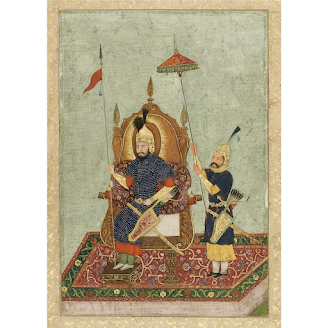
Researching my post on Shi involved a bit of reading around it, into the weird, spine-twisting world of 1990s 'bad girl' comic books. It didn't take long for another one to catch my attention - in this case Shi's close contemporary in the surprisingly crowded field of 'fanservicey 1990s comic book Catholic martial artist superheroines', namely Warrior Nun Areala. I promptly read something like one hundred issues worth of nunsploitation superheroics, and now stagger back to report my findings. 

Anti-Pope Sixtus VI, punching through walls one-handed like a total boss.

Shi and WNA debuted in the same year, 1994, and in many ways they are mirror images. Both are drawn in manga-influenced styles, and both are action heroines in revealing outfits who jump around a lot while hitting people with swords. Both flirt with 'bad girl' iconography, while actually depicting their heroines as completely morally upright and sexually chaste. But whereas Shi was an Asian heroine created by a white American artist fascinated by Japanese Buddhism, Areala was a white heroine created by a Taiwanese-American artist fascinated by Roman Catholicism; and while Shi had aspirations to artistry, sophistication, and moral seriousness, WNA was gleefully trashy from the outset. Ana angsts endlessly over how to reconcile her violence with her religious morality. Areala just yells 'HAIL MARY!' and then beats everyone up. 

Here’s the concept: it’s the eleventh century, and Vikings are ravaging Europe. Belatedly noticing that the warriors she watches over spend most of their time brutalising helpless civilians, the Valkyrie Auria has an ‘are we the baddies?’ identity crisis and converts to Roman Catholicism. She then spots an unarmed nun being pursued by Vikings, and merges her spirit with her own, creating a new, composite, superpowered being: Warrior Nun Areala. Areala slaughters the Vikings, achieves sainthood, and proceeds to found a secret order of all-female Catholic demon-hunters, the Warrior Nuns.


The story then cuts forward to the 1990s, by which point there has been no noticeable demonic activity for decades and the Warrior Nuns are viewed as something of an obsolete embarrassment by the Vatican. Newly-qualified Warrior Nun Shannon Masters is sent out to New York… just in time for a demonic invasion of the city led by an immortal ancient Roman Satanist arms dealer named Julius Salvius, who plans to use his army of cyber-demons to TAKE OVER THE WORLD. Shannon tries to stop him and gets splattered, but as she lies dying she has a vision in which Saint Areala merges with her, healing her wounds and granting her superhuman prowess. (Oddly enough, the Trinitarian echoes here – Areala as Mother, Shannon as Daughter, Auria as Holy Valkyrie Spirit – are never discussed or explored.) Declaring herself to be Warrior Nun Areala reborn, Shannon proceeds to defeat Julius and saves the world. Then she hangs around in New York to beat down any other demons who turn up.

This concept could have been used as the basis for a serviceable urban fantasy series, and indeed several subsequent writers tried to use it to tell 'serious' urban fantasy stories, usually with poor results. But Dunn's original series leans deeply into high camp. Shannon is trained by a cyborg nun named Mother Superion. Her nun-fu fighting style involves yelling things like 'VIRGIN KICK!' and 'ROSARY ATTACK!' while hitting people. (And, yes, her rosary beads explode on impact.) Her original Warrior Nun costume has three cleavage windows. (It gradually became more sensible over time.) At one point she is attacked by a wooden golem who communicates entirely in anagrams of 'Warrior Nun Areala', and who thus lurches around saying things like 'WAR AURA, LEARN IRON' and 'I RAN A RUNE WAR'. The colours are bright and the visuals are cartoonish and the whole thing has a slightly amateurish air that reassuringly implies no-one involved in the comic was taking things too seriously. And the characters communicate in 'dialogue' like this:

"YOU STUPID NUNS! AGAIN I WIN! YOU WILL NEVER DEFEAT THE FORCES OF HELL! HA! HA! HA! HA!"

(And then his plane explodes.)

It's also obvious that Ben Dunn is a massive D&D nerd. Demons answer to 'lord Orcus', describe inferior demons as 'low-level lemures', refer casually to conflicts between 'demons' and 'devils', and describe Earth as being on 'the Prime Material Plane'. One character is referred to as 'a level 5 Magic Priest', who went missing while 'battling a type 7 demon'. At one point, the demon princess Lillith is even attacked by an armoured Catholic priest who introduces himself as 'THE CLERIC!' (She kills him one panel later.) 

Even though Shi was a higher-profile property at the time, WNA had a lot more comics - 120ish vs 65ish over the same ten-year period - probably because Ben Dunn's Antarctic Press was a much more efficient comic-producing company than Billy Tucci's Crusade Fine Arts, which seems to have existed in a perpetual state of crisis. These are mostly filled with inconsequential adventures, and endless spin-off mini-series about minor characters: Shotgun Mary, Lillith, Dei, Crimson Nun, Silver Cross, Serina, The Redeemers, etc, etc, etc. As with Shi, however, the core narrative is contained in just a few issues: Warrior Nun 1-3 (1994), Rituals 1-6 (1995), Resurrection 1-3 (1998), and finally issues 9-12 of Warrior Nun series 3 (1999). Those sixteen issues tell Shannon's actual story, although frustratingly it cuts off just before reaching its climax: the next issue, Warrior Nun 3:13, time-jumps forwards to introduce a new, younger, Buffy-inspired heroine, leaving the original story unresolved. (Maybe it got wrapped up in series 4? I couldn't find those.) 

Considered as a stand-alone sequence of sixteen issues, I felt that there was a lot to like about the core story of Warrior Nun. The first twelve, by Ben Dunn, are lurid and campy and fun, fully self-aware of their own silliness: it was only when people tried to take it seriously that the whole thing went off the rails. Both Barry Lyga's Warrior Nun series (1997) and Steve Englehart's Warrior Nun: Scorpio Rose miniseries (1996) tried to use WNA to directly tackle serious themes of institutionalised sexism, racism, antisemitism, and homophobia within the Catholic church, a task to which it was wildly unsuited. They were meant to be character-driven stories about faith and doubt, but Shannon herself is essentially a non-character: her whole personality boils down to 'be good' and 'serve the church', and whenever they come into conflict the first one always wins. Her backstory is like that of every D&D character irritated at having to waste time on background that could be better spent adventuring: 'I'm an orphan who was raised by paladins to be a paladin so now I'm a paladin. Motivation: be a paladin. Personality: Lawful Good. Now where's the dungeon entrance?'

There's nothing inherently wrong with being a non-character if you're in the right kind of story. Secondary series protagonist Shotgun Mary exemplifies this: she's an ex-nun with a motorbike and a shotgun who rides around America shooting demons in the face. That's it: that's her entire life. Some of the Shotgun Mary stories are almost abstract in their pure simplicity: cultists do cultist stuff until the demons show up, and then the demons do demon stuff until Shotgun Mary shows up, and then Shotgun Mary shoots everyone in the face and the story ends. (It appears to be a fundamental law of the Warrior Nun universe that all problems can be solved by Shotgun Mary shooting them in the face.) It's more like a dance than a story. And because of that absolute simplicity, when a complication is added - as with the rather touching revelation of Mary's homosexuality in Shotgun Mary: Blood Lore (1997) - it can actually work. Whereas the writers who worked on WNA in 1996-9 kept trying to write about Shannon as though she was an actual character, and she just wasn't, and it never really came together. 

Ideologically, WNA clearly wanted to have its communion wafer and eat it, too. In one sense, Shannon is an exemplar of 1990s 'Girl Power' pop-feminism: heroic, capable, near-invincible in battle, and frequently shown to be right while her male superiors are wrong. At the same time, she's a 'good girl' who willingly subordinates herself to patriarchal religious authority, and never objects to the assortment of ridiculous stripper costumes she's asked to wear in the line of duty. (It's Mother Superion, not Shannon, who ultimately insists on a more sensible design.) Like the Paladin Girls of whom she is, in a sense, an early example, she's sexy without being sexually threatening, empowered without being confrontational. (Compare and contrast the Ghost comics written in the same period, whose 'feminist avenger' rhetoric deliberately set out to alienate parts of its male readership.) Shannon's secretly in love with a priest, Father Crowe, but they're both sworn to celibacy, and both much too moral to dream of breaking their vows. Judging from their letters columns, other contemporary comic books featuring 'strong female characters' - Shi, for example, or Ghost, or Kabuki - were extremely proud of the fact that they had female readers who identified with the pain and anger of their heroines. I'm not sure that WNA had any female readers at all.

What could possibly have driven them all away?

Religion-wise, Dunn took flak from both sides: Catholics wrote in to complain that he was sexualising and trivialising something holy, while atheists and neopagans expressed disgust at his depiction of Catholic militant orders as heroic rather than villainous. Certainly Dunn's portrayal of the Catholic church was much more positive than that of most other comic books of the era: Magdalena and Witchblade, for example, mostly depicted it as a nest of intolerant fanatics and loopy demon cultists. Maybe he absorbed something other than an epic-level nun fetish from his days as a Catholic schoolboy after all...

The most remarkable part of the series came in 2000, when Chris Allen took over as both writer and artist on the main book for four highly impressive issues. Abruptly the story swerves into operatic grandeur, as Satan comes to Earth, Shannon renounces the church, Father Crowe confesses his love, and Auria's opposite number - the demonic valkyrie Nebelhexa - manipulates the franchise's greatest villains into breaking open the hidden vaults where the first Pope is locked away, crazed and immortal, deliberately written out of history by his successors. (The true original Pope turns out to be a black man, in a fairly obvious but still effective metaphor for the erasure of black experience from Eurocentric histories.) After dozens of issues worth of plate-spinning, Allen pulls all the narrative triggers at once, and it briefly looks as though the whole franchise is actually going to grow up. Sadly, the series got yanked out from under him and soft-rebooted back into perpetual adolescence before he'd even finished his narrative arc. 

Thinking about why Allen's arc worked for me when Englehart and Lyga's didn't, I concluded that it came back to the difference between working with a concept and working against it. If your form is something that tends naturally towards absurdism, like a nunsploitation superhero comic or the average D&D adventure, then suddenly asking your audience to take it completely seriously usually won't work, because the premise is at least somewhat inherently ridiculous. But if you just keep turning up the dramatic volume, then such stories can often attain a level of weight and significance of their own accord. Shannon, like many D&D PCs, has virtually no inner life: she relates to the world purely through action, and as a result she is fundamentally ill-adapted to stories about psychological complexity. What she can do is grand gestures: doomed final stands, dramatic renunciations of allegiance, declarations of secret love. Comic books thrive off that sort of thing. So do D&D campaigns.

I haven't seen the recent Netflix adaptation. The 2019 comic book miniseries was pretty good, though!

Thursday, 27 January 2022

Major injuries: what doesn't kill you makes you stranger

In yesterday's game, one PC was rescued from captivity by the party, but not before undergoing some pretty severe torture. This presented me with a bit of a quandary: having him simply bounce back from such an ordeal after a couple of Cure Light Wounds spells felt wrong, but at the same time I didn't want the consequences to feel like a punishment. (The problem with most 'lasting injury' rules is that they make you weaker as a consequence for failure, which makes you more likely to fail again in future, which makes you even weaker... realistic, no doubt, but not what most people are looking for in fantasy adventure games!) In order to model what I think of as 'comic-book trauma' - the kind where undergoing severe physical suffering makes you different without necessarily making you less capable - I thus proposed the following off-the-cuff house rule:


1: When a character undergoes life-changing suffering (not just a regular injury, but an ordeal so severe that they will never quite be the same again), roll 2d6 of different colours. Declare before rolling which one is the good dice and which one is the bad dice.

2: The good dice shows how the experience has changed you for the better, as follows:

  1. Gain +1 Strength permanently. Your ordeal has left you filled with a slightly crazed fury that drives you to train harder than you have ever trained before.
  2. Gain +1 Dexterity permanently. Your experiences have left you jumpy and on-edge, sharpening your reflexes.
  3. Gain +1 Constitution permanently. After what you've lived through, regular pain and hardship barely even registers anymore.
  4. Gain +1 Intelligence permanently. Your experiences have made you hyper-vigilant, determined not to miss anything lest you expose yourself to further suffering.
  5. Gain +1 Wisdom permanently. Your sufferings have given you a new perspective on life.
  6. Gain +1 Charisma permanently. When your injuries heal, they leave you with the kind of scars that make you look cool and sexy and dangerous.

3: The bad dice shows how the experience has changed you for the worse, as follows:

  1. Lose -1 Strength permanently, due to permanent muscle damage.
  2. Lose -1 Dexterity permanently, due to permanent nerve damage.
  3. Lose -1 Constitution permanently, due to permanent organ damage.
  4. Lose -1 Intelligence permanently, due to permanent brain damage.
  5. Lose -1 Wisdom permanently, due to lasting trauma and/or derangement.
  6. Lose -1 Charisma permanently, due to disfiguring scars.
4: If you roll a double, then you've somehow passed through your ordeal largely unscathed. In retrospect it probably seems more like a bad dream than something that really happened.

(Naturally, in yesterday's session my player rolled a double and the whole thing was wasted, but we might use it again in future...)

Do note that using these rules freely enough will increase the chances of characters drifting towards the extreme ends of the stat distribution range, though this is probably pretty appropriate for people who've been through as many extreme experiences as they have!

Tuesday, 28 December 2021

Remnants of the Nameless Empire: more monsters from City of Spires

More monsters that my players have run into during my current City of Spires campaign. These ones lean further into science fantasy, as one of the key conceits of the campaign is that it's a fantasy setting built on top of the ruins of an SF setting. The deeper you dig the more likely you are to start running into all the malfunctioning cyborgs and radiation zombies left over from previous ages of the world. 

Worm Cultists: AC leather, 1-5 HD, damage by weapon, morale 7.

Long ago, the Nameless Empire procured the egg of an alien worm-god for study. At some point after the fall of their empire, this egg hatched, giving birth to the enormous alien monster known as the Great Worm. It remains trapped to this day in the subterranean vault it was originally stored in as an egg, but its dreams and magical radiation are powerful enough to bleed into the world outside.

Worm cultists are those wretched individuals who strayed too close to the Great Worm's prison, and found their minds overwhelmed by the power of its alien dreams. Compelled by its will, they dig themselves as deeply as they can into the rock and earth that entomb it, bathing themselves in the bizarre radiation that it emits until they are utterly changed, body and soul. Their bodies and limbs become slimy and segmented, studded with bristly hairs that allow them to sense vibrations in the earth and air. They can still just about speak, though their voices sound as though they're gargling with slime. At the apex of their transformation they tear out their own eyes, their empty sockets becoming hollow, slime-filled pits in what were once their faces. Mortal sight would only be a distraction from their new senses.

Worm cultists retain human-level intelligence, though the submersion of their minds in the dreams of the Great Worm tends to make them rather unhinged. They are utterly devoted to the Worm, and work tirelessly to free it from its prison. Their boneless bodies can squeeze through any space wide enough for them to get their heads through, and they can tunnel efficiently through soil and dirt. Their bristling hairs allow them to sense motion, making them hard to evade: they can also instinctively sense radiation, including the background radiation found throughout nature, and can recognise different substances from their differing radiation signatures. They are still blind, however, and cannot easily distinguish between e.g. one human and another unless they hear them speak. Drying out is very painful for them, and they take an additional 50% damage from heat- or fire-based attacks. They prefer to remain in cool, wet, dark locations whenever possible.

All worm cultists double as priests of the Great Worm, and have the spellcasting abilities of a cleric with levels equal to their hit dice. 

Image by Artur Owsnicki, after an image by Devon Cady-Lee.

Worm Men: AC leather, 2 HD, damage by weapon, morale 6.

This is what worm cultists eventually degenerate into after soaking up too much magical radiation. Their legs atrophy into vestigial stubs, while their arms warp into long, boneless, wriggling tendrils. Any hint of neck or waist disappears: apart from their arms, they now resemble giant segmented worms with distorted human faces at their apex. Their radiation-fried brains are only semi-intelligent, and they cannot speak. They have the same sensory abilities as worm cultists, and are even more proficient as tunnellers, but lack their spellcasting powers. They usually fight with crude clubs or spears.

Worm men are hermaphroditic, and are capable of breeding with one another, though their irradiated state means that their fertility is very low. They instinctively obey worm cultists, who use them as warriors, labourers, and guardians.

Image by Patrick Reinemann

Zomborgs: AC chain and shield, 3 HD, damage 2d6 (blade hands) or 4d6 (energy blaster), morale N/A.

Cybernetic zombies built by the Nameless Empire to guard the resting places of its honoured dead. They resemble embalmed corpses held upright by cybernetic skeletons: their right arms terminate in a variety of blades (to allow them to assist with embalming work), while their left hands have been replaced with short range energy blasters. These blasters require three rounds to reload between shots - zomborgs will try to keep their distance while their blasters are reloading, but if their enemies close with them they will fight with their blade-hands, instead.

Zomborgs sense intruders via motion sensors built into their eye sockets, whose blinking red lights are easily spotted in the darkness of their ruined vaults. They have no other senses, and are oblivious to noises, smells, lights, etc. They have no intelligence beyond their preprogrammed 'guard-hunt-kill' and 'autopsy-embalm-preserve' routines, and are incapable of learning from experience. (My PCs mostly dealt with them by luring them into traps.)


Stranglers: AC chain, 1 HD, damage 1d4 / 1d4 (2 claws), morale 5.

These hairless subterranean humanoids are a deliberately devolved caste of engineer-slaves created by the Nameless Empire. Their stature is dwarfish, averaging only 4' high, but their bodies are lithe and muscular and they have freakishly long arms ending in long, clever, multi-jointed fingers. They can see in the dark, and underground they are as agile as monkeys, effortlessly climbing and swinging along walls and ceilings. They are capable of squeezing their bodies through narrow cracks like contortionists, and their nests are usually found in spaces only reachable via fissures so narrow that only they can squeeze through them. They possess only animal-level intelligence, but have an instinctive knack for mechanical labour if commanded to undertake it via the correct machine-noise signals.

Stranglers get their name from their secondary function, which is to protect the areas they inhabit against intrusions from unauthorised personnel, i.e. anyone without the correct subdermal microchips. When they sense intruders into their ruined underground complexes they will creep stealthily down upon them, aiming to sever ropes, douse lights, and otherwise render their victims blind and vulnerable: then they will leap down upon them in chattering swarms and try to claw and strangle the life from them. If a Strangler hits the same target with both claws in the same round it has its hands wrapped around their throat, and will proceed to throttle them for an automatic 2d4 damage per round in place of its normal attacks until either it is defeated or its victim dies. (Obviously, this special attack only works on enemies who have necks and need to breathe.) They attack only from ambush and in packs, and will retreat if faced with determined opposition. 

Stranglers are usually found in the wreckage of Nameless Empire factories and laboratories, some of which still house semi-functional AIs dozing through the centuries on sleep mode. Explorers who manage to fight their way through the Stranglers and contact such an AI may be able to persuade it to microchip them if they can convince it that they are there on legitimate imperial business, though the AIs may demand that they perform other tasks in return in service of their long-dead empire.

Friday, 10 December 2021

That's what Shi said: race, gender, and 1990s comic books

Who here remembers Shi?


I certainly didn't until recently. As my dalliance with Mutant Chronicles demonstrates, however, there are few limits to my tendency to become fascinated by whatever 1990s pop culture ephemera happen to cross my path. In this case, all it took was a stray link to a recent kickstarter and the fact that the comics turned out to be on sale at Drivethru. 

In many ways, Shi turned out to be a kind of bottled essence of mid-1990s nerd culture. A sexy Japanese woman in a stripper costume, written and drawn by a white American man, engages in bloody martial arts battles against urban criminal gangs while quoting Sun Tzu and pontificating on the nature of Bushido, all against a backdrop of Japanese corporate takeover of American business. It has everything: violence, Orientalism, urban decay, mercenaries, ex-Special Forces vigilantes, objectified 'action girl' heroines, guns, katanas, rampant fetishism. It even finds room for the then-current preoccupation with Catholicism that was so much a part of other 1990s action-girl comics like Magdalena, Fallen Angel, Warrior Nun Areala, and Avengelyne.

What surprised me about Shi is that, despite all this, it actually had some real merit. It almost manages to tell a story worth telling: not a narrative for the ages, by any means, but a good, pulpy tale about the self-consuming nature of violence and the futility of revenge, with strong roots in both Christian morality and Japanese pop culture. The art, at its best, manages to accomplish an effective fusion of Manga stylings, Floating World prints, and the Western superhero comicbook tradition. In places it comes close to being a cross-cultural success story, an example of an Italian-American Catholic artist developing a fascination with Japanese Buddhism that gives rise to something greater than the sum of its parts. But it never quite managed to cohere.

Here, as elsewhere, the hallucinatory Japanese warriors Ana sees around her in battle mirror the way that the comic itself is haunted by the Floating World imagery upon which it draws. 

Here's the story it wanted to tell: some time in the 1970s, a Japanese martial artist marries an American woman, converts to Catholicism, and retires from his old life to run a small business. One of his rivals sends a Yakuza hitman, Arashi, to hunt him down. He overpowers Arashi, and is about to kill him when his daughter, Ana, runs out, yelling 'Thou shalt not kill!' Arashi takes advantage of the distraction to shoot him dead, and then flees.

Traumatised by her father's death, Ana goes to her paternal grandfather for martial arts training, planning to shape herself into an avenger. Arashi, meanwhile, emigrates to America and builds himself a criminal empire. Years later, Ana hunts him down and starts killing his henchmen, but finds herself increasingly shocked by the human toll her violence is taking: after all, the men she's killing have wives and children, too. She tries to abandon her mission, but she's in too deep, and her attempts to disentangle herself only end up with more people getting killed. Finally, sorrowfully, she concludes that she has to see this through. 

Meanwhile, Arashi's powerbase is starting to crumble under the impact of Ana's assassinations. His enemies circle and the loyalty of his followers wavers, culminating in a coup attempt in which his own lieutenants rise up against him: Arashi wins, but is left broken-hearted, having killed his own closest friends in order to preserve his power over an empire that is already falling apart. Ana arrives to kill him, they fight, and she loses, but Arashi no longer has the heart to kill her, recognising her as a truer embodiment of the martial virtues he once aspired to than he ever was. Instead he commits symbolic seppuku by calling the police and framing himself for the murders she committed, while she abandons her avenger identity and walks away, her traumas resolved. The end.

At its best, Shi manages to be a rather humane story about the way in which violence can estrange us from ourselves: a story in which every fight scene has real psychological weight for the heroine, rather than just being meaningless padding of the 'and then ninjas attack!' variety. Its moral core is a struggle between three sides of Ana's personality: the religious morality that calls her to forgive, the honour code that calls her to avenge, and the primordial bloodlust embodied by the figure of the demon-samurai which haunts her, that calls her to just keep killing people because killing people feels fucking awesome. But anyone who has the slightest familiarity with 1990s comics will be completely unsurprised to hear that this core story kept getting buried under mountains of utter gibberish. There are conspiracies and misunderstood mutants and ancient orders of secret warriors and more fetish fuel and cod-Asian mysticism than you can shake a bokken at. 


Shi had honourable beginnings. The early editorials keep emphasising that it wasn't like those other 'bad girl' comics, with their meaningless violence and gratuitous fanservice, and at first it was sort of true. Billy Tucci had an actual story he wanted to tell, supported by real characters and an above-average-for-1994 level of understanding of Japanese culture, and these helped to make Shi a hit back when it was still just a struggling indie comic coming out at irregular intervals a few times a year. It got mainstream recognition: Tucci wrote proudly about the coverage he'd received in The New York Times and Elle magazine, notice that he attributed to his heroine's 'style and sophistication', approvingly quoting a description of Ana as 'the Audrey Hepburn of comics'. He was obviously frustrated with the way that Shi kept getting lumped together with what he viewed as inferior works, a perspective that Shi: Shiseiji (1996) was written to refute, as its editorial makes clear:

[A]s he spies upon Ana's adventures as Shi, our shiseiji has no idea of the complex moral issues that drive Ana's quest to avenge her family. Consequently, all he sees in Ana is a 'super ninja-bitch'. In this respect, Shiseiji is very much like a lot of fans in the comics community who write Shi off as another 'bad girl' book. The fact of the matter is that Ana isn't bad at all. She's not a ninja, either.

By 1997 Tucci was riding high, and unwisely tried to make Shi the lynchpin of a whole new comics franchise, with everything that implied in the late 1990s: spin-offs, crossovers, trading cards, alternate covers, the works. There were even plans for a Shi movie starring Tia Carrere, whom readers of a certain age will remember as Cassandra from Wayne's World. But the audience wasn't there, and the comics industry was in crisis, and by 1998 it was obvious that the entire enterprise was in deep trouble, with cancelled series and plaintive editorials begging readers to tell them what they were doing wrong. By 1999 the whole thing had collapsed into ruin.

It's easy to critique Shi. Critiquing Shi is like shooting fish in a barrel. Ana's whole character design is an exercise in fanservice - one comic even lampshades this by having her visit a strip club, where everyone naturally assumes, based on her costume, that she's one of the performers. Her fighting style apparently consists mostly of jumping into the air while sticking her butt out. The dilemma her character is built around rests on awful essentialising stereotypes that juxtapose kind humane western Christianity with alien and implacable Asian honour codes. (Moments where Ana starts talking about her giri tend to be particularly bad.) For a story supposedly built around a 'strong female character', a surprising amount of the plot consists of men taking decisions on Ana's behalf while she flops around having existential crises. The ancient secret orders of the Nara and Kyoto sohei, whose feuds drive much of the plot, are portrayed as murderous idiots, a kind of parody of Western stereotypes about Eastern religion, forever killing each other over trivialities and committing ritual suicide at the drop of a hat: it's impossible to believe that such organisations could hold together for a single generation, let alone a thousand years. (The 2004-5 miniseries Shi: Ju-Nen - which inexplicably featured costume designs by Anna Sui, of all people - showed them finally wiping each other out: the only wonder was that it hadn't happened sooner.) And the series never knew what to do with its secondary protagonist, Tomoe, whose narrative rapidly devolved into stream-of-consciousness mad-libs even by comic book standards. Not even the queer-baiting between her and Ana ever amounted to anything.

'I love you, Tomoe! But in a totally Platonic, heterosexual way, because it's still 1997! Now let's have another scene where we hug while we're both half-naked!'

The attitude of the whole franchise towards its Asian sources is deeply conflicted. On one hand, Tucci was clearly fascinated with all things Japanese, intrigued by Shinto and Buddhism, visually enraptured by kimonos and samurai armour, and delighted by the expressive potential of manga. (Shi had a manga spin-off in 1996, an era when manga was still relatively little known to the mainstream American comic-book market.) He proudly printed an endorsement from Stan Sakai, creator of Usagi Yojimbo, who praised Shi for being more respectful of its source material than most of its competitors, and who described it as 'captur[ing] the spirit of the buyuden - tales of valor popular in medieval Japanese literature'. Tucci even collaborated with the Korean-American writer Hank Kwon on the short-lived series Horseman (1996), whose story of an immortal Korean warrior predated the arrival of Hallyu culture in America by several years. 

At the same time, though, Tucci kept condemning the very Asian cultures that he drew upon so heavily, returning repeatedly to the cruelty of the historical Japanese persecution of Christianity, and to Ana's need to reconnect with her mother's Catholicism as an antidote to the violence and inhumanity of Bushido. Even when he was publishing his own manga series it was at pains to distance itself from association with the wrong kind of manga, keeping its own brand of softcore fanservice carefully distinct from the form's reputation for more extreme pornographic content. As the editorial to the first issue explained, 'Weird monsters, giant robots, invaders from space... you name it, we'll do it (although, we'll skip emulating some of the racier stuff, like LA BLUE GIRL or DEMON BEAST INVASION. Sorry, but Shi just isn't that kind of gal).'

OUR manga isn't porny at all!

The frustrating thing about Shi is how close it kept getting to becoming something more. Take these passages from the 1995 comic Shi: Senryaku. Here's Ana, aged seventeen, learning a harsh lesson about why the white American boy she likes keeps smiling at her -  

"Let me guess," Mike offered. He let an insinuating tone creep into his voice. "You've heard some things about Oriental girls, you were wondering if they're true, and since I'm married to a Japanese woman..."

"Hey, I knew you'd understand," Ted said. The leer in his voice echoed Mike's. "The guys in my frat say that Asian women are, like, totally submissive and they'll do anything! Y'think Ana would be like that?

"Gee, Ted, I guess you'd better ask her", Mike responded, as I stepped out of the office. Ted gaped at me, astonished and ashamed. I glared at him. He turned to Mike, realized he'd been set up, and stormed out.

Full marks to Mike, right? Except that after becoming Ana's substitute father figure, and sharing all his sorrows, he shows his true colours as well:

I felt so sorry for him. Suddenly we were embracing. I was rocking him, trying to comfort him... and he kissed me.

I froze, mortified. What was he doing? He kissed my eyes, my hair, he whispered in my ear. It was okay, he said, Mariko didn't understand him, our bond was so special, so deep, and then he said: "Ana, you're so beautiful... I've been waiting for this since the day you walked in..."

He'd been waiting for this since the day I walked in. Which meant he'd been planning for it since then. Which meant that everything he'd been for me was a lie to make me vulnerable so that this could happen...

I broke away from him. I couldn't speak. I trembled with fury and anguish at the incredible depth of his betrayal.


This is pretty insightful stuff for a 1990s comic book, offering not just obvious critiques of racial stereotyping and fetishisation, but also a more subtle awareness that just because a man seems to transcend such vulgar prejudices doesn't mean he's not waiting to exploit you the moment he gets the chance. But this appears embedded in a series whose entire marketing strategy essentially boiled down to: 'HEY! LOOK! BUSTY ASIAN CHIX! CHECK OUT DAT A$$!'


See what I mean?

But under all the nonsense there's some real strength, both in the writing and the imagery. Shi, I fear, was a graphic novel manqué, undone by the realities of mid-1990s commercial comic book publishing. If the strongest elements of The Way of the Warrior, Shi: Kaidan, Shi: Senryaku, and Tora No Shi had been distilled down into a single series of about twelve issues, it could have been great, a kind of red-and-gold counterpart to David Mack's astonishing black-and-white Kabuki: Circle of Blood: a lurid martial arts crime drama about a traumatised girl taking on the legacy of her legendary ancestress in a half-crazed bid for revenge and redemption, haunted by a hallucinatory swirl of Japanese folklore and Catholic religious imagery, oni and angels, leering tengu and bleeding saints. But drawing it out to over sixty issues, and diluting it with all the superfluous characters whom Tucci hoped to publish spin-off series about, just let all its strength dissipate, reducing Ana to the status of yet another 90s action girl with too many katanas and not enough clothes.

The moral of the story is that if you only have one story to tell, then for heaven's sake just tell that story. 

The application of this moral to RPGs is left as an exercise for the reader.

Monday, 15 November 2021

Upstairs, Downstairs: d20 Power Relations

You know what makes for good drama? Unequal power relations!

You know what makes for even better drama? Power relations that are not what they appear to be!

Gerard ter Borch, Young Woman with a Maid (c. 1650)

Next time you introduce two NPCs, make clear that one of them is higher status than the other. This can be obvious (noble and servant, employer and employee, lord and villein, officer and soldier, teacher and student) or more subtle (two members of the same guild, community, regiment, or family, one of whom is just slightly senior to the other), but it's something that they're both acutely aware of, and it inflects every interaction between the two of them. 

Then roll 1d20 on this table to find out what the relationship between them really is!

  1. Exactly what it seems to be. The high-status NPC is in charge, and the low-status NPC respects their authority.
  2. Creepily extreme. The high-status NPC makes all the decisions, and the low-status NPC obeys instantly and without question, having apparently reduced themselves to a mere instrument of their superior's will. 
  3. One-sided. The low-status NPC is sycophantically devoted to the high-status NPC, to an extent that obviously makes them uncomfortable, and keeps making desperate attempts to prove the extent of their loyalty.
  4. Emptily theatrical. They make an enormous show of performative authority on one side and performative deference on the other, but anyone paying attention will notice they both actually just seem to do whatever they want. 
  5. Performatively informal. The high-status NPC makes a big performance over being the low-status NPC's friend, treating them as an equal, etc, but in practise they expect their authority to be accepted without question. 
  6. Erotically charged. The pair of them seem to be enjoying this whole 'giving and taking orders' thing a bit too much, in ways that may make people speculate about exactly what goes on between them behind closed doors.
  7. Founded on lies. The high-status NPC is actually the lower-status of the pair, and is trading on some kind of falsehood (e.g. forged qualifications, fake titles) to invert the power relationship that would otherwise exist between them. 50% chance the other NPC has started to suspect that something weird is going on. Obviously they'd be furious if they learned the truth. 
  8. Overt dependency. The high-status NPC makes a show of calling all the shots, but it's blatantly obvious that all the real decisions are being made by the low-status NPC. 
  9. Puppet show. In public the high-status NPC appears to be in charge, but actually the low-status NPC wields all the real power, either through some external hold (e.g. blackmail) or just through sheer force of personality. Their 'superior' would never dare to do anything that went against their wishes. (50% chance that the high-status NPC is actually OK with this state of affairs; 50% chance they resent it bitterly.)
  10. Covert subversion. The high-status NPC makes all the decisions, and the low-status NPC pretends to obey, but secretly tries to undermine and sabotage them at every opportunity. 
  11. Overt subversion. The high-status NPC makes all the decisions, but the low-status NPC openly mocks and defies them at every chance they get. 
  12. Covert equality. The two NPCs go through a charade of authority and submission in public, but actually regard one another as trusted equals and genuinely seek one another's input and guidance, though they may need to conceal this due to the status difference between them.
  13. Stiffly formal. The two NPCs have a very clear understanding of the exact nature and limits of their duties to one another, and scrupulously observe these at all times, making a great show of observing their obligations to one another to the letter without exceeding them.
  14. Founded on love. The two NPCs genuinely love one another, romantically or otherwise, though depending on the status difference between them they may need to keep this secret.
  15. Founded on fear. The low-status NPC only obeys the high-status NPC out of fear of punishment. If they can safely get away with disobeying them without consequences then they will happily do so.
  16. Founded on self-interest. The low-status NPC serves the high-status NPC only because they currently believe it to be in their best interests to do so, and will desert them in a heartbeat if a better opportunity comes along.
  17. Founded on abuse. The high-status NPC ensures the subservience of the low-status NPC through physical and emotional cruelty. The low-status NPC hates them bitterly, but is too beaten down to resist them unless they're absolutely sure they'll get away with it.
  18. Chronic misunderstanding. The low-status NPC is apparently loyal to the high-status NPC, but somehow manages to comically misunderstand almost every order and instruction they are given. (50% chance this is a campaign of passive resistance on the part of the low-status NPC; 50% chance they really are just that dim.)
  19. It's complicated. While the overall status difference between the two NPCs is clear, there is one significant area of life in which the low-status NPC is actually higher status than the high-status NPC, and can expect to be treated as such. (E.g. higher educational attainment, higher professional standing, higher religious status, higher military rank.) 50% chance the high-status NPC acknowledges and respects this; 50% chance they're furious about having to defer to someone they normally regard as an inferior. 
  20. Masquerade. The two NPCs have swapped places, with the low-status NPC pretending to be high-status, and vice versa - there may be a good reason for this, e.g. fear that an assassination attempt may be imminent, or it may just be a random whim of the high-status NPC. Neither is performing their assumed social role very convincingly. 50% chance the low-status NPC is still loyal to the high-status NPC despite their apparent role reversal; 50% chance they're scheming how to make their change in status permanent.


Tuesday, 9 November 2021

Desert Monsters from the City of Spires

A few monsters who have turned up in my current campaign. I think my PCs have figured all these guys out well enough for me to safely list them here.


Image by Akihiro Tsuji


Smoke Giant: AC chain, 4 HD, 2 fists (1d8 damage), morale N/A.

Smoke giants are artificial guardians created by a long-fallen civilisation. In their dormant state, they just look like a thick covering of soot, coating everything in the room they guard. When they are disturbed, however, the soot flies up into the air and rapidly coheres into an ogre-sized humanoid monster, jet-black from head to foot. The giant furiously attacks anything that enters its protected area. If reduced to less than half HP, or if the trespassers depart, it explodes apart into a cloud of choking black smoke, which gradually settles to the ground as thick black soot. In smoke/soot form it recovers 1 HP per round until fully healed, at which point it will cohere back into humanoid form if the trespassers are still present. If reduced to 0 HP it explodes into smoke and does not recohere. 

If a dormant smoke giant can be collected into a container while in soot form without triggering it, then the resulting container can be used as a missile weapon: the moment it is opened, the giant will explode out of it to attack anyone nearby. Smoke giants are sometimes found still lying dormant inside their original storage crates.

(Once my PCs worked these guys out, they dealt with them by building an improvised suction pump attached to a hose, which they used to suck up the soot a little at a time from outside the giant's trigger radius. Then they mixed the soot with clay and baked it into bricks, effectively imprisoning the giant. The smoke giant's attempts to reform itself from inside the bricks makes them vibrate violently whenever anyone approaches, allowing them to function as an intruder alarm system.)


Locust Spirits: AC chain + shield, 4 HD, 1 claw (1d8 damage + strength drain), morale 8.

These awful famine-spirits look like shadowy humanoid locusts. They are only semi-corporeal and take half damage from non-magical attacks. Anyone struck by their claws is filled with terrible weakness, as though they hadn't eaten for days, and loses 1d6 strength - this strength returns at the rate of one point for each decent meal they eat. Anyone falling to Strength 0 is reduced to an emaciated corpse, apparently the victim of months of starvation. 

Locust spirits are only semi-intelligent, and can usually be found as servitors to more powerful spirits or dark magicians.


Jackal Knights: AC plate, 6 HD, 1 greatsword (3d6 damage) or 1 bite (1d6 damage), morale 9. 

These terrible demon-warriors of the desert can take the form either of a jackal (in which case they have a bite attack, and can run much more swiftly than a human), an armoured jackal-headed warrior (in which case they have a greatsword attack, and move at human speed), or a dust devil (in which case they have no attacks, but are immune to non-magical attacks, can move at much greater than human speed, and can blow through narrow spaces). Shifting between forms takes one round. 

In jackal or warrior form, they have long, lashing razor-sharp tongues, with which they can attempt to open the arteries of one opponent per round in melee combat. Unless their target is wearing armour on their neck, wrists, and thighs, they must save each round or else be cut, bleeding out for 1d6 damage per round. Spending a full round bandaging the wound allows for a new save to stop the damage. Any healing magic stops the bleeding instantly.

Jackal Knights register as magical to Detect Magic, and casting Dispel Magic on a Jackal Knight in dust-devil form will force it to resume one of its corporeal forms.


Desert Zombies: AC leather, 2 HD, 1 claw (1d6 damage), morale N/A.

This one was adapted from a Pathfinder monster. Created from the dehydrated corpses of unfortunates who perished in the wastes, these zombies resemble dried-out desert mummies aside from the candle-like flames that flicker inside their hollow eye-sockets. By day they slumber beneath the desert sands, quiescent unless disturbed, but by night they wander the in search of prey, their eye-flames visible from afar off in the darkness of the desert night. If they hit anyone in melee, their target must save or be grabbed and pulled in close enough for the zombie to exhale its dessicating breath all over its victim, causing an additional 1d8 damage in spontaneous dehydration. 

The flames in their eye-sockets serve as their eyes: immersion in sand cannot extinguish them, but immersion in water can. A zombie whose eye-flames are extinguished is effectively blind, and will simply wander randomly. If it is still animate by the following dawn, the flames in its eye-sockets reignite the moment the sun comes over the horizon.